Max B. Sawicky
Senior Research Fellow
Senior Research Fellow
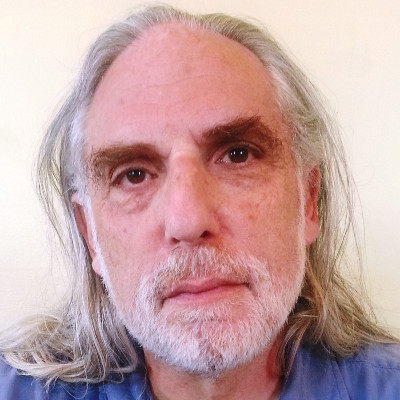
Max is a senior research fellow at CEPR and is an economist and writer in Virginia. He received his BA in English literature from Rutgers University and his MA and PhD in economics at the University of Maryland, College Park. His principal areas of research and interest include the federal budget, state and local finance, fiscal federalism, the economics of taxation, and privatization.
Max has worked at the US Advisory Commission on Intergovernmental Relations, the Economic Policy Institute (EPI), and the US Government Accountability Office. He has written about economics for EPI, CEPR, the Roosevelt Institute, and the Peoples Policy Institute. His three favorite papers for EPI are “Up From Deficit Reduction” (2004), “The Poverty of the New Paradigm” (1991), and with Robert Cherry, “Giving Tax Credit Where Credit Is Due: A ‘Unified Universal Child Credit’ that Expands the EITC and Cuts Taxes for Working Families” (2000).
Max is the coauthor (with Rima Shore and Craig Richards) of Risky Business: Private Management of Public Schools. He has edited the books The End of Welfare? Consequences of Federal Devolution for the Nation and Bridging the Tax Gap: Addressing the Crisis in Federal Tax Administration and wrote the report The Hidden Costs of Channel One with Alex Molnar. He has collaborated separately with Rep. Dennis Kucinich (D-OH) and Rep. Rahm Emanuel (D-IL) on legislation to institute an expanded tax credit for families with children.
Max’s articles have appeared in The American Prospect, In These Times, Jacobin, The Boston Review, The Baffler, Newsweek, Democracy Journal, The Daily Beast, Democratic Left, Pro Publica, the People’s World, Mother Jones, The Progressive Populist, and The New Republic. He has consulted for the National Association of Social Workers; the National Women’s Law Center; the Service Employees International Union; the American Federation of State, County and Municipal Employees; and the Alliance for Aviation Across America. He has written numerous op-eds, including in the Boston Globe, the Houston Chronicle, the Miami Herald, the Austin Chronicle, the Arizona Republic, USA Today, and the Los Angeles Times. He was among the earliest bloggers on economics and politics at MaxSpeak, You Listen!
The program cannot run out of money, nor can benefits be threatened by a sudden shortage of revenues

Deficit demagogy has (finally) become a fringe position in American politics—just look at the massive bills moving through Congress.

The USPS is the premier public enterprise of the United States, and we could do with more of it.

This paper focuses on the three most likely ways to pay for new spending: cuts in defense spending, tax increases, and borrowing (deficit spending).

Against the universal, natural tendency to put off future needs for the sake of current ones, I want to dwell on the disposition of U.S. public investment.

In Part I of this series, we addressed two of the immediate needs facing the Federal Government: cash assistance to individuals, and to state and local governments. Here in Part II, we confine our discussion to public investment, narrowly defined.
A new day in public policy beckons with the election of Joe Biden and Kamala Harris. There is much to do. Popular attention tends to focus on taxes and spending, but the Biden Administration will have additional, powerful tools at its disposal.
Rehabilitating the US Postal Service is one small but necessary step back to a well-functioning government and a civilized society.

The financial problems of the United States Postal Service (USPS) are the result of misguided policy decisions — some of them long-standing — not declines in first-class mail, its primary source of revenue.