
Past
Greg Grandin’s America, América: A New History of the New World – Book Discussion
- 6:00 pm – 8:00 pm EDT
- Busboys and Poets, 450 K Street NW, Washington, DC 20001
Past
CEPR hosted a conversation between journalist Ryan Grim and Pulitzer Prize-winning historian Greg Grandin about Grandin’s New York Times best-selling book, America, América: A New History of the New World. CEPR’s Francesca Emanuele made introductory remarks. Grandin’s book provides a sweeping five-century narrative of the turbulent relationship between an expansionist United States and the nations of Latin America, and how that relationship has largely shaped the identities of both.
The discussion was particularly relevant given the Trump administration’s increasingly belligerent policies in the Western Hemisphere, which seek to reestablish dominance in a region long considered by the Washington foreign policy establishment to be the US’s “backyard” but which has moved away from the US in recent decades.
The book provides much-needed historical context for understanding current events in the region, including the rise of far-right politicians like Javier Milei in Argentina, Jair Bolsonaro in Brazil, Nayib Bukele in El Salvador, and Daniel Noboa in Ecuador — and how their success is deeply linked with political developments in the US.
At the event, Grandin noted how, throughout history, after the fracturing of a dominant US political coalition, Latin America played a central role in the consolidation of new domestic coalitions, from the founding fathers to FDR’s New Deal Democrats and into the post-Cold War neoliberal order.
“History is repeating itself,” said CEPR International Research Director Jake Johnston. “The Republican party of old has splintered, and as MAGA seeks to consolidate its hold over the party, they are looking to Latin America to do so.” They appear to be doing so through the mass stigmatization of Latin American immigrants and through an openly interventionist hemispheric agenda reminiscent of the early 20th century era of “gun boat diplomacy.” Multiple outlets have recently reported that top Trump administration officials are pushing for direct US military action inside Venezuela aimed at regime change, while the Trump administration has intervened heavily in countries like Brazil, Colombia, and Argentina in order to support far-right political allies. The US recently announced a $20 billion bailout for Milei’s Argentina, a clear effort to influence upcoming elections.
But America, América is also a book of hope, as Grandin pointed out. In response to US interventions, Latin Americans remade the rules of international relations, with lasting implications for the modern world. At a time when international law is again under threat, and multilateral institutions have proven unable to stop the ongoing massacre of civilians in Gaza, the tireless organizing of social movements in Latin America will continue to be a source of inspiration, and the leading edge in the fight for a more just world order.
“Grandin reminds us that Latin America has never been merely an object of domination, but a source of enduring ideas and struggles that continue to challenge and reshape the international order,” said CEPR’s Emanuele. “And spaces of diplomacy — which may appear fragile or weak today — are indispensable in moments like the one we are living through. No negotiating space should be abandoned, for it is through dialogue and diplomacy that we confront violence and prevent war.”
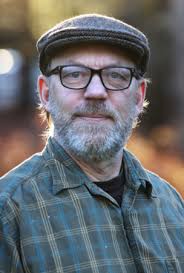
Greg Grandin is the Peter V. and C. Vann Woodward Professor of History at Yale University. He received his doctorate at Yale University under the direction of Emilia Viotti da Costa and Gilbert Joseph and previously taught at New York University for 19 years. He is the author of seven books, including The Blood of Guatemala, which won the Latin American Studies Association’s Bryce Wood Award for best book published on Latin America in any discipline; The Last Colonial Massacre; Empire’s Workshop; Fordlandia, which was a finalist for the Pulitzer Prize, the National Book Award, and the National Book Critics Award; The Empire of Necessity, which won the Bancroft and Beveridge awards in American history; Kissinger’s Shadow; and The End of the Myth, which won the Pulitzer Prize for general nonfiction and was a finalist in the history category. Grandin is a member of the American Academy of Arts and Sciences and the Society of American Historians. He has coedited, with Gil Joseph, A Century of Revolution, and, with Deborah Levenson and Elizabeth Oglesby, The Guatemala Reader. Grandin has published widely, in The Nation, where he is a member of the editorial board; the London Review of Books; The New Republic; NACLA’s Report on the Americas; and The New York Times, among other venues. He is a regular guest on Democracy Now! A revised edition of Empire’s Workshop is forthcoming.
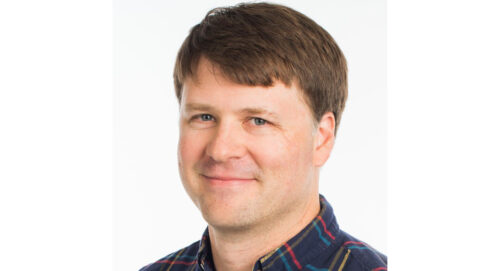
Ryan Grim is the cofounder of Drop Site News and a longtime DC reporter, breaking news from the halls of Congress and leading the Washington bureaus for The Intercept and HuffPost. At HuffPost, he led a team that was twice a finalist for the Pulitzer Prize, and won once. Grim has spent years chronicling the rise of progressives in Congress, and his most recent book is The Squad: AOC and the Hope of a Political Revolution, which followed his best-selling We’ve Got People. He’s also the author of the 2009 book This Is Your Country On Drugs.
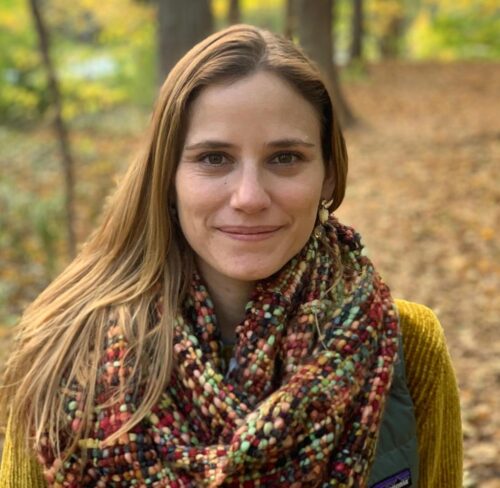
Francesca Emanuele focuses on US policy toward Latin America and the Caribbean as well as issues related to human rights, democracy, economic development, and regional integration in the Americas. Her commentary and analysis have appeared in US outlets such as Associated Press, Foreign Policy, and The Nation, as well as in international media, particularly in her home country, Peru. She has organized and participated in electoral observation missions in Peru, Colombia, Argentina, and other countries across the Western Hemisphere. Francesca holds a degree in Sociology from the Complutense University of Madrid, a Master’s in Public and Social Policy from Pompeu Fabra University, and is a doctoral candidate in Public Anthropology at American University, where her research focuses on the Organization of American States.