Article • Expose the Heist: Power and Policy in Unprecedented Times
Public Broadcasting Cuts Put Rural Communities At Risk

Article • Expose the Heist: Power and Policy in Unprecedented Times
While people are still reviewing the One Big Bill for Billionaires to understand its contents (including members of Congress who voted for it), another piece of legislation has been signed that dismantles even more services for Americans.
At a glance, the Rescissions Act of 2025 focuses mainly on international aid programs. But the last item in the law will have a direct impact on Americans, particularly in rural areas. The law cancels over $1 billion in funding to the Corporation for Public Broadcasting — $535 million appropriated for fiscal year 2026 under the Further Consolidated Appropriations Act of 2024, and another $535 million under the Full-Year Continuing Appropriations and Extensions Act of 2025. That might sound like a lot of money, but it would be 0.01 percent of the $6.75 trillion the federal government spent in fiscal year 2024.
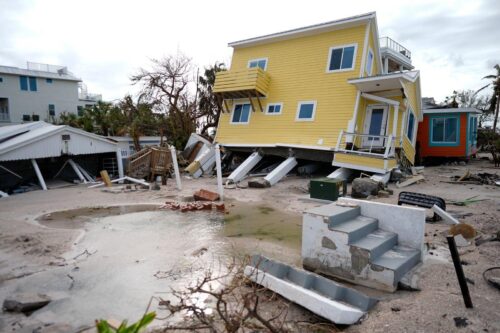
So why is public broadcasting important for Americans, especially in rural areas? A 2022 Alliance of Rural Public Media report found that rural public radio stations serve as lifelines during emergencies and natural disasters. They deliver critical public safety information via broadcasts and digital platforms, frequently serving as the sole available source of information during power or cell tower outages. For example, during Hurricane Helene, Blue Ridge Public Radio provided updates to Asheville, NC residents who were unable to get cell service. Rural stations already contend with significant hurdles compared to their urban counterparts, including limited prospects for donor contributions, substantial infrastructure expenses associated with reaching distant audiences, and the persistent broadband deficit that limits access to digital content. They rely on a steady stream of funding to maintain their equipment and keep operating.
In 2022, the Federal Emergency Management Agency (FEMA) awarded CPB $136 million to establish and implement the Next Generation Warning System grant program. This program enables public television and radio stations to replace and upgrade their infrastructure, as well as expand their alert and warning systems. These grants prioritize projects in underserved communities, specifically those serving individuals with disabilities, those with access and functional needs, or those with limited English proficiency. But, at the beginning of the year, interference by Elon Musk’s Department of Government Efficiency (DOGE) forced FEMA to hold $38 million in funding for the system, which led CPB to alert stations to pause all work on it. The funding was intended to reimburse stations that had already incurred expenses on upgrades, leaving many to bear the cost.
CPB sued FEMA in March, asserting that DOGE lacked the authority to withhold congressionally appropriated funds, but a Trump-appointed federal judge denied CPB’s request for a temporary restraining order. By April, Senators Ed Markey and Lisa Murkowski sent a letter to FEMA requesting a timeline for unfreezing the funds. FEMA never responded publicly, but it released the funding later that month, allowing CPB to resume reimbursements to stations.
During Senate debates over the Rescissions Act, Sen. Eric Schmitt( R-MO) insisted the funding being rescinded was unrelated to the Next Generation Warning System grant program. But in an update the morning after the package passed the House, National Public Radio reported that rural stations were likely to close due to the cuts. It is difficult to envision a scenario where a rural station, forced to close after being stripped of its funding, could still fulfill its warning system duties. Of course, Congress and the administration have other options for disseminating emergency communications beyond broadcasting. But so far, no plans have been announced, and the agencies that would likely lead such an effort — FEMA or the National Weather Service — have had their own staff and resources cut. Besides, broadcast networks are the most reliable option. Cellular network infrastructure is vulnerable during disasters, whether due to damage or congestion when a large number of people attempt to connect to the network. Additionally, government websites necessitate internet access, which can be inconsistent or unavailable during an outage. Public radio and TV broadcasts, however, remain accessible to all, particularly in areas with limited broadband.
At a time of increasing disasters across the US, Congress and the Trump administration’s ideologically driven attacks on public media jeopardize all these vital services. By signing the Rescissions Act of 2025, Trump has yet again reduced rural communities’ abilities to respond to emergencies and disasters—a baffling move, given that the recent Texas floods have underscored the necessity of early warning systems. At what point will all Americans begin to ask what, if anything, is being done to help them at a time when we need the federal government’s leadership the most?
Article
Article
Article

Article

Article

Article

Podcast
Article