

Article
As Iran War Rages, Washington Opens a New Front in Ecuador
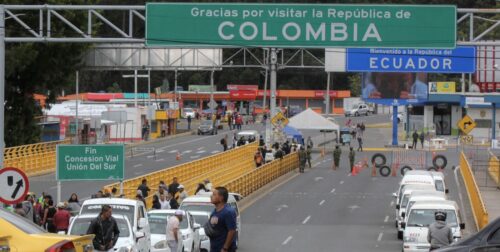
The Trump administration has joined the Ecuadoran government’s military campaign against so-called “narco-terrorists.
Mar 13, 2026
Article
The Trump administration has joined the Ecuadoran government’s military campaign against so-called “narco-terrorists.
Mar 13, 2026
Article • Ecuador News Round-Up
Feb 20, 2026

Article
Jan 23, 2026
Article
Dec 4, 2025

Article • Ecuador News Round-Up
Nov 13, 2025
In an article this week in the Malaysian Star, South Centre Director Martin Khor describes a move by Latin American and Caribbean countries – most of which belong to the Bolivarian Alliance for the Americas group, or ALBA – to form an alternative to the World Bank’s International Center for Settlement of Investment Disputes (ICSID) to settle investor-state disputes, noting the predilection of ICSID to rule in favor of corporations:
LEADERS of several Latin American countries have set up a new coalition to coordinate actions to face the growing number of international legal suits being taken against governments by transnational companies.
A ministerial meeting of 12 countries held in Guayaquil, Ecuador, decided on several joint actions to counter the threat posed by these lawsuits, which have claimed millions or even billions of dollars from governments.
…
Seven of the countries, mostly represented by their ministers of foreign affairs, trade or finance, adopted a declaration with an agreement to form a conference of states affected by transnational interests.
They are Ecuador, Bolivia, Cuba, Nicaragua, Dominican Republic, St Vincent and the Grenadines as well as Venezuela.
But while these are all ALBA members (except the Dominican Republic), Khor notes that several other countries were also present at the meeting are not: “Representatives of another five countries (Argentina, Guatemala, El Salvador, Honduras and Mexico) also attended the meeting and will convey the results to their respective governments.”
The Organization of American States (OAS) is set to take up proposed reforms to the Inter-American Commission on Human Rights (IACHR) today at 11:00am EDT (live feed here). While arguments against the reforms have received column space in major U.S. media outlets, little attention has been granted to some of the criticisms laid out by the Ecuadorean government, which has been leading the effort for IACHR reform.
In a presentation [Spanish PDF here; English PDF here] to OAS members in Guayaquil on March 11, Ecuadorean President Rafael Correa pointed out that Ecuador is one of seven countries to have “subscribed in absolute terms” to all of the Inter-American human rights instruments, noting that:
Here, torture is not allowed, there is no death penalty, we have not invaded anyone at all, no drone and selectively killing terrorism suspects without trials, along with “collateral damage” as family, neighbors, etc. In Ecuador, as in all true State of Law, we pursue crime, not people, but precisely because it is already a real State of Law, and no one can be above the Law, which disturbs the supremacy powers.
Correa noted that only 24 of 34 states have ratified the “fundamental document” of the American Convention on Human Rights – the “San Jose Pact” that led to the creation of two bodies, the Inter-American Court of Human Rights and the Inter-American Commission on Human Rights. Consequently, he states, only for those 24 countries are the organizations’ decisions binding.
The strong asymmetry between countries attached to the Convention versus those who finance and manage, has come to a completely perverting tool that was initially developed for the benefit of each and every American. Instead of this, some countries plan to intervene in other countries, while judges hide behind immunity by not being under the jurisdiction of the system and especially of the Court.
Correa pointed out a number of contradictions within the Inter-American system, such as that the Inter-American Commission is based in “a country that is not a part of the Inter-American Human Rights System, and that has ratified none of the inter-American human rights instruments” – the United States.
The Miami Herald editorial board commented on the recent reelection of Ecuador’s Rafael Correa earlier this week, noting that “opposition candidate Alvaro Noboa, whom Mr. Correa defeated 57 percent to 43 percent, has indicated that he might challenge the
International media reporting ahead of Ecuador’s elections today has sounded familiar themes, understating the achievements of the Rafael Correa government and attributing Ecuador’s recent economic and social progress to “luck” or happenstance, and high oil prices. Correa is depicted as an enemy of press freedom, despite the fact that Ecuadorean media is uncensored and the majority of it opposes the government; and despite his granting of political asylum to Julian Assange. He is also depicted as a member of Latin America’s “bad left” who has ambitions of regional leadership should “bad left” leader Hugo Chávez succumb to illness or otherwise be unable to continue in office.
A common theme in press accounts is that the Correa administration’s social programs are “funded by the country’s oil proceeds.” While some reporting has gone deeper and noted that “Correa has taken on big business and media groups, imposing new contracts on oil companies and renegotiating the country’s debt while touting his poverty reduction efforts,” others have not. “High prices for oil exports resulted in higher revenues which the government invested in social programs and public infrastructure,” the Christian Science Monitor reported in a Friday article. The New York Times’ William Neuman presented a contradictory picture of the economic importance of Ecuador’s petroleum sector, writing that “Ecuador is the smallest oil producer in the Organization of the Petroleum Exporting Countries, yet oil sales account for about half of the country’s income from exports and about a third of all tax revenues, according to the United States Energy Information Administration,” just before stating in the next paragraph that “Mr. Correa has taken advantage of high oil prices to put money into social programs, earning him immense popularity, especially among the country’s poor.”
Petroleum exports have been important to Ecuador’s economy for a long time; this did not suddenly come about with Correa. While Correa was favored by high oil prices during most of his six years in office, the collapse of oil prices in 2008 was a major blow to the economy. Also, an important change during Correa’s first term has been the Ecuadorean government’s relationship with foreign oil companies. Correa notably has driven a much harder bargain than his predecessors, “imposing a windfall profits tax for concessions made to companies for the exploitation of domestic natural resources” that “raised over $500 million for the government in 2010,” as our latest paper notes. A raft of financial and regulatory reforms have also put a considerable amount of revenue in the government’s coffers, contributing to the increase from 27 percent of GDP in 2006 to more than 40 percent in 2012. Stimulus spending – 5 percent of GDP in 2009 – boosted the economy and allowed Ecuador to get through the global recession with minimal damage, losing only about 1.3 percent of GDP during three quarters of recession, despite being one of the hardest hit countries in the hemisphere by external shocks. Non-petroleum sectors such as construction, commerce and services have also been important drivers of growth in recent years, including in 2011, when Ecuador had some of the highest real GDP growth in the region at 7.8 percent, second only to Argentina in South America.
The Guardian: It’s not luck but good financial judgment that has set the president on the path to victory in forthcoming elections.
On Sunday Ecuadorians will head to the polls to vote for a president and vice president, members of the National Assembly, mayors, and other elected officials. As we’ve done ahead of other elections in Latin America, CEPR has published a report offering s
February 2013, Mark Weisbrot, Jake Johnston and Stephan Lefebvre
Al Jazeera English: President Obama’s crass comments about newly-elected Chavez only serve to further alienate himself from Latin America.
CNN and much of the Spanish language press regaled in an apparent “aha!” moment last week when, in an interview with CNN’s Erin Burnett, WikiLeaks’ founder Julian Assange referred to Ecuador as an “insignificant country.” CNN en español immediately report
A guest post by former CEPR intern Tara Ruttenberg.
Ecuador made international headlines this week, first for plaintiffs taking their fight to Argentina and Colombia to hold Chevron accountable for decades of toxic pollution, and secondly as a result of the government’s recent decision to tax bank profits as a way to increase state revenue for social spending on poverty alleviation. As Ecuador celebrated the fourth anniversary of its relatively new citizen’s constitution last month, news agencies and policy analysts have made note of the successes of the many changes taking place under President Correa, particularly related to social policies targeting poverty reduction through increased public social expenditure and cash transfers to the poor. These and other reforms embody Correa’s proclaimed commitment to 21st century socialism and an inverted juxtaposition of traditional power relations, placing people and the environment above the market economy and the formerly unbridled reign of the private sector. Ecuador’s social and economic policy platform and successful poverty reduction experience are a strong reflection of wider regional trends in countries governed by left-of-center leaders now nearly a decade into Latin America’s post-neoliberal era.
While analysts continue to draw due attention to Ecuador’s success in reducing poverty and improving socioeconomic indicators by balancing strong economic growth with policies geared toward greater income redistribution (see CEPR publication on Ecuador’s economy since 2007), many have neglected the wider paradigmatic framework within which Ecuador’s new constitution thrives; that is, the indigenous-born and politically articulated concept of ‘buen vivir’ (living well). Buen vivir as a social paradigm incorporated into Ecuador’s constitution seeks to “better the quality of life of the population, develop their capacities and potential; rely on an economic system that promotes equality through social and territorial redistribution of the benefits of development; ….establish a harmonious coexistence with nature… promote Latin American integration; and protect and promote cultural diversity” (Article 276 of the Constitution of the Republic of Ecuador). Refreshingly, we see Ecuadoran policies living up to these ambitious constitutional aims based on buen vivir, with Correa continuing to focus on income redistribution, as demonstrated by the most recent tax on banks.