
Article • Dean Baker’s Beat the Press
Weakening Patent Monopolies: The Most Effective Wealth Tax
Article • Dean Baker’s Beat the Press
The idea of a wealth tax has gained considerable popularity in the dozen years since Thomas Piketty first popularized it with his book, Capital for the 21st Century. I have always been a skeptic myself — not because I have any trouble with taxing billionaires, but I think it faces enormous practical and political obstacles.
On the practical side, the rich are very good at avoiding and evading taxes. At the moment, we have no registry of wealth. There are many ways to hide wealth, and we can assume the rich will find many more methods that most of us could never imagine. Rich people can also just leave the country. I know wealth tax proponents suggest an exit tax, but good luck enforcing that when they move to an uncooperative country.
As a legal matter, I realize many talented constitutional lawyers have made compelling cases as to why a wealth tax is constitutional. Maybe one day we will have a Court where those arguments might matter; but for the foreseeable future, no one has to waste time reading a brief, this Court is against it.
From my very limited understanding of French politics, I gather a wealth tax may be one outcome of the country’s current political stalemate. If that turns out to be the case, it will provide a useful test case from which we can all learn, and hopefully France will get much revenue, but for the near-term future, we probably don’t want to put my stock in the idea of getting a wealth tax here.
There is an incredibly lazy way of thinking about politics and the economy, where the idea is that the market generates inequality and then we bring in the government to reduce inequality. This is a ridiculous view of the economy and the world.
Markets are infinitely malleable; governments structure them. They can structure them in ways that tend to promote equality, or they can structure them in ways that allow some people to accumulate vast fortunes. The US has chosen to go the second route, driven by the beneficiaries of this decision.
If political actors insist on the simple view where market outcomes are just taken as given, then it will be hugely more difficult to reduce income or wealth inequality. It is much harder to take back the money from the rich after we have given it to them, than keeping them from getting it in the first place. This is both because they are very good at hiding their income and wealth from the taxing authorities; and also because they use their money to beat back efforts to tax them.
Government-granted patent and copyright monopolies are the easiest policy to alter that could radically reduce the amount of money going to the rich. By my calculations, these monopolies transfer over $1 trillion a year from the rest of us to their beneficiaries. This is more than $8,000 per household per year. It’s more than one-third of all after-tax corporate profits. It is real money by any measure.
The transfer takes the form of the higher prices we pay for prescription drugs, medical equipment, smartphones, computers, software, and many other products and services. Items like prescription drugs that would be cheap in a free market are often extremely expensive as a result of patent monopolies. And some people, for example Bill Gates, get very rich from them. It is remarkable that this obvious point is not more widely appreciated.
Patent and copyright monopolies do serve a purpose; they provide an incentive to innovate and do creative work. But there are other ways to provide incentives, most obviously paying people. In the case of medical research, where patent abuse is probably most extreme, the government spends over $50 billion a year on biomedical research through the National Institutes of Health and other government agencies.
This sum could be tripled or quadrupled to replace the work currently supported by patents. The additional spending would be easily recovered in the form of lower drug prices. If the research was paid for upfront, and drugs were sold in a free market without patent monopolies, nearly all drugs would be cheap. Drugs are nearly always cheap to manufacture and distribute, it is patent monopolies that make them expensive. (For those keeping score, we made at least five Moderna billionaires by giving the company control over a vaccine the government largely paid to develop.)
There is a similar story in other areas. We would need to structure the mechanism differently in various sectors (I talk about this in chapter 5 of Rigged [it’s free]). But the point is that we can structure the economy in a way that makes patent and copyright monopolies far less important and leaves fewer opportunities for people like Bill Gates and Larry Ellison to accumulate hundreds of billions of dollars.
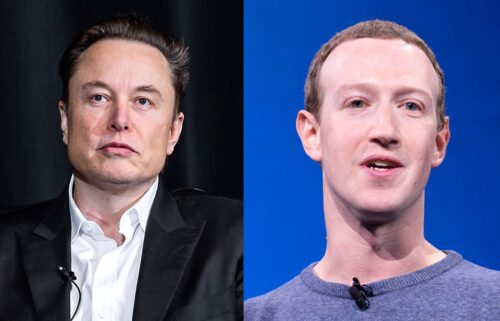
There are similar stories with finance, where a small sales tax would do wonders, along with other efficiency enhancing measures. Fixing Section 230 would help to downsize Mark Zuckerberg and at least part of Elon Musk’s fortune.
I realize I must sound like a broken record to regular readers, but I find this point incredibly important. It seems blindingly obvious to me but overlooked by the overwhelming majority of people in policy debates.
We have structured the market in ways that concentrate a huge amount of income at the top. We can structure it differently to produce far more evenly shared income and wealth. To my mind, this restructuring should be front and center in progressives’ thinking about policy. The idea we will fix it all with a big wealth tax might be comforting, but it has nothing to do with the reality we face here on earth
Article

Article

Article
Article

Article

Article

Article

Article
