Article • Expose the Heist: Power and Policy in Unprecedented Times
Supreme Court Sides with Big Oil, Sends Louisiana’s Coastal Damage Fight Back to Square One
Article • Expose the Heist: Power and Policy in Unprecedented Times
Just a little over a year after Plaquemines Parish, Louisiana, won a $745 million victory against Chevron, the Supreme Court has upended the ruling on a technicality. The 8-0 decision last week likely sends the fight for Louisiana’s vanishing wetlands back to square one in federal court. What does this mean? The Supreme Court’s decision and the justices’ arguments raise significant questions about the extent of authority held by state and local governments — specifically, their ability to seek redress for environmental damage when the responsible companies claim they were acting under the federal government’s direction.
To understand the Supreme Court’s decision, you have to go back, first, to 1978, when Louisiana passed the State and Local Coastal Resources Management Act. The law protects and restores coastal resources and uses sustainable development practices by prohibiting certain uses of Louisiana’s coastal zone, including oil production, without a permit. The act, however, exempts permitted activity that occurred before 1980, and by then most of the damage had been done. Louisiana’s first inland oil field was established in 1901, and the first offshore oil well opened in the late 1930s. But — as detailed in Jason Theriot’s excellent American Energy, Imperiled Coast — those early operations involved rapid infrastructure development without the comprehensive regulations that now exist and consideration of environmental impacts.
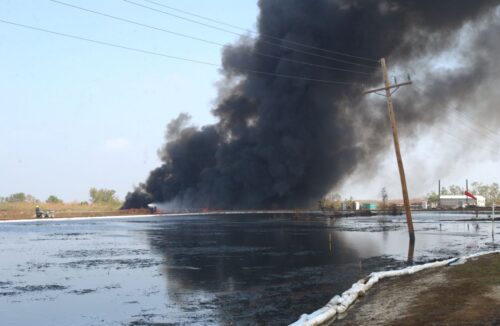
In 2013, Plaquemines Parish and other coastal parishes filed 42 lawsuits against oil and gas companies in Louisiana state courts. In the lawsuits, the parishes alleged these companies lacked required permits and that some uses of the coastal zone, even though they began before 1980, had been started in violation of the law. A report filed by Plaquemines targeted crude oil production during World War II, specifically the company’s dredging of canals and use of earthen pits as an alternative to steel tanks, both of which contributed to the wetlands’ degradation. Research has found that shrinking wetlands are linked to increased flooding and subsidence, which, combined with sea-level rise, has led to the rapid disappearance of land along the Gulf Coast.
Chevron has argued, however, that its role in refining aviation fuel for the US Army during World War II means it was essentially performing the duties of “Federal Officers.” This argument matters because of two words: “relating to.” According to the federal officer removal statute, 28 U. S. C. §1442(a)(1), cases filed in state court against federal officials or individuals “acting under” them may be transferred to federal court if the litigation concerns actions taken “for or relating to any act under color of such office.” Chevron essentially argued that it was a military contractor during World War II, and that the war effort required the parish’s oil fields to increase aviation fuel production.
The Supreme Court last week backed this view in a decision written by Clarence Thomas, who said the purpose of the federal officer removal statute is to prevent state courts from interfering with federal matters. While agreeing with the final judgment, Justice Ketanji Onyika Brown Jackson took issue with the majority’s interpretation of the federal officer removal statute. Specifically, she disagreed with the idea that the phrase “for or relating to” could be satisfied by an indirect connection between a defendant’s conduct and its federal obligations.
Why does this matter? Because an interpretation that indirectly links environmental damage caused by companies to federal responsibilities provides companies with a kind of special protection, allowing them to do what they want as long as they can show even a small link to the government. The decision also takes power away from the states and communities affected by pollution and environmental degradation caused by large multinational corporations. There is a possibility that a federal court will side with Plaquemines at a retrial, but the plaintiffs face two hurdles: the growing costs they have absorbed over the case’s 13 years and Trump’s efforts to pack federal courts since the beginning of his first term.
The most frustrating aspect of this case is that leaked internal documents have shown that oil companies know their activities in the Gulf have damaged coastal wetlands. That fact is not even being disputed. As long as the activities are legally permissible via federal guidance, the companies are just following orders — and making money along the way. And under the Trump administration, which has proven hostile in every way toward environmental and climate concerns, we can see a lot more damage to coastal communities with little concern for how future generations will survive on sinking land.
Article
Article
Article

Article

Article
Article
Article
Article