Article • Expose the Heist: Power and Policy in Unprecedented Times
Another Federal Court Rebukes Trump Administration Over Illegally Withheld Funds
Article • Expose the Heist: Power and Policy in Unprecedented Times
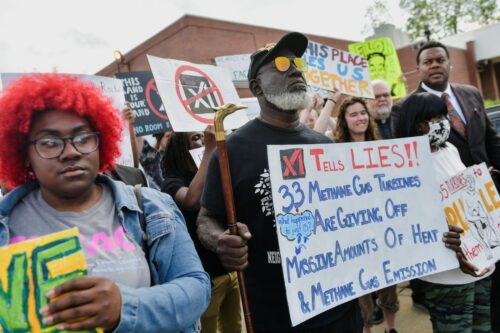
Another week, another court ruling that the Trump administration illegally withheld Congressionally appropriated funding from communities. This time, the funding in question comes from the Environmental Protection Agency’s (EPA) Environmental and Climate Justice Block Grant Program.
In 2022, Congress enacted the Inflation Reduction Act, appropriating $2.8 billion in financial assistance to support environmental and climate justice initiatives. The funding, administered through Community Change Grants, was allocated to projects such as a collaboration between Texas A&M University and the Black Belt Unincorporated Wastewater Program to install wastewater treatment systems for households in rural Alabama. Another project aimed to expand residential and commercial composting programs in Waco and McLennan County, Texas, to decrease the volume of waste sent to landfills
The act required the EPA to award grants and assistance by September 30, 2026. But Trump targeted the program in an executive order right after taking office, calling for the termination of all “environmental justice” offices and positions. The administration canceled or clawed back funding for the grants in July 2025 and laid off federal employees in charge of the program, leaving communities in a lurch — which might sound because we’ve written about this with other programs several times. As a result, the Southern Environmental Law Center and the Public Rights Project, acting on behalf of nonprofits and communities, took the administration to court in March 2025.
US District Judge Richard Gergel, in a ruling last week, agreed with plaintiffs that “contrary to Congress’ will, the EPA issued guidance that shuttered the ECJ Program before its end date of September 30, 2026.” To legally cut funding, the administration should have called on Congress to approve a rescission bill. Gergel also agreed that communities that lost funding received an “injury,” ultimately calling the EPA’s decision “arbitrary and capricious and unlawful.” However, Gergel stopped short of ordering the program to resume and rejected a bid to push back the award deadline, noting that the agency’s capacity to handle applications has been decimated by staff departures.
It’s unclear what will happen next. But precedent with the Federal Emergency Management Agency (FEMA) predicts a somewhat positive outcome. After the administration was taken to court for shutting down the Flood Mitigation Assistance (FMA) and Building Resilient Infrastructure and Communities (BRIC) grant programs in a similar fashion, FEMA — the administering agency — eventually issued amended notice of funding opportunities for the FY 2024/2025 grant cycles that had been disrupted. Also, further lawsuits in Federal Claims Court, which Gergel somewhat encouraged, could lead to restitution for applicants and awardees.
These lawsuits are sending a message to the administration that the separation of powers exists and that it must follow the law. If Congress allocates funding to environmental justice programs, the administration doesn’t have the right to end the very programs Congress just funded. It’s just a shame that Congress remains silent on the issue right now. The courts, Supreme Court excluded, appear to be the only part of the government willing to uphold our constitutionally established framework.
Article

Article

Article

Article
Podcast

Article
Article

Article