

Hayley Brown
Labor and Disability Researcher
Labor and Disability Researcher, IFTPE Local 70 Unit Rep
Labor and Disability Researcher
Labor and Disability Researcher, IFTPE Local 70 Unit Rep
Hayley Brown is a Labor and Disability Researcher with CEPR. Her research spans a wide range of subject matter, including labor and worker power, disability, inequality, and public health. Hayley recently served as president of the Nonprofit Professional Employees Union, which represents the staff at CEPR and many other nonprofits throughout the United States. She previously worked in the Research, Markets, and Regulations division of the Consumer Financial Protection Bureau and for the Brookings Institution’s Metropolitan Policy Program. She studied geographical sciences and philosophy at the University of Maryland, College Park .
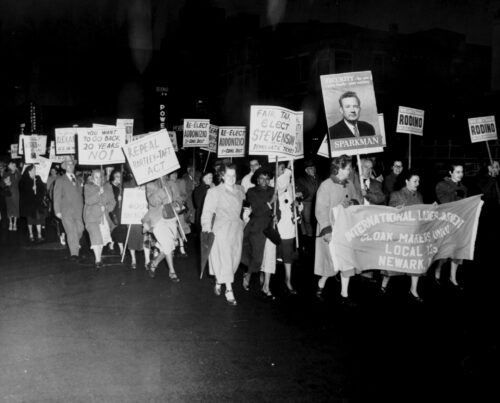
For decades, the Taft-Hartley Act has done serious damage to the labor movement — in part by making it impossible for workers to organize solidarity strikes.
Robert F. Kennedy says he wants to wants to make Long COVID a priority. But he’s spent the early part of his tenure as HHS Secretary doing the opposite.

Florida’s proposed SB 1296 would weaken public-sector unions by imposing stricter recertification rules, making it harder for workers to maintain representation.

The administration’s Census plan presents a problem for overall Census validity and seems designed to fall hardest on groups that are already more likely to be undercounted.
Decades of policy decisions have weakened workers’ ability to organize unions. Reversing course will raise wages and reduce inequality.

Unions have lost ground over the past 40 years — see which states have been most dramatically impacted, and which have held strong.

It’s only early March, but millionaires are already done with their contribution to Social Security for the year.

A fair and accurate census is a constitutional pillar of representative democracy, but the Trump administration is proposing sweeping changes to an operational test this year that could threaten the 2030 count.
A new analysis of government data shows that union density was mostly steady in 2025 — with a drop in the fourth quarter that could be due to federal job cuts.

Republican lawmakers have introduced a suite of anti-labor bills that would make it harder for workers to build power — amounting to a coordinated attempt to break unions and stifle collective action.