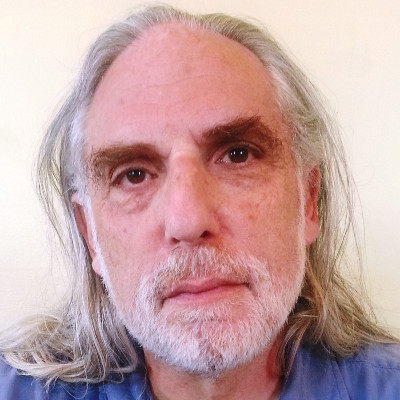
Max B. Sawicky
Senior Research Fellow
Senior Research Fellow
Max is a senior research fellow at CEPR and is an economist and writer in Virginia. He received his BA in English literature from Rutgers University and his MA and PhD in economics at the University of Maryland, College Park. His principal areas of research and interest include the federal budget, state and local finance, fiscal federalism, the economics of taxation, and privatization.
Max has worked at the US Advisory Commission on Intergovernmental Relations, the Economic Policy Institute (EPI), and the US Government Accountability Office. He has written about economics for EPI, CEPR, the Roosevelt Institute, and the Peoples Policy Institute. His three favorite papers for EPI are “Up From Deficit Reduction” (2004), “The Poverty of the New Paradigm” (1991), and with Robert Cherry, “Giving Tax Credit Where Credit Is Due: A ‘Unified Universal Child Credit’ that Expands the EITC and Cuts Taxes for Working Families” (2000).
Max is the coauthor (with Rima Shore and Craig Richards) of Risky Business: Private Management of Public Schools. He has edited the books The End of Welfare? Consequences of Federal Devolution for the Nation and Bridging the Tax Gap: Addressing the Crisis in Federal Tax Administration and wrote the report The Hidden Costs of Channel One with Alex Molnar. He has collaborated separately with Rep. Dennis Kucinich (D-OH) and Rep. Rahm Emanuel (D-IL) on legislation to institute an expanded tax credit for families with children.
Max’s articles have appeared in The American Prospect, In These Times, Jacobin, The Boston Review, The Baffler, Newsweek, Democracy Journal, The Daily Beast, Democratic Left, Pro Publica, the People’s World, Mother Jones, The Progressive Populist, and The New Republic. He has consulted for the National Association of Social Workers; the National Women’s Law Center; the Service Employees International Union; the American Federation of State, County and Municipal Employees; and the Alliance for Aviation Across America. He has written numerous op-eds, including in the Boston Globe, the Houston Chronicle, the Miami Herald, the Austin Chronicle, the Arizona Republic, USA Today, and the Los Angeles Times. He was among the earliest bloggers on economics and politics at MaxSpeak, You Listen!
Explore the dangers of medicaid cuts and the block grant scam that threatens health care for low-income families in America.

The objective of universal social benefits provided without charge to all comers may be disparaged as radical and impractical, but the idea of the common school — a system of free, non-sectarian education open to all children — goes back to the founding o

Rapid job growth and increased worker bargaining power are very good—there’s a whole lot more progressive policy that could be done.

The inflation panic is causing some Democrats to pivot from social spending to deficit reduction. That’s exactly the wrong approach.

Fixing a sabotaged institution is not always easy. In the case of the US Postal Service (USPS), relief is imminent.

The political fortunes of the Democratic Party look dim, but the current economy is not too damn bad. How to explain this seemingly contradictory economic news?

The role of the SLG in anti-recession policy should not be forgotten, since its impact on any economic recovery is inescapable and, absent federal intervention, that impact on recovery will be negative.

The specter of inflation is being invoked to obstruct vital social programs in the Build Back Better bill. That’s a recipe for economic ruin.
Elites are sounding the alarm over threats of inflation in order to block Biden’s social spending plan. We shouldn’t fall for it.

What’s in the latest version of Biden and the Democrats’ massive social spending plan? Not everything progressives wanted, but more than might have been expected under a centrist president.