
Press Release
Washington, DC ― A new issue brief from the Center for Economic and Policy Research (CEPR) examines economic and social developments under Colombia’s Gustavo Petro administration and finds that there has been significant progress according to a variety of key indicators ― including a historic decline in poverty and a substantial increase in the real minimum wage. The publication of the brief, “Colombia Under Petro: Social Gains Amid Monetary and Fiscal Constraints,” by International Research Director Jake Johnston and Research Fellow Paola Jaimes Santamaria, comes just days before Colombia holds new presidential elections on May 31.
“The past four years show how important economic policy can be, and that it is possible to raise living standards and reduce poverty in spite of significant constraints,” Johnston said. “There have been considerable gains in many areas, from land distribution to minimum wage increases, and the economy is likely to be top-of-mind for many voters as they head to the polls ― especially since Colombia is not immune to the current global economic turmoil.”
Polls show a close race between Iván Cepeda, the candidate of Petro’s Pacto Histórico party; far-right candidate Abelardo de la Espriella; and Paloma Valencia, a senator backed by former president Alvaro Uribe.
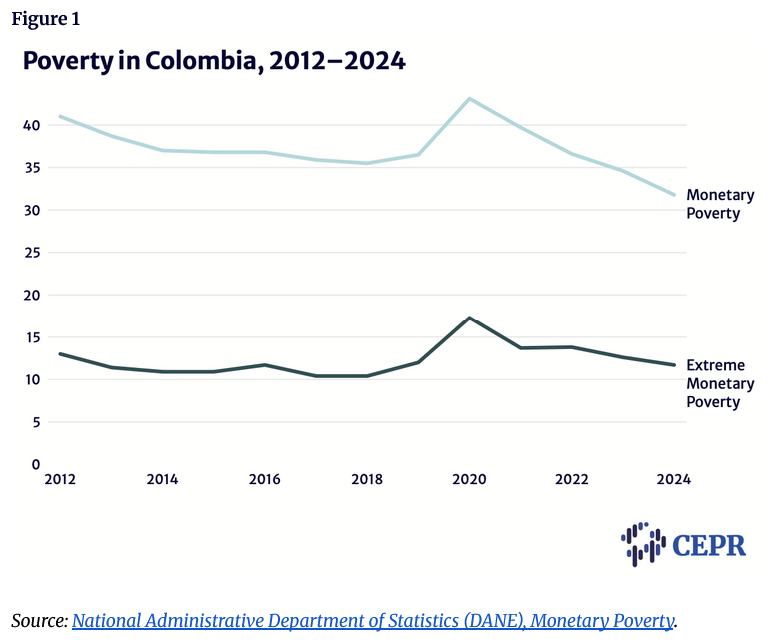
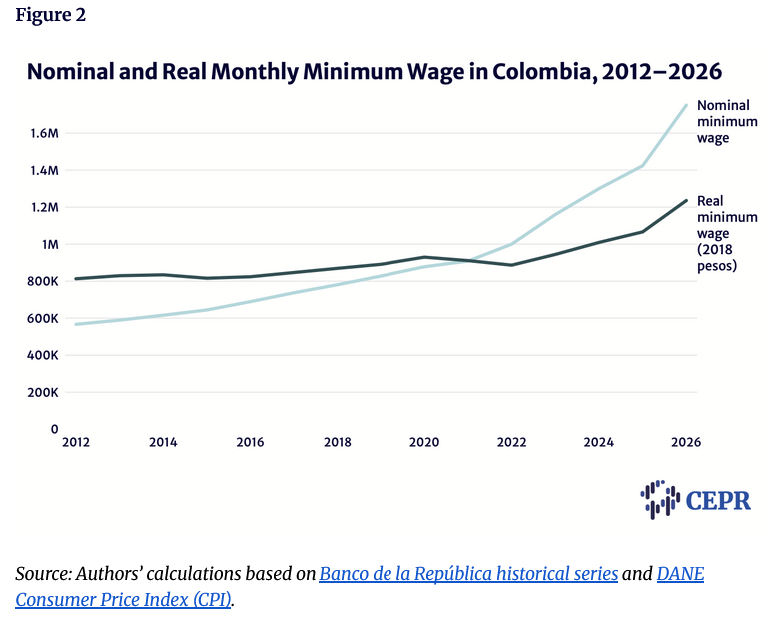
“The 2022 election marked a notable shift in Colombia’s economic trajectory,” the paper notes. Along with reducing monetary poverty by 13 percent and multidimensional poverty by 23 percent since 2022, the CEPR brief examines the effects of the Petro administration’s increased social spending (up by more than 1 percentage point of gross domestic product), 39 percent real minimum wage increase, boosts in support for impoverished and low-income households, land redistributions, gains in economic growth, and attempts to increase revenues through progressive taxation policies.
“It is all the more remarkable that Colombia has experienced these economic and social gains despite monetary policy restrictions imposed by its independent central bank and having to pay off previously incurred high debt service obligations to the International Monetary Fund and other creditors,” CEPR Research Fellow Paola Jaimes Santamaria said.
###