
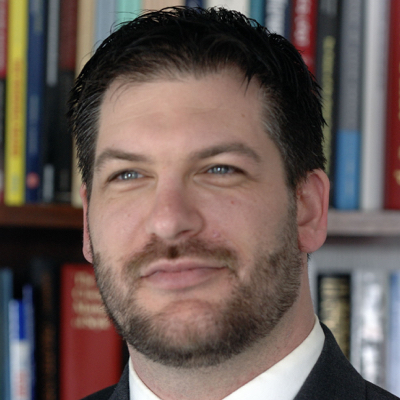
David is an economist at CEPR. He has a PhD in computer science from North Carolina State University and an M.A. in economics from George Washington University.
David has extensive experience monitoring international election data and testing theories of fraud and institutional interference, including balloting in Bolivia (“Observing the Observers: The OAS In The 2019 Bolivian Elections” with Jake Johnston, March 2020), Ecuador, Haiti (“The Organization of American States in Haiti: Election Monitoring or Political Intervention?” October 2011), Mexico (“An Analysis of Mexico’s Recounted Ballots” with Mark Weisbrot, Luis Sandoval, and Carla Paredes-Drouet, August 2006), Pakistan, Peru, and Venezuela (“Black Swans, Conspiracy Theories, and the Quixotic Search for Fraud: A Look at Hausmann and Rigobon’s Analysis of Venezuela’s Referendum Vote” with Mark Weisbrot and Todd Tucker, September 2004).
David has written numerous policy papers and analyses on a variety of subjects including “Have US-Funded CARSI Programs Reduced Crime and Violence in Central America?” with Alex Main and Laura Jung; “Latin American Growth in the 21st Century: The ‘Commodities Boom’ That Wasn’t” with Mark Weisbrot, May 2014; “Pension Liabilities: Fear Tactics and Serious Policy” with Dean Baker, January 2012; “The Ryan Medicare Plan: Winners and Losers” with Dean Baker, April 2011; “Social Security and the Age of Retirement,” June 2010; “Poor Numbers: The Impact of Trade Liberalization on World Poverty,” with Mark Weisbrot and Dean Baker, November 2004; and “The Forty-Four Trillion Dollar Deficit Scare,” with Dean Baker, September 2003.
He is the architect of a number of online calculators, including CEPR’s Accurate Benefits Calculator that compares current-law Social Security benefits to the Bush Plan based on “Progressive Indexing” and the Housing Cost Calculator that compares the cost of owning a home relative to renting for a potential new homeowner. The Housing Cost Calculator gave homebuyers a sense of how the bubble in the housing market might have affected them.
Prior to joining CEPR, he worked as a research associate (postdoc) at the Department of Computer Science, North Carolina State University.
All from David Rosnick
Moody’s: The Solution to Argentina’s Debt Problem is More Debt
A pusher cares less for the health of an addict than squeezing every last penny from the customer. Perhaps this is more so when the victim tries to manage the addiction. Likewise, creditors hardly have the best interests of debtors at heart. Thus, we ough
TTIP: Are 40 Cents a Day Big Gains?
August 2015, David Rosnick
CBO Keeps Revising Down Potential GDP
Ten years ago, with the technology-stock bubble well past us, the Congressional Budget Office (CBO) predicted that from 2000–2015 the potential for the United States economy to produce goods and services—at full employment—would grow 58 percent. This year
The Gains from Trade in a New Model from the IMF: Still Very Small
April 2015, David Rosnick
Retirement Incomes are Falling for Many Americans, Despite What AEI Wants You to Think
In a new paper from the American Enterprise Institute, Andrew Biggs and Sylvester Schieber argue that workers’ retirements are more secure financially than some suggest. In part, they point to the ratio of household assets to wage earnings for those with
The Greek Economy: Which Way Forward?
January 2015, Mark Weisbrot, David Rosnick and Stephan Lefebvre
Trends in the Labor Force 1999-2014: Seniors Increase Participation, Younger Workers Withdraw
In early 2000, the civilian labor force participation rate peaked at a post-war high of 67.3 percent of the population aged 16 and over. Despite flattening out in the latter part of the decade at about 66 percent, participation rates never recovered and h
The Consequences of Increased Population Growth for Climate Change
This paper finds that an additional 1 percentage point of population growth through the end of the century would coincide with about an additional 2 degrees Fahrenheit in average global temperatures.
The Wealth of Households: An Analysis of the 2013 Survey of Consumer Finances
November 2014, David Rosnick and Dean Baker
Farmer’s Folly: The Sequel
In a new working paper, UCLA’s Roger Farmer responds to last year’s investigation into his claim that declines in the stock market caused the Great Recession. Farmer apparently failed to grasp the nature of the critique. In his original paper, Farmer clai