Menu

International Elections


Topics

Regions

Advanced Filters

Close

Filters

Format

Series

Language

Authors

Date
Start Date

End Date

Clear Filters 65 Results

65 Results

(Los Angeles Times) A Presidential Partnership With Trump Could Be Disastrous for Colombia

Article Mark Weisbrot’s Columns

(Los Angeles Times) A Presidential Partnership With Trump Could Be Disastrous for Colombia

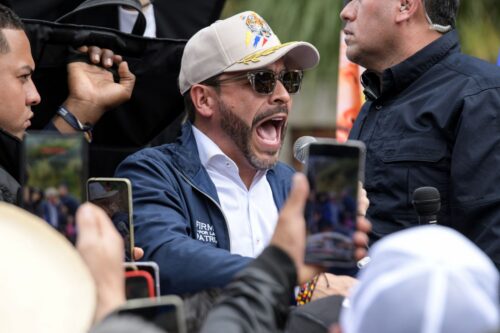
President Trump’s endorsement of Colombian presidential candidate Abelardo De la Espriella is more than an unusual intervention in a foreign election. It raises the prospect of a close alliance between two leaders who favor militarized approaches to security and governance, with potentially far-reaching consequences for Colombia’s peace process, social progress, and political future.

By Mark Weisbrot

Presidential candidate Abelardo De La Espriella visits the Colombia-Ecuador border in Ipiales, Narino, marking the start of his campaign in the region, April 17, 2026. (Photo by: Camilo Erasso/Long Visual Press/Universal Images Group via Getty Images)
Peru’s Run-Off Presidential Election: What You Need to Know

Article

Peru’s Run-Off Presidential Election: What You Need to Know

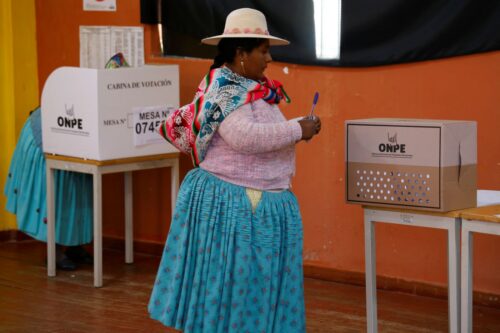
Peruvians will head to the polls on June 7 for a high-stakes presidential runoff between far-right candidate Keiko Fujimori and left-wing candidate Roberto Sánchez. With polls showing a tight race, concerns over electoral integrity, and memories of years of political instability still fresh, the vote could have significant implications for Peru’s political future.

By CEPR

Indigenous women prepare to cast their vote during the presidential election at a polling station in Capachica, province of Puno, Peru, on April 12, 2026. Peruvians will elect a new president from a record field of 35 candidates to lead a country plagued by organized crime and chronic political instability. (Photo by Juan Carlos CISNEROS / AFP via Getty Images)
Colombia’s Presidential Election: What You Need to Know

Article

Colombia’s Presidential Election: What You Need to Know

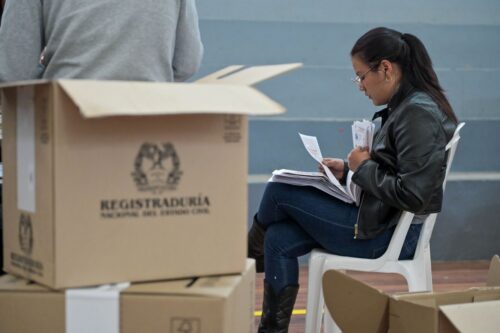
Colombians vote this Sunday in the first round of their 2026 presidential election, choosing a successor to leftist President Gustavo Petro. Frontrunner Senator Iván Cepeda faces right-wing rivals Abelardo de la Espriella and Paloma Valencia in what is widely seen as a referendum on Colombia’s first-ever left-wing presidency. Read on for a full breakdown of the candidates, key issues, and election concerns — with live updates from CEPR observers on the ground.

By CEPR

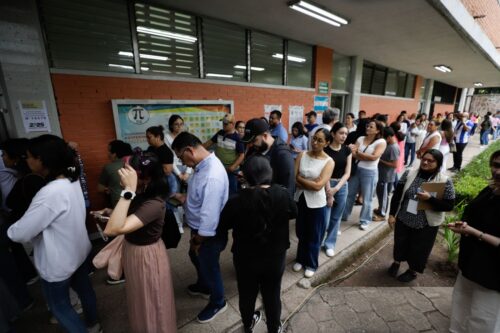
Colombians cast their votes in the Corferias event compound, the biggest voting center in the country during the 2026 congressional elections on March 08, 2026 in Bogota. (Photo by: Jorge Londono/Long Visual Press/Universal ImagesGroup via Getty Images)
Colombia Under Petro: Social Gains Amid Monetary and Fiscal Constraints

Issue Brief

Colombia Under Petro: Social Gains Amid Monetary and Fiscal Constraints

A new CEPR report finds that Colombia experienced major social gains under President Gustavo Petro — including sharp reductions in poverty and unemployment — driven by rising real wages, expanded social spending, and increased investment in historically neglected regions. The report also examines how restrictive monetary policy and fiscal constraints weighed on private investment and shaped the country’s broader economic trajectory.

New Report on Honduras’s 2025 Elections Finds that Partisan Gridlock, US Interference, Procedural Irregularities, and Technical Deficiencies Undermined Their Legitimacy

Press Release

New Report on Honduras’s 2025 Elections Finds that Partisan Gridlock, US Interference, Procedural Irregularities, and Technical Deficiencies Undermined Their Legitimacy

A new CEPR report takes an in-depth look at Honduras’s 2025 elections and finds that several aspects of the electoral process contributed to delays in tabulating and announcing official results, and to distrust in the process from across the political spectrum.

Gridlock, US Interference, Technical Failures and an Incomplete Recount: An Assessment of Honduras’s 2025 Elections

Report

Gridlock, US Interference, Technical Failures and an Incomplete Recount: An Assessment of Honduras’s 2025 Elections

This report on Honduras’s 2025 general elections, based on the observations of CEPR’s electoral mission to Tegucigalpa, finds no evidence in the available data to support claims of fraud. However, the elections were marked by a broader crisis of confidence, driven by partisan institutional gridlock, US interference, logistical issues, technical deficiencies, disputes over the results, and an incomplete recount process.

TEGUCIGALPA, HONDURAS - NOVEMBER 30: Hondurans head to the polls to vote for 2025 Honduran general election in Tegucigalpa, the capital of Honduras, on November 30, 2025. More than six million registered voters are casting ballots at 5,744 polling stations across the country, which has a population exceeding 11 million. In addition to the presidency, voters will choose vice presidents, 128 members of the national parliament, 20 representatives to the Central American Parliament, and 298 mayors. (Photo by Emilio Flores/Anadolu via Getty Images)
The People of Hungary Throw Out the Fascists

Article Dean Baker’s Beat the Press

The People of Hungary Throw Out the Fascists

In a decisive electoral upset, Hungarian voters ousted Viktor Orbán despite years of entrenched power, signaling a rejection of authoritarian-style governance.

By Dean Baker

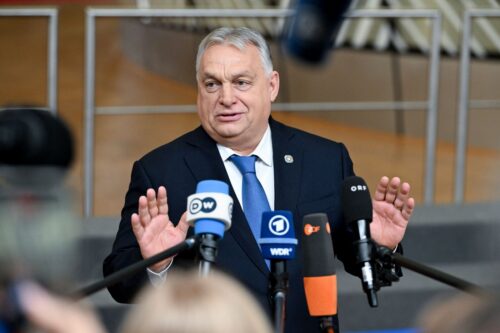
Viktor Orban at the 2025 Western Balkans Summit By © European Union, 1998 – 2026, Attribution, https://commons.wikimedia.org/w/index.php?curid=180322905