Report
Gridlock, US Interference, Technical Failures and an Incomplete Recount: An Assessment of Honduras’s 2025 Elections
Report
Honduras’s November 30 general elections took place in a deeply polarized political environment marked by institutional weaknesses, technical deficiencies, significant foreign interference, and a crisis of confidence in the electoral results.
While the current partisan structure of Honduras’s electoral institutions improves upon the institutional framework that existed before 2021, it contributed to gridlock in key decision-making processes, leading to delays in procurement and the establishment of procedural, logistical, and regulatory aspects of the vote.
Technical deficiencies further undermined the election’s integrity. The preliminary results transmission system suffered from repeated outages and poor optical character recognition accuracy, yielding a considerable volume of irregular data. Data inconsistencies (combined with infighting within the electoral institutions) fueled fraud narratives across the political spectrum and led to a particularly contentious special scrutiny recount process that was not completed, further eroding confidence in the results.
The electoral process was also affected by overt foreign interference, particularly from US political figures, including President Donald Trump, whose public statements and actions — such as endorsements, threats, and the pardoning of former Honduran President Juan Orlando Hernández — exerted undue pressure on the electorate and may have influenced voter behavior.
The Center for Economic and Policy Research (CEPR) deployed a three-member electoral mission to Tegucigalpa from November 27 to December 11. The mission, which focused primarily on the country’s presidential contest, visited polling centers on election day and met with a range of stakeholders, including electoral authorities, representatives of political parties, civil society organizations, and government officials, to gather their perspectives and concerns regarding the elections. The mission also conducted a statistical analysis of the electoral data made available to it and did not find evidence supporting claims of fraud in the presidential election. However, the mission was unable to assess the potential impact of reported electoral data irregularities on the final results, given the considerable resources such an analysis would require and access to certain data that CEPR does not currently have.
Candidate Nasry Asfura was declared the winner on December 24 by a narrow margin of 27,000 votes over the runner-up, before the electoral authority had completed its review of disputed tally sheets. His victory marks a return to power for the National Party, which governed Honduras for most of the 12 years that followed a coup d’etat in 2009 — a period marked by significant corruption scandals, serious human rights abuses, and high levels of impunity. Notably, former President Hernández (2014–2022) and other top officials were extradited and convicted on drug trafficking charges in the US in 2024. Honduran civil society has expressed concern that the Asfura administration could herald a resurgence of the authoritarianism and violent corruption networks that had consolidated substantial influence after the coup. In recent weeks, the National and Liberal parties in Congress have carried out contentious impeachment proceedings against several LIBRE electoral officials, removing them from office “in a manner inconsistent with international human rights standards and in a context of high institutional polarization,” according to local and international human rights organizations.
On November 30, Hondurans voted to elect a new president, all 128 members of the legislature, and all local elected officials (mayors, deputy, mayors, and municipal councilors) across the country’s 298 municipalities. Broadly, the election presented voters with the choice of supporting the continuation of President Xiomara Castro’s left-leaning social and economic agenda by voting for Liberty and Refoundation (Libertad y Refundación, or LIBRE) candidates, or opting for the return to a more conservative agenda by voting for candidates from the Liberal Party or the National Party.
The vote took place in a highly polarized climate that also featured egregious instances of US interference — including interventions by President Trump and Republican lawmakers — alongside widespread allegations, by supporters of all three candidates, of plans to manipulate the vote or to subvert a legitimate electoral outcome. In some cases, key aspects of the electoral process, including regulations and technology platforms, were not finalized until hours before the vote. Although troubling reports of voter intimidation surfaced, the most significant technical problems appear to have occurred during the validation of the preliminary results, partly due to significant deficiencies in the optical character recognition software used to scan tally sheets.
Constitutional reforms in 2019 and a new electoral law implemented in 2021 redesigned Honduras’s electoral institutions. These reforms were in part a response to the 2017 elections, which many believed to be marred by fraud that benefited the then-incumbent National Party.1 Under the old system, a single body, the Supreme Electoral Tribunal (Tribunal Supremo Electoral, or TSE), was in charge of both organizing elections and ruling on electoral disputes. Because its three judges were appointed by a congress historically dominated by the National and Liberal parties, the tribunal lacked meaningful independence. The reforms abolished the TSE and split its functions between two separate electoral bodies. Each is composed of representatives from the three major parties, allowing for a higher degree of political representation and a broader forum to contest electoral decisions.
This design “broadly provided for democratic elections” in 2021, as the EU’s observation mission stated that year; however, in the 2025 elections, the system’s design generated a high level of contention within the electoral bodies, producing sharp partisan divisions.2 This led to delays in the implementation of key elements of the electoral process and contributed to serious problems in the review and verification of results, as well as in the timing and communication of the official results. Together, these divisions and delays deepened public distrust in both the authorities themselves and the broader electoral process.
In the lead-up to the election, the National and Liberal Party opposition accused LIBRE of using its influence over the government to persecute opposition-aligned electoral officials and of planning to use its leadership in the Honduran Congress to try to alter the results. In turn, LIBRE alleged that the opposition — holding a two-to-one advantage within the electoral bodies and backed by powerful allies in influential economic sectors — intended to orchestrate fraudulent interference in the balloting process. LIBRE also expressed concern that the electoral authorities might prematurely declare a winner without conclusive results.
On election night, Honduras’s electoral authority, the National Electoral Council (Consejo Nacional Electoral, or CNE), reported early results from the Preliminary Results Transmission System (Sistema de Transmisión de Resultados Electorales Preliminares, or TREP). They indicated that the incumbent LIBRE Party had lost the presidential election by a wide, unrecoverable margin, while the two opposition parties were in a dead heat, with the National Party showing an extremely narrow lead. That night, alongside the first publication of the preliminary results, the LIBRE Party’s presidential candidate, Rixi Moncada, held a press conference alleging irregularities in the voting data and asserting that LIBRE would demand a full review of all ballots. Weeks later, the CNE — which is composed of representatives from each of the three major parties — officially declared Nasry “Tito” Asfura president-elect on December 24, in the absence of the LIBRE-affiliated councilor and before fully completing a special scrutiny process of irregular ballots, which previously the CNE had unanimously agreed to carry out.
CEPR deployed a three-person accredited electoral observation mission to Tegucigalpa: CEPR Senior International Policy Associate Francesca Emanuele, CEPR Research Associate Pedro Labayen Herrera, and Annie Bird, a leading Honduras expert and human rights advocate. The team was on the ground from November 27 until December 11 and focused its observation efforts primarily on the presidential election. In the lead-up to election day, the mission met with various actors — including civil society and human rights organizations; journalists; analysts; other electoral observation missions; senior party officials from the LIBRE, National, and Liberal parties; two of the CNE’s three councilors and other electoral authorities; and ministers in the Castro administration — to better understand the context and the concerns of the stakeholders involved.
CEPR was granted access to the preliminary results as they became available through the CNE’s central repository of tally sheets and data, which was set up for electoral observation missions and journalists. This access allowed the mission to employ the assistance of CEPR economist David Rosnick, who has extensive experience in the analysis of electoral data to track results and perform internal projections. However, CEPR experienced difficulties in obtaining timely access to the data. Although authorization had been granted, the central repository interface was not activated until just hours before the start of election day, highlighting the CNE’s delay in establishing clear and timely procedures for data sharing.
These elections were the most observed in Honduran history, according to CNE Councilor Marlon Ochoa.3 In addition to CEPR, there were at least 43 national and 24 international accredited electoral observation missions.4 These included delegations from the Organization of American States 5(OAS) and the European Union,6 composed of more than 100 and more than 80 observers, respectively. The Network for the Defense of Democracy — a coalition of several civil society organizations including the Association for a More Just Society, the Honduran Private Enterprise Council (Consejo Hondureño de la Empresa Privada, or COHEP), and the National Anticorruption Council — deployed more than 12,000 national and international observers across the country.7 In a separate joint mission,8 the Center for the Study of Democracy (CESPAD), Global Exchange, and the Honduran Solidarity Network deployed 96 domestic observers and 44 international observers.9
In support of CEPR’s observation mission, CEPR staff conducted statistical analysis of the presidential election results based on thousands of Monte Carlo simulations using the electoral data available to the mission through the CNE’s central repository of tally sheet images and data reports. This analysis did not identify evidence supporting claims of electoral fraud in the presidential election. At the same time, it bears emphasizing that the margins were extremely narrow, and the Monte Carlo simulation methodology involved a degree of uncertainty given the limits of the available data.
CEPR’s review of the CNE’s central data repository found that the quality of the data generated by the TREP system, through the optical character recognition (OCR) software implemented by the contracted TREP operator and subsequent human corrections, appeared to be exceptionally poor. The frequency and magnitude of discrepancies between the tally sheet images and the OCR-generated data appeared to be unusually high and these discrepancies were accompanied by media reports of unexplained irregularities. In some cases, as electoral officials entered tally sheet results for transmission to the central repository, the numbers automatically shifted from the box in which they were entered to boxes for other candidates.10 CEPR was unable to fully verify reported irregularities or to determine the extent to which these data issues were corrected through the established verification or special scrutiny processes, nor could it assess the potential impact of these irregularities on the election’s results, due to the considerable resources such a study would require.
Moreover, CEPR received a report from Smartmatic — the company contracted by the CNE to provide biometric voter identification — detailing the number of individuals the biometric system recorded as having voted in the 2025 elections. Figures from the TREP system’s OCR-generated tally sheet data reports consistently showed higher voter totals than those recorded in the Smartmatic biometric data, though CEPR’s mission is aware that the biometric voter identification system may have been bypassed for seemingly legitimate reasons, including system and device malfunctions.
Several other factors undermined voters’ trust in the election’s legitimacy, including delays in the publishing of results, last-minute changes to electoral rules by the CNE, the CNE’s decision not to conduct a full recount of tally sheets, failure to fully complete the special scrutiny processes, and the CNE’s lack of a united and coherent communications strategy.
The partisan composition of both the CNE and the Electoral Justice Tribunal (Tribunal de Justicia Electoral, or TJE) also allowed representatives of the National and Liberal parties to consistently outvote those from LIBRE on procedural and logistical determinations that electoral authorities are responsible for resolving — including decisions related to contracts with electoral service providers, timelines, key dates, and postelection processes — contributing to contradictory, counterproductive, and at times potentially illegal decisions made for political reasons.
The entire electoral process was also marked by egregious instances of foreign interference, particularly from political actors in the United States. Several US Republican lawmakers, including Representatives María Elvira Salazar and Carlos Giménez of Florida, as well as President Trump, urged Hondurans not to vote for LIBRE candidate Rixi Moncada. President Trump publicly endorsed National Party candidate Nasry Asfura and threatened economic consequences should either Moncada or Liberal Party candidate Salvador Nasralla win the election. Such threats carry particular weight in Honduras, whose economy and citizens are highly reliant on trade11 with the United States and on remittances sent by Honduran migrants, which account for roughly a quarter of the country’s gross domestic product.12
Trump also granted a pardon to former Honduran President Juan Orlando Hernández, who had been serving a 45-year prison sentence in the United States on drug trafficking charges. Despite his conviction and incarceration, Hernández is still considered a key leader of Asfura’s National Party. In 2017, Hernández had been declared reelected to a second presidential term in flawed elections that the OAS called to be repeated.13
Elections in Honduras are overseen, organized, and certified by the CNE, an independent three-member board composed of representatives from each major party.14 The councilors who served on the CNE during the 2025 elections were CNE President Ana Paola Hall of the Liberal Party, Councilor Cossette López of the National Party, and Councilor Ochoa of the LIBRE Party.
Honduras’s second independent electoral body, the TJE, is tasked with resolving electoral disputes.15 Like the CNE, it consists of one representative from each of the three major parties. The members who served on the TJE during the 2025 electoral process were TJE President Mario Flores Urrutia of the National Party, Magistrate Miriam Barahona of the Liberal Party, and Magistrate Mario Morazán of LIBRE.
Both electoral bodies have been criticized for lacking independence and impartiality.16 Their three-member structure, with each seat tied to a major political party, makes them susceptible to partisan influence and — as most decisions are taken by majority vote rather than by consensus — allows two parties to consistently outvote the third.
As a result, the electoral bodies became politicized, clashing frequently over key aspects of the electoral process. Within the CNE, these disputes caused delays and disagreements over the design and awarding of the TREP contract, the contract for transporting electoral materials, the purchase of satellite Internet services and antennas for rural areas, the procedure for rectifying OCR mistakes, and other essential components of the election. At the TJE, divisions were most evident when the two opposition magistrates issued a ruling on the eligibility of a candidate — who had lost in the March presidential primary — to run for a legislative seat without the participation of the third magistrate who was affiliated with LIBRE. This decision triggered an impeachment process brought by the LIBRE-aligned attorney general’s office against the two magistrates, which the opposition argued was part of a broader pattern of judicial persecution by LIBRE.17
The 2021 Honduran Elections Law (Decree 35-2021) governs how elections are conducted, including the structure of the bodies that oversee and administer the process, the regulation of political parties and candidates, campaign activities and financing, detailed procedures for balloting and initial vote counts at voting reception tables, the production and transport of electoral materials, and other matters relevant to the electoral process.18
However, the Elections Law establishes only very general provisions regarding the management of digital voting data, essentially referring only to information security measures for the calculation, transmission, and reporting of electronic electoral data. The law provides virtually no parameters for this essential stage of the electoral process, which proved to be the most contentious during the 2025 election.
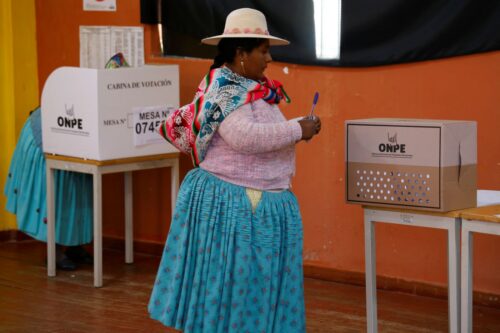
The 2021 Elections Law mandates strict guidelines for handling ballots and recording the results on tally sheets. Each sheet corresponds to a specific polling station (mesa receptora de votos, or MRV) and serves as the primary source of data for the digital repository, which is used to calculate the final results. In the 2025 elections, registered voters were assigned to a specific MRV, each serving on average approximately 350 voters. Nationally, there were 19,167 MRVs.19 Every MRV contained three ballot boxes — one for presidential, congressional, and municipal ballots, respectively — and on average received just over 200 voters on election day.20 Each MRV was staffed by a polling board (junta receptora de votos, or JRV), made up of five individuals appointed by the three major parties and the CNE.
Upon arrival at the MRV, each voter underwent biometric verification using a system managed by the Smartmatic corporation. If fingerprints or facial recognition failed, the JRV members would attempt verification by inputting the voter’s national identification card number in the system. If this second search still yielded no results, an error was logged in the biometric system, and the official located the voter manually in the printed voter log. Once identified manually, the voter’s fingerprints would be scanned into the system and they were permitted to cast their ballot.
At the end of the day, the JRVs assigned to each table counted the votes in the presence of observers. The JRVs recorded each MRV’s results by manually completing three tally sheets, one for each of the three ballot boxes. These tally sheets were then entered into the TREP system, where they were first scanned and then converted to data reports by OCR technology. After each JRV reviewed and manually corrected errors in the data reports, the final data was transmitted to the CNE’s central data repository.
The 2021 Elections Law contains few provisions regarding the management of electronic data. Although an expanded framework addressing electronic data was approved in August as part of the terms of reference for awarding the TREP contract,21 the rules establishing the specific overall electoral procedures — known as Agreement 73-2025 — were not approved by the CNE until November 29, just one day before the elections.22
Agreement 73-2025 established detailed procedures for the creation of electronic data by the JRV, electronic security measures, data transmission, and other rules governing data management. It also set contingency transmission procedures, under which tally sheet images not transmitted on election day would be sent to the CNE’s central repository of data.
Agreement 73-2025 also established specific guidelines for setting up and testing biometric identification equipment and the TREP system before the elections. It set fail-safes to protect the integrity of the data on tally sheets, including rules on the certification of JRV signatures, the calculation of the total number of votes recorded on the tally sheets, protocols for scanning tally sheets for OCR transcription, and procedures allowing each JRV to manually correct data produced by the OCR.
In Article 8, Agreement 73-2025 mandated that the TREP system automatically compare the number of votes recorded on each tally sheet with the number of voters recorded in the biometric identification system. It specified that tally sheets reflecting different voter totals than those registered in the biometric records would still be included in the TREP results announced on election night. The agreement’s text notes that LIBRE Councilor Ochoa disagreed with these provisions, and public statements indicate that his main objection was the inclusion of results from tally sheets that did not match the biometric data in the TREP results.23
It is often emphasized that TREP results are preliminary and that the final outcome must be determined by the official vote count. However, it is important to note that the data transmitted through the TREP system to the CNE’s data repository is the same data used in the final count.
To ensure the accuracy of the data underlying the final count, Articles 19 and 20 of Agreement 73-2025 state that all TREP data must undergo visual verification, a process in which teams of CNE workers compare each tally sheet image with its corresponding OCR-generated report. If discrepancies are detected, the rules require that the data be sent for automated review. Should the automated process fail to resolve the discrepancy, the CNE must then approve any necessary manual corrections to the data through a unanimous vote.
The three leading contenders for the presidency were LIBRE candidate Moncada, a former finance (2022–2024) and defense minister (2024–2025) in the Castro administration; Liberal Party candidate Nasralla, who served as the country’s vice president (2022–2024) for the first half of Castro’s term before resigning and joining the opposition; and Asfura, a former mayor of Tegucigalpa (2014–2022) who ran for the National Party.
The organization of the elections was hampered by multiple delays caused by internal disagreements within the CNE and TJE. Deliberations surrounding the TREP system’s design and the awarding of its operational contract, for instance, paralyzed the CNE for nearly a month. In June, Councilors López and Hall approved the TREP design by majority vote, while Councilor Ochoa opposed it, arguing that allowing manual corrections at the CNE processing center to tally sheet data generated by OCR scans could open the door to manipulation of the results.24 Throughout July, Councilor Ochoa subsequently failed to attend meetings where the CNE would finalize the terms of reference for the TREP bidding process, which was expected to allow for the contested manual correction procedure.25
The councilors eventually reached a unanimous agreement for a modified TREP design and terms of reference on August 4, several days past the July 29 deadline to award the contract.26 Under the revised design, any data reports generated by the OCR system that were inconsistent with the tally sheet’s image would still be published, but excluded from the preliminary count.27 The agreement also stated that the day after the election, 100 percent of the OCR-generated data reports would begin the process of undergoing human, visual verification. When discrepancies between the tally sheet images and the OCR data were identified, correction of the tally sheet data had to be approved unanimously by the CNE councilors. These rules were formally implemented with the issuance of Agreement 73-2025 on November 29.
The CNE unanimously awarded the TREP contract to Grupo ASD, a Colombian firm, on August 29.28 On November 9, a simulation of the TREP system was conducted. Councilor Ochoa said there were serious deficiencies in the system during the test, noting that only 35.7 percent of tally sheets were transmitted and that significant connectivity issues had occurred.29 He asserted that these issues persisted in subsequent simulations closer to election day.30 In response to these alleged failures, LIBRE candidate Moncada announced that LIBRE would not recognize the TREP’s preliminary results and would instead wait until all ballot review processes had produced a final count.31
The tender for the contract to provide satellite Internet connectivity to voting centers in remote areas was also delayed. Councilor López accused Councilor Ochoa of pressuring her to award the contract to the firm Smartmatic,32 while Ochoa countered that the other councilors sought to award the contract to front companies that he claimed had participated in electoral fraud in 2017.33 The contract was ultimately awarded unanimously to a consortium made up of Reytel and Ufinet34 after Smartmatic withdrew its bid.35 Smartmatic had already been awarded the contract to manage the biometric voter identification system.36
Additional delays compounded these disruptions, pushing back other critical milestones in the electoral timeline. For example, the contract for the transportation of electoral materials was originally scheduled to be awarded on October 15. However, earlier setbacks, the CNE’s outstanding debt to the companies that handled transportation for the primary elections,37 and the withdrawal of bidders due to the compressed timeline 38ultimately delayed the award until November 16.39
The preelectoral period was also rife with controversy. In late October, the country’s attorney general launched an investigation into alleged audio recordings40 of Councilor López conspiring to commit fraud and interfere with the elections.41 The opposition claimed42 the recordings were AI-generated and accused the attorney general, and LIBRE more broadly, of engaging in judicial persecution.43 Another controversy concerned an indictment against two opposition-affiliated TJE magistrates that prompted an impeachment process. They were charged with abuse of authority for issuing a ruling without convening the third magistrate, who is affiliated with LIBRE.44
Analysts, politicians, watchdog groups, and CNE President45 Hall also criticized46 the Honduran military’s conduct before the vote, particularly after the head of the armed forces — who was perceived to be aligned with LIBRE — requested that the CNE provide the military with tally sheets on election day to perform an independent count.47 The CNE argued that this exceeded the military’s electoral mandate as defined by the constitution.48 The request was never approved, and the military neither received nor conducted any independent tally of the vote.
In addition, the elections were held during a partial state of emergency, raising concerns from human rights groups that this would impact the vote’s integrity.49 The government maintained that the state of emergency was limited to specific regions plagued by security issues and that it did not impact citizens’ political rights.
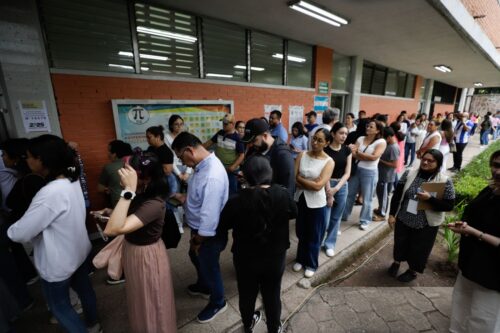
Throughout election day, CEPR was present at four voting centers in Tegucigalpa. The mission freely observed key parts of the voting process, including the CNE’s election day opening ceremony, the opening of voting centers, the use of biometric devices, the casting of ballots, the closing of polling stations, and the filling out of tally sheets by poll workers. CEPR noted high levels of voter participation and long lines at voting centers.
CEPR observed no irregularities except for partial failures of the biometric devices used to verify voters’ identities. When such failures occurred, poll workers checked voter identities manually. In one instance, a biometric device proved inoperable, so voters assigned to that table shared the biometric device assigned to a neighboring table, a procedure established in the electoral rules. CEPR took note of media50 reports of voter intimidation in areas with gang presence.51
Hours before the election day opening ceremony, López, the National Party councilor at the CNE, announced she would not attend because she had received information that violent LIBRE-aligned groups planned to intimidate her at the venue where the event would take place.52 CEPR’s team in Honduras was at the site from early in the morning and did not see the violent groups López referred to in her social media post; everything remained calm throughout the opening event.
US Representative Salazar tweeted in Spanish on election day that Honduras “either advances with freedom, democracy, and growth, or it retreats with Rixi Moncada toward communism, economic collapse, and the same darkness that devastated Venezuela and Cuba.”53 Although she was not in the country, she was nevertheless accredited as an electoral observer, making her statement a potential violation of Honduran electoral law, specifically Article 19 of the CNE’s Regulation on Electoral Observation for the 2025 General Election.54
Due to concerns raised by several stakeholders about the TREP, the CEPR mission issued a public statement at 2:30 p.m. warning that practical issues with the system could prevent the preliminary results from being fully representative of the final outcome.55 The statement also urged all actors to wait for the CNE’s certification of the official results.
Although the preliminary results were scheduled to be announced jointly by all three CNE councilors at 9 p.m., the announcement was delayed until around 11 p.m. With just over 30 percent of the tally sheets processed, the results were too limited and too close to indicate an irreversible trend in favor of one candidate. At that point, Asfura held 40.62 percent, Nasralla 38.72 percent, and Moncada 19.6 percent.56 Before the CNE’s announcement, however, CEPR observed coverage of unauthorized exit polls on election night by Honduran media outlets.
The month following election day was marked by uncertainty and a growing crisis of confidence in the integrity of the results, which the CNE had until December 30 to certify. In the weeks following the election, the CNE’s results dashboard went down several times, and the central repository of electoral data was repeatedly left without updates, sometimes for days at a time. In some instances, transmission equipment went offline, the most notable example being votes cast in the United States, which were initially not transmitted. Moreover, CEPR observed tally sheets with inconsistencies, including a very large number of discrepancies between the scanned images of the tally sheets and the results reported by the OCR-generated data reports, as well as inflated vote totals compared with the number of voters assigned to an MRV. These issues were also acknowledged by the CNE and were widely reported in Honduran and international media.
CNE President Hall blamed these issues on technical problems with the TREP system,57 along with an unauthorized pause in the system by the contracted TREP operator, Grupo ASD, for maintenance.58 Councilor Ochoa cited deliberate sabotage and fraud, problems with the data management system created by Grupo ASD, and a decision by the other CNE councilors on the eve of the elections to scrap the requirement to cross-reference the total number of voters reported on tally sheets with the number recorded in the biometric system.59 Observers at CESPAD, for their part, stated that technical deficiencies and other last-minute changes by the CNE contributed to system problems, particularly the removal of certain verification checks for tally sheets.60
The LIBRE and Liberal party presidential candidates both alleged electoral fraud and challenged the legitimacy of the CNE’s official results, which ultimately indicated that they had lost.
Moncada, President Castro, and other LIBRE leaders alleged that the vote had been fraudulent and called for the annulment of the election, citing the repeated outages of the TREP system, the large number of inconsistent tally sheets, problems with the biometric verification system, and US interference.61 The nine-member permanent committee of Congress — which manages administrative tasks while the body is out of session and was controlled by LIBRE and its allies — also stated that an “electoral coup” was underway and that it would not validate the results.62 LIBRE’s CNE councilor, Marlon Ochoa, contended that over 17,000 tally sheets63 contained inconsistencies and called for a full recount. 64 Of these, Ochoa and the Castro government alleged that 14,000 tally sheets contained mismatches between the number of voters recorded on the sheets and by the biometric registration systems,65 representing a difference of 982,142 votes.66
Members of the LIBRE Party told the CEPR mission that their accusations of fraud were informed by the party’s experience in the 2017 elections. At the time, the OAS called for a repeat vote, citing a lack of “democratic quality and guarantees” due to irregularities and deficiencies in the process, including “deliberate human intrusions in the computer system.”67 Members of LIBRE said Councilor Ochoa’s calls for recounts were part of an effort to prevent a questionable outcome. They added that his absences during votes on certain electoral procedures before and after the elections — including during the July standoff over the TREP contract — were a legitimate use of the electoral rules to achieve guarantees against fraud, given the unanimity requirement for certain votes at the CNE.
Liberal Party candidate Nasralla similarly alleged that there was “monumental fraud” and called for a review of all tally sheets.68 He claimed that every tally sheet contained inconsistencies and that the data transmitted by the TREP did not match the tally sheets collected by his party.69 Like LIBRE, Nasralla also referenced the alleged fraud that had occurred in 2017.70
LIBRE Party Councilor Ochoa71 and Nasralla both called for a vote-by-vote recount as the only way to ensure the election’s credibility,72 a request the National Party’s vice presidential candidate also appeared to be open to supporting.73 Nevertheless, the CNE ultimately approved a review of only 2,792 tally sheets, a process that was not completed in its entirety.
On December 4, LIBRE supporters and activists protested in front of the US embassy against Washington’s interference in the elections and the release of former President Juan Orlando Hernández.74 Demonstrations over fraud allegations followed: On December 9, LIBRE supporters gathered near the National Institute for Vocational Training (Instituto Nacional de Formación Profesional, or INFOP),75 the CNE’s logistical center where electoral materials were stored, and on December 15, supporters of the LIBRE and Liberal parties protested at INFOP at different times.76
As required by Agreement 73-2025, the visual verification process began the day after the elections, on December 1. Two days later, however, visual verification was halted when the data management system went offline. Election workers reported that the results of the incomplete verification were not to be used until the full process was completed. By mid-December, CEPR could not confirm whether the mandated visual verification of all tally sheet data reports had taken place, although the European Union Electoral Observation Mission report77 states it was concluded on December 13.78
On December 21, the CNE held an impromptu special session in which Councilors Hall and López voted to amend Agreement 73-2025, allowing a simple majority of councilors — rather than the previous requirement of unanimous approval — to authorize corrections to electoral data identified during visual verification.79 Councilor López cited what she called unjustified delays in approving corrections by CNE personnel affiliated with LIBRE. Councilor Ochoa explained that his team could not approve any modifications unless the memo requesting the change included the following specific documentation: an image of the tally sheet, a clear identification of the error, and the proposed correction.
On December 11, the CNE unanimously voted that 2,792 tally sheets containing inconsistencies,80 including legibility issues,81 errors in vote totals, mismatches between the number of voters and those registered, and other irregularities, would be reviewed in a special scrutiny recount process.82 The review did not begin until December 1983 due to disagreements between the National and Liberal parties, reportedly regarding how many tally sheets should be reviewed.84 To resolve the impasse, the National and Liberal parties reportedly reached an agreement under which they would also support the review of an additional 7,795 tally sheets.85 During this time, CNE Councilors Hall and López also issued86 a memo rejecting LIBRE’s request for a vote-by-vote recount on legal grounds.87
Once underway, the special scrutiny recount faced further delays,88 as all three major parties disagreed on how to register irregular tally sheet data transmissions.89 Councilor Ochoa90 and Liberal Party candidate Nasralla also rejected a December 21 decision by CNE Councilors Hall and López to approve changes to the visual verification rules for 691 tally sheet data reports from ballot boxes pending review.91 This reduced the number of ballot boxes subject to the special scrutiny recount to 2,101. Hall said the decision followed the recommendations of an external audit, which concluded that the inconsistencies in that batch could be corrected through the ordinary visual verification rules, and did not require a full special scrutiny review.92
On the night of December 23, Councilors Hall and López, along with Alternate Councilor Carlos Enrique Cardona, serving in place of Ochoa, voted for the CNE to issue an official declaration of a winner “with the data available at this time,”93 even though around 395 tally sheets94 and several legal challenges remained pending review.95 The declaration was issued the following day, naming Asfura the winner with 40.27 percent of the vote, a margin of just over 27,000 votes ahead of Nasralla. Cardona represents the Honduras Savior Party, founded by Nasralla in 2020.96 Like all alternates at the CNE, he was appointed by the Honduran Congress for a five-year term. Hall and López summoned him to attend the meeting, as he had previously served in Ochoa’s place.
In response, Nasralla called for a vote-by-vote recount, requested the CNE extend the declaration deadline to January 10, and said the council’s decision may have been illegal.97 Councilor Ochoa argued that the decision was invalid, as he had left the plenary meeting before the vote, meaning the body lacked the necessary three-member quorum to hold the vote.98 Ochoa also said he would file a complaint with the attorney general since the special scrutiny review needed to be completed before the results could be announced.99 On this point, the CNE’s December 24 declaration stated that while the special scrutiny review process is “recognized as a mechanism of review and control,” it should not “paralyze the expression of the sovereign will of the electorate.”100
Following the declaration of the presidential election results, the CNE announced the start of a special scrutiny recount for the municipal and legislative elections. Councilors Hall and López — again joined by Alternate Councilor Cardona in place of Ochoa — declared the results for these elections on December 30, despite the fact that the CNE hadn’t finished examining all of the tally sheets flagged for review for this second special scrutiny.101 In its declaration, the CNE claimed that the special scrutiny recount had not been fully completed due to what it described as “force majeure” obstacles, acts of sabotage, and threats from political parties and political sectors. The CNE recognized that only 86.59 percent of legislative-level tally sheets and 90.35 percent of municipal-level tally sheets had been processed and that 430 tally sheets and 66 legal challenges at the municipal level would have to be reviewed by the TJE.102 Hours before the declaration was issued, Councilor Ochoa requested that the other two councilors approve an extension of the December 30 declaration deadline in order to review all outstanding inconsistencies.103
The declaration formally certified the results of several local elections where the outcomes fell within a narrow margin of error. In Tegucigalpa, National Party candidate Juan Diego Zelaya was declared the winner of the mayoral election by fewer than 900 votes over LIBRE candidate Jorge Aldana.104 Aldana challenged the outcome before the TJE, alleging that the special scrutiny recount was finalized while at least 435 tally sheets — representing approximately 100,000 votes — were still awaiting review.105 The TJE rejected his appeal.106
Neither the presidential election declaration nor the municipal and legislative declarations were sent by the CNE to La Gaceta, the official government newspaper, for publication, as required by law. Instead, they were released only on the CNE’s website. CNE President Hall said the results were not published in La Gaceta “due to the continued refusal of the corresponding state agencies” but argued that the announcement was nonetheless properly made public through the CNE’s site and media coverage.107 Reporting indicates that the CNE attempted to submit the declaration for publication twice — on December 24 and 31 — but no staff were present at La Gaceta’s offices to receive it because of the holidays.108
The electoral authorities’ failure to complete a full recount, along with allegations of fraud and US interference, prompted the Honduran Congress’s permanent committee to convene a special plenary session on January 9. During that session, LIBRE legislators, including alternates, together with three lawmakers from other parties, passed a decree ordering the CNE to conduct a complete recount of the November 30 election tally sheets.109 The decree also instructed the attorney general’s office to determine whether CNE councilors could be held criminally liable for failing to count all votes and for other issues in the elections. It cited Article 205 of the Honduran Constitution, which authorizes Congress to carry out recounts when electoral authorities are unable to officially declare an election, arguing that the CNE’s declaration was not legally valid. President Castro approved the decree, and it was published in La Gaceta, making it law.110
The Honduran opposition boycotted the decree vote111 and condemned the move, calling it a threat to democracy and an attempt to overturn the electoral results.112 Rather than participating in the vote, opposition lawmakers convened a parallel session of Congress and passed a motion calling on the armed forces to detain Luis Redondo, the president of Congress.113 They argued that the decree was invalid because they did not recognize the permanent committee’s authority and because it was adopted without a proper quorum, as LIBRE alternates had voted in place of absent opposition legislators, which is illegal under Article 60 of the Organic Law of the Legislative Branch.
CNE President Hall defended the council’s declaration, stating that the CNE is the only body legally authorized to certify electoral results and that it was unable to complete a full vote count due to staffing issues, threats, and intimidation.114
Congress’s decree was challenged before the Constitutional Chamber of the Supreme Court of Justice. Nevertheless, legislators, mayors, and President Asfura were issued their credentials and sworn in on January 27 before the court had ruled and without the contentious recount ordered by the Congress’s permanent committee having taken place.115
Throughout the vote count and certification process, the OAS Electoral Observation Mission (EOM) urged a rapid certification of the results. On December 6, the mission called on the CNE “to expedite tallying and await completion of the vote count,” adding that “the OAS/EOM considers it imperative that the electoral authorities fully guarantee that the subsequent stages of the process — including the high volume of tally sheets not yet counted, the special scrutiny, and the challenge phase — are carried out with total clarity, maximum efficiency, and without any type of delay.”116 After the special scrutiny process was made official, the OAS “made an urgent call” on December 15 for the CNE “to immediately begin the special scrutiny (escrutinio especial) and adopt expeditious decisions to obtain official results in the shortest time possible.”117 On December 22, it further urged in a social media post in Spanish that the process conclude “as soon as possible, in strict accordance with the law and with full guarantees for all political and social actors.”118 Once the CNE issued its official declaration on December 24, the OAS said it “took note” of the results and stated “that the certified results reflect the will expressed by citizens at the ballot boxes that were counted,” while also calling “for the remaining procedures still underway to be concluded.”119
Political actors in the US repeatedly interfered in Honduras’s 2025 election, in a clear effort to undermine one presidential candidate and promote another.
For weeks before election day, several US Republican lawmakers, including120 Florida Representatives Salazar121 and Gimenez,122 and the US House Committee on Foreign Affairs Republican majority’s Twitter account warned that LIBRE might commit election fraud and suggested that both the Castro government and Moncada were seeking to take Honduras down an undemocratic path.123 No evidence was presented to support these allegations.
On November 20 — 10 days before Election Day — the House Foreign Affairs Committee held a hearing titled “Democracy in Peril: the Fight for Free Elections in Honduras,” in which Representative Salazar praised the 2009 coup that ousted President Castro’s husband, former President Manuel Zelaya.124 She also referred to Moncada as a “communist” and stated, “I am not telling you who to vote for.125 All I am saying is do not elect a communist.” At the hearing, Rep. Joaquin Castro of Texas highlighted the conflicts of interest involving one of the witnesses, Carlos Trujillo — President Trump’s former ambassador to the OAS and a lobbyist whose firm previously represented several Honduran companies, including Próspera, which is currently suing the Honduran government.126 In his testimony, Trujillo stated unequivocally, albeit without evidence, that LIBRE was attempting to rig the elections.
Liberal Party candidate Nasralla was present at the hearing. Although Honduran media reported that he would testify, he ultimately did not.127 In the months leading up to the election, Nasralla traveled128 to Washington several times to meet with US members of Congress,129 as did National Party candidate Asfura.130 Representative Salazar expressed her support for Nasralla repeatedly following the announcement of his candidacy in 2024.131 In October of 2024, she and Representative Gimenez held a press conference with Nasralla in which both legislators accused the LIBRE administration of attacking democracy.132
On November 22, repeating the opposition’s claim that LIBRE lawmakers in Congress would try to choose the next president, US Deputy Secretary of State Christopher Landau expressed concern about the elections after speaking with unidentified members of the Honduran business community.133
On November 26, President Trump endorsed National Party candidate Asfura in a social media post portraying LIBRE candidate Moncada as a communist and labeling Liberal Party candidate Nasralla as a “borderline communist” in disguise.134
On November 28, Trump again expressed support for Asfura and warned that he would cut US funding to Honduras if voters elected a different candidate.135 He also announced a pardon for former National Party President Hernández, who was serving a 45-year prison sentence in the US on drug-trafficking charges. Hernández was released from prison on December 1. Trump’s endorsements were issued during Honduras’s “electoral silence” period, which, under Honduran law, prohibits electoral propaganda and campaign activities in the five days before an election. Nevertheless, Asfura,136 the National Party,137 and some of its members amplified the endorsement,138 potentially in violation of the law.139
Representative Salazar tweeted in Spanish on election day that Honduras “either advances with freedom, democracy, and growth, or it retreats with Rixi Moncada toward communism, economic collapse, and the same darkness that devastated Venezuela and Cuba.”140 Although she was not in the country, she was nevertheless accredited as an electoral observer, making her statement a potential violation of Honduran electoral law, specifically Article 19 of the CNE’s Regulation on Electoral Observation for the 2025 General Election.141
Days after the election, with the final results still unclear, Trump took to social media to baselessly accuse Honduran electoral authorities of attempting to “change the outcome,” warning that there would be “hell to pay” if that were the case.142 As vote counting continued on December 8 and 9, Representative Salazar also publicly dismissed the LIBRE Party’s concerns regarding the electoral process and US interference,143 and claimed it was trying to steal the elections.144
Additionally, on December 19, the US imposed visa restrictions on CNE Councilor Ochoa and TJE Magistrate Mario Morazán, who are affiliated with LIBRE, citing their alleged efforts to impede the vote count.145 This action appeared designed to coerce Ochoa and Morazán into ending their opposition to, and public criticism of, decisions made by electoral authorities from the other parties and to cast further negative light on the LIBRE Party, despite the fact that the primary obstacles to launching a special scrutiny recount at the time were disagreements between the National and Liberal parties.146
Despite recurring system outages, a reported data security breach, and the hurdles in the organization of the special scrutiny recount described above, the Trump administration used public statements to push the CNE for a swift declaration of a winner.147 The State Department initially urged “continued patience while waiting for the CNE’s official results” on December 1,148 but on December 17 it said the CNE “needs to begin immediately the special scrutiny process to finalize official results.”149
The electoral observation mission primarily monitored public and private news outlets with a digital presence. CEPR’s team found that state outlets such as Televisión Nacional de Honduras (TNH) provided disproportionate and primarily positive coverage of LIBRE candidate Moncada and the actions of the party’s electoral authorities. Furthermore, TNH amplified the content of the party’s platform, criticisms of the Liberal and National parties,150 and LIBRE’s concerns regarding the election,151 while omitting the concerns of the opposition or criticisms of Moncada’s campaign.152 At times, TNH’s reporting153 directly mirrored the candidate’s statements.154 This pattern was largely repeated by the outlet UNE TV.
However, polls conducted by the organization Equipo de Reflexión, Investigación y Comunicación (ERIC), affiliated with the Catholic Church’s Jesuit order, show that private media outlets dominate the airwaves and remain the most widely followed in the country. In ERIC’s latest poll from 2025, private outlets such as La Prensa, El Heraldo, La Tribuna, HCH, and Canal 5 are far more popular than state-run outlets.155
While private media outlets offered broader coverage of the three major candidates, they generally maintained a negative tone with regard to the LIBRE campaign while providing neutral or positive coverage of the opposition candidates. Notably, they often characterized the actions of LIBRE electoral officials, such as Councilor Ochoa, as a risk to the electoral process. El Heraldo, for example, often included critical commentary and opinions from opposition figures about the LIBRE campaign, government officials, and Ochoa — either embedded within news stories or published as standalone pieces — while rarely applying the same approach to the other parites.156 Proceso Digital similarly ran disproportionate, critical, and negative commentary about the ruling party. Independent outlets, such as Criterio, gave more balanced coverage than the traditional outlets.
CEPR’s mission in Honduras identified several concerning incidents of political violence during and after the campaign. Here, we present descriptions of a few of those attacks.
Gunmen killed a five-year-old boy and injured a 14-year-old girl when they opened fire on a caravan of LIBRE activists leaving a campaign rally on November 17.157 On November 24, the offices of the Council of Popular and Indigenous Organizations of Honduras (Consejo Cívico de Organizaciones Populares e Indígenas de Honduras, or COPINH), a human, Indigenous, and environmental rights organization, came under armed attack.158 The attack took place in Intibucá, while members of the organization were present and at work. Another incident occurred on January 22 in Choluteca, when Reina Margarita Carrasco, a human rights defender and legislative candidate in the 2022 elections, was murdered shortly after protesting in Tegucigalpa in favor of a full vote count.159
In addition, Cristosal, a human rights organization, issued a report documenting political violence between September 2024 and a few days before the election.160 The group identified 67 “representative” cases of political violence, selected for their “relevance, social impact, and geographic location.” These incidents included murders, physical harm, gender-based violence, threats, and other forms of violence. The victims were primarily candidates, government officials, and party activists from the three main political parties. The report states that seven murders occurred in total, six of which targeted candidates or elected officials, while one victim was a five-year-old child (mentioned above).
Furthermore, the US outlet The Intercept161 and Miroslava Cerpas,162 the head of Honduras’s 911 emergency system, reported that gangs and organized criminal groups intimidated citizens into voting for certain candidates.
Honduran human rights organizations that CEPR spoke to expressed concern about the potential consequences of Asfura’s election for human rights in Honduras. Central to these concerns is the risk of increased violence against human rights defenders, Indigenous peoples, and community activists. They fear that the new administration will weaken human rights institutions and that — as was the case with prior National Party governments — its security policies may allow gangs, organized criminal groups, and paramilitary groups to operate more freely in an environment of increased corruption. They also warn that, despite the human rights concerns associated with the Castro government’s protracted state of emergency in parts of the country, the armed forces and police may face even fewer constraints, further fueling abuses. These dynamics could exacerbate Honduras’s already dire human rights situation.
Human rights organizations further fear an increase in both violent and illegal displacement of small farming communities, as well as displacement carried out under a quasi-legal veil through the abusive use of preventive evictions. Preventive evictions, as they are currently implemented, allow influential agribusinesses — often holding land titles challenged as fraudulent — to carry out removals without due process, leaving competing land rights claimants unable to defend their claims in court. These concerns are especially acute in land conflicts involving Indigenous communities, small farmers, and agrarian reform cooperatives, as well as in the related violence targeting land rights defenders.
In addition, several of the groups CEPR met with cautioned that a shrinking of civic space may accompany this intensification of human rights issues. They noted that this could take the form of new registration requirements, increased audits, and legal persecution, which they believe would be used to suppress resistance to government policies and demands for justice and accountability.
Civil society organizations also fear the administration’s potential undoing of the Castro government’s efforts to roll back Economic Development and Employment Zones (zonas de empleo y desarrollo económico, or ZEDEs). ZEDEs are controversial semiautonomous economic free zones where private corporations operate with virtually no oversight, establishing their own courts, laws, tax systems, and private police forces. In 2021, the United Nations expressed strong concern over Honduran ZEDEs, stating that they posed a potential threat to human rights in Honduras.163 Organizations that CEPR spoke to worry that, in an effort to align more closely with the Trump administration — whose orbit includes figures such as Peter Thiel who have invested in the Próspera ZEDE — the Asfura administration may seek to promote or expand these zones.
Since assuming office, Asfura’s National Party and its allies in Congress have purged officials linked to or aligned with LIBRE. In a process that lasted just three days, the National and Liberal Party impeached Attorney General Johel Zelaya on March 25.164 That same day, Supreme Court of Justice President Rebeca Ráquel Obando resigned amid reports of her own imminent impeachment.165 Local and international human rights organizations — including the Center for Justice and International Law, the Washington Office on Latin America, the Due Process of Law Foundation, COPINH, and others — responded with concern in a joint statement, warning that the impeachments were being “carried out in a manner inconsistent with international human rights standards and in a context of high institutional polarization.”166
Less than a month later, on April 16, the National and Liberal parties impeached four electoral authorities in a single day: LIBRE CNE Councilor Ochoa, LIBRE TJE Magistrate Morazán, and TJE Alternate Magistrates Lourdes Mejia and Gabriel Gutierrez.167 CNE Alternate Councilor Karen Rodríguez had also resigned on April 9, when her name was raised in connection with a possible impeachment.168 All these officials, along with Zelaya, were removed from their posts on the grounds that they had allegedly interfered with or obstructed the general elections. The targeted individuals and LIBRE, however, contend that they are being subjected to political retaliation and persecution.
1. The Honduran Congress should consider amending the 2021 Elections Law:
(a) to establish clear and detailed provisions for managing digital voting data during the final count in order to prevent disputes such as those observed in these elections;
(b) to define specific requirements for the awarding and operation of the TREP system, including minimum performance standards (such as optical character recognition accuracy), to reduce the risk of institutional gridlock and improve the reliability of preliminary results;
(c) to require a longer timeline for awarding elections-related contracts, including initiating the TREP contract award process earlier than in previous election cycles, and to conduct more frequent preelection audits to ensure the system is functioning properly;
(d) to prohibit last-minute changes to electoral rules and procedures, except under narrowly defined emergency circumstances, and to require that any such changes be unanimously approved and publicly justified;
(e) to encourage electoral authorities, particularly the CNE, to adopt a coherent, unified, and timely communication strategy, bolstering transparency by providing clear explanations of procedures and decisions, and ensuring consistent public messaging;
(f) to require the CNE to fully complete any special scrutiny or recount process it undertakes, including allowing reasonable delays to the certification process when necessary; and
(g) to state that the will of the electorate is unknown until a full and reliable vote count is carried out.
2. Honduran electoral authorities should impose effective sanctions on Honduran political actors who, during the electoral silence period, publicize endorsements or statements of foreign officials that favor or oppose particular candidates.
3. The United States Congress should investigate improper interference by US authorities in the Honduran elections:
(a) to determine whether statements made by the President of the United States in relation to Honduras’s election violate the Charter of the OAS, which expressly prohibits external interference in another state’s political affairs; and
(b) to determine the impact and propriety of US sanctions, such as visa revocations, imposed on electoral officials during any stage of the electoral process.
Agencia EFE. 2025a. “CNE reconoce fallas técnicas, pero garantiza integridad de resultados.” La Prensa, December 9. https://www.laprensa.hn/elecciones-honduras-2025/cne-reconoce-fallas-tecnicas-garantiza-integridad-resultados-IK28554963
———. 2025b. “Escrutinio especial de elecciones está paralizado por nuevos incidentes.” La Prensa, December 21. https://www.laprensa.hn/honduras/escrutinio-especial-de-elecciones-esta-paralizado-por-nuevos-por-incidentes-GF28691315
———. 2025c. “Organismo regional advierte riesgo por estado de excepción.” El Heraldo, November 15. https://www.elheraldo.hn/honduras/organismo-regional-advierte-riesgo-estado-excepcin-elecciones-honduras-2025-HJ28211987
———. 2025d. “Xiomara Castro advierte que denunciará las elecciones generales ante organismos internacionales.” El Heraldo, December 9. https://www.elheraldo.hn/honduras/xiomara-castro-advierte-denunciara-elecciones-generales-ante-organismos-internacionales-elecciones-honduras-2025-NK28557857
———. 2026a. “Exconsejero electoral de Honduras denuncia «venganza» tras destitución en juicio político.” SWI swissinfo, April 17. https://www.swissinfo.ch/spa/exconsejero-electoral-de-honduras-denuncia-%22venganza%22-tras-destituci%C3%B3n-en-juicio-pol%C3%ADtico/91275536
———. 2026b. “Presidenta del Supremo de Honduras renuncia para evitar un juicio político del Parlamento.” March 26. https://efe.com/mundo/2026-03-26/supremo-honduras-renuncia/
Agence France-Presse (AFP). 2026. “Congreso de Honduras destituye a fiscal general y renuncia presidenta de la Corte Suprema.” Yahoo, March 26. https://es-us.noticias.yahoo.com/congreso-honduras-destituye-fiscal-general-041512819.html
Asfura, Nasry (@titoasfura). 2025. “Muchas gracias por el apoyo Presidente @realdonaldtrump.” X, November 26. https://x.com/titoasfura/status/1993833898195759164
Canal 11 Honduras. 2025. “Sesión de Pleno del Consejo Nacional Electoral – 21 de diciembre de 2025.” YouTube, December 21. https://www.youtube.com/watch?v=3zaBxS6A9Cg
Castro de Zelaya, Xiomara (@XiomaraCastroZ). 2026. “Sr. Presidente de los Estados Unidos de América, Donald J. Trump.” X, January 10. https://x.com/XiomaraCastroZ/status/2010119711946870875
Center for Economic and Policy Research (CEPR). 2026. “US Escalation in the Caribbean and Latin America – Live Updates.” CEPR, April 3. https://cepr.net/publications/americas-live-updates/
Centro de Estudio para la Democracia (CESPAD). 2025. “Comunicado: Sobre la interrupción del trep y las implicaciones para la transparencia electoral.” Facebook, December 2. https://www.facebook.com/photo/?fbid=1165516782320197&set=pcb.1165516848986857
Chambasis, Lesly. 2025a. “CNE cierra licitación de conectividad satelital con adjudicación a Reytel y Ufinet.” El Heraldo, October 27. https://www.elheraldo.hn/honduras/cne-cierra-licitacion-conectividad-satelital-adjudicacin-reytel-ufinet-elecciones-honduras-2025-GP27935726
———. 2025b. “CNE descarta recuento voto por voto solicitado por Libre y explica límites para revisión de actas.” El Heraldo, December 16. https://www.elheraldo.hn/honduras/elecciones-honduras-2025-cne-descarta-recuento-vto-por-voto-solicitado-partido-libre-revision-actas-GI28645175
———. 2025c. “Smartmatic se retira del proceso de licitación de conectividad satelital.” La Prensa, October 24. https://www.laprensa.hn/elecciones-honduras-2025/smartmatic-retira-proceso-licitacionconectividad-satelital-PE27894586
ConfidencialHN. 2025. “CNE oficializa padrón con 6.5 millones de votantes y habilita el sufragio para casi 400 mil hondureños en EE.UU.” ConfidencialHN, October 2. https://confidencialhn.com/cne-oficializa-padron-con-6-5-millones-de-votantes-y-habilita-el-sufragio-para-casi-400-mil-hondurenos-en-ee-uu/
Congreso Nacional de Honduras. 2021. Decreto No. 35-2021: Ley Electoral de Honduras. May 26. https://www.tsc.gob.hn/web/leyes/Decreto-35-2021.pdf
——— (@Congreso_HND). 2025. “La Comisión Permanente del Congreso Nacional de la República de Honduras.” X, December 10. https://x.com/Congreso_HND/status/1998978713765965944
Consejo Nacional Anticorrupción (CNA). 2025. “¿Qué dice la ley electoral sobre el escrutinio especial?” Facebook, December 5. https://www.facebook.com/photo/?fbid=1264841482346970&set=pcb.1264841619013623
Consejo Nacional Eléctoral (CNE). 2025a. Acuerdo No. 46-2025. Tegucigalpa, Honduras. September 19. https://www.tsc.gob.hn/web/leyes/Acuerdo-46-2025.pdf
———. 2025b. Certificación No. 3055-2025: Declaratoria a nivel de diputados y corporaciones municipales elecciones generales 2025. https://cne.hn/documentos/Cert-2025/Certificacion-3055-2025-Declaratoria-Nivel-Diputdos-y-Corporaciones-Elecciones-Generales-2025.pdf
———. 2025c. Enmientda No. 5, Procedimiento Especial No. CNE-PEG-UCCE-001-2025. August 4. http://h1.honducompras.gob.hn/Docs/Lic1173CNE-PEG-UCCE-001-20254E5-EnmiendaoAdendum.pdf
———. 2025d. Memorando CNE-P2022-2025. December 16. https://www.elheraldo.hn/binrepository/memorando-cne-p2022-2025-memorandum-cneV-1_12959257_20251216234948.pdf
Cristosal. 2025. “Democracia bajo amenaza: violencia política en el proceso electoral de Honduras.” December. https://cristosal.org/ES/wp-content/uploads/2025/11/Democracia-bajo-amenaza-Violenca-politica-en-el-proceso-electoral-de-Honduras.pdf
Criterio.hn (@criteriohn). 2025. “#LOÚLTIMO ~ El escrutinio especial se ha paralizado nuevamente.” X, December 21. https://x.com/criteriohn/status/2002798925619605980
Diario Digital Paradigma. 2025. “Coordinadora del 911 presenta denuncia ante el MP por supuestos delitos electorales.” December 8. https://paradigma.hn/coordinadora-del-911-presenta-denuncia-ante-el-mp-por-supuestos-delitos-electorales/
Diario el Heraldo. 2025. “Tomás Zambrano, jefe de la bancada nacionalista, reaccionó al mensaje.” Facebook, November 28. Video, 1 min., 32 secs. https://www.facebook.com/watch/?v=1148581487359746
DW News. 2025. “Policía de Honduras dispersa protesta de militantes oficialistas.” Deutsche Welle, December 16. https://www.dw.com/es/polic%C3%ADa-de-honduras-dispersa-protesta-de-militantes-ofcialistas/a-75172292
———. 2026. “Congreso de Honduras destituye a funcionarios de izquierda.” Deutsche Welle, April 17. https://www.dw.com/es/congreso-de-honduras-destituye-a-altos-funcionarios-de-izquierda/a-76818694
El Espectador HN (@ElEspectadorHn). 2025. “RIXI MONCADA: ‘EL PAÍS FUE ENTREGADO A 25 GRUPOS ECONÓMICOS A LAS 10 FAMILIAS Y POR INTERESES EXTRANJEROS’.” X, November 29. https://x.com/ElEspectadorHn/status/1994868067386757180
El Heraldo. 2025a. “CNE adjudica contrato de transporte de material electoral para las elecciones generales.” November 4. https://www.elheraldo.hn/honduras/cne-adjudica-contrato-empresa-transporte-material-electoral-elecciones-generales-honduras-2025-AO28040819
———. 2025b. “CNE anuncia que escrutinio especial se realizará de manera pública.” December 4. https://www.elheraldo.hn/honduras/cne-elecciones-honduras-2025-escrutinio-especial-publico-resultados-electorales-GP28502361
———. 2025c. “CNE inicia revisión de 2,792 actas luego de bloqueos y perturbaciones.” December 18. https://www.elheraldo.hn/honduras/cne-inicia-revision-2-792-actas-luego-semana-bloqueo-disturbios-CK28667005
———. 2025d. “Colectivos de Libre se toman calles pese a que ‘Mel’ reconoció derrota de Rixi Moncada.” December 10. https://www.elheraldo.hn/honduras/colectivos-libre-protestas-pese-manuel-zelaya-reconocio-derrota-rixi-moncada-elecciones-honduras-2025-GJ28560071
———. 2025e. “’Estas serán las elecciones más observadas de la historia’: Marlon Ochoa, consejero del CNE.” September 19. https://www.elheraldo.hn/honduras/elecciones-mas-observadas-historia-marlon-ochoa-elecciones-honduras-2025-KC27439377
———. 2025f. “Inicia escrutinio especial para definir resultados presidencial tras semanas de tensión.” December 18. https://www.elheraldo.hn/honduras/inicia-escrutinio-especial-definir-resultados-presidencial-tras-dos-semanas-tension-electoral-MK28660396
———. 2025g. “Libre advierte que no reconocerá resultados transmitidos por el sistema TREP.” November 9. https://www.elheraldo.hn/honduras/elecciones-honduras-2025-libre-advierte-no-reconocera-resultados-transmitidos-sistema-trep-NK28119455
———. 2025h. “Marlon Ochoa afirma que declaratoria aprobada por consejeras del CNE no es válida.” December 24. https://www.elheraldo.hn/honduras/elecciones-honduras-2025-marlon-ochoa-afirma-decaratoria-aprobada-consejeras-cne-no-es-valida-IM28719908
———. 2025i. “Marlon Ochoa pide que se abran los audios que presentó en el MP para ’constatar el intento de fraude.’” October 24. https://www.elheraldo.hn/honduras/marlon-ochoa-abran-audios-presento-mp-constatar-intento-fraude-elecciones-honduras-2025-JE27894058
———. 2025j. “Más de 2,700 actas a revisar: CNE afina protocolo para escrutinio especial.” December 11. https://www.elheraldo.hn/honduras/mas-de-2-700-actas-revisar-cne-afina-protocolo-reglamento-para-escrutinio-especial-elecciones-honduras-2025-OI28574208
———. 2025k. “Ochoa presentará una denuncia por ‘intenciones de fraude’ en declaratoria presidencial.” December 23. https://www.elheraldo.hn/honduras/elecciones-honduras-2025-marlon-ochoa-presentara-denuncia-intenciones-fraude-declaratoria-presidencial-FM28717705
———. 2025l. “Partido Liberal asegura que el 100% de las actas fueron alteradas y se deben revisar.” December 10. https://www.elheraldo.hn/honduras/partido-liberal-asegura-100-actas-fueron-alteradas-deben-revisar-elecciones-honduras-2025-LI28571219
———. 2025m. “Partido Nacional ofrece revisión total de votos para garantizar transparencia.” December 8. https://www.elheraldo.hn/honduras/elecciones-honduras-2025-partido-nacional-ofrece-revision-voto-garantizar-transparencia-LL28544096
———. 2025n. “Persisten fallas en el TREP a pocas horas de iniciar la votación, denuncia Marlon Ochoa.” November 30. https://www.elheraldo.hn/honduras/elecciones-honduras-2025-persisten-fallas-trep-votacion-denuncia-marlon-ochoa-DM28420506
———. 2025o. “‘Por prácticas antidemocráticas y malas relaciones con EE UU, exportar es más caro’: Maribel Espinoza.” November 14. https://www.elheraldo.hn/honduras/maribel-espinoza-socialismo-aplicado-libre-fracaso-malas-practicas-caras-expotaciones-aranceles-estados-unidos-MI28202169
———. 2025p. “Presidenta de la CSJ acepta dar trámite a recusación y aplaza audiencia de magistrados del TJE.” November 18. https://www.elheraldo.hn/honduras/presidenta-csj-acepta-tramite-recusacion-aplazan-audiencia-magistrados-tje-elecciones-honduras-2025-IM28244387
———. 2025q. “¿Quién es el consejero suplente Carlos Enrique Cardona que firmó la declaratoria del CNE?” December 24. https://www.elheraldo.hn/honduras/quien-es-el-consejero-suplente-carlos-enrique-cardona-firmo-declaratoria-nasry-cne-elecciones-honduras-2025-NP28726182
———. 2025r. “Salvador Nasralla se reúne con María Elvira Salazar y otros congresistas de EE UU.” September 17. https://www.elheraldo.hn/honduras/salvador-nasralla-reunion-maria-elvira-salazar-congresistas-ee-uu-gira-washington-EA27417470
———. 2025s. “Se rompe diálogo entre Partido Nacional y Partido Liberal para revisar 2,792 actas electorales.” December 16. https://www.elheraldo.hn/honduras/dialogo-partido-nacional-partido-liberal-revisar-2-792-actas-elecciones-honduras-2025-CI28644464
———. 2025t. “Tomás Zambrano sobre audios presentados por MP: ‘Cualquier perito nacional o internacional va a verificar que son falsos.’” October 29. https://www.elheraldo.hn/honduras/tomas-zambrano-audios-mp-cualquier-perito-verificar-falsos-elecciones-honduras-2025-BK27961653
———. 2025u. “Transportistas que operaron en primarias dispuestos a asumir traslado en elecciones generales.” November 6. https://www.elheraldo.hn/honduras/transportistas-operaron-primarias-anuncian-apoyo-elecciones-generales-honduras-2025-IN28079133
———. 2026. “Jorge Aldana presenta actas con las que apelará resultados en la alcaldía del Distrito Central.” January 2. https://www.elheraldo.hn/honduras/jorge-aldana-presenta-actas-apelara-resultados-alcaldia-distrito-central-elecciones-honduras-2025-DE28795732
Equipo De Reflexión, Investigación y Comunicación. 2025. Sondeo de Opinión Pública. Bulletin No. 14. https://47938888-512f-42bc-ad37-83d00e5dcf30.filesusr.com/ugd/36c4aa_4ac2e294c18347038691df21e3e13032.pdf
Escalante, Luis. 2026. “Presidenta Castro y diputados oficialistas prolongan crisis política desconociendo declaratoria de elecciones.” Contra Corriente, January 10. https://contracorriente.red/2026/01/10/presidenta-castro-y-diputados-oficialistas-prolongan-crisis-politica-desconociendo-declaratoria-de-elecciones/
European Union Election Observation Mission (EU EOM). 2022. Honduras 2021 General Elections: Final Report. January. https://www.eeas.europa.eu/sites/default/files/eu_eom_honduras_2021_final_report_english.pdf
———. 2025a. “Sobre la MOE (Misión de Observación Electoral de la Unión Europea en) Honduras 2025.” October 11. https://www.eeas.europa.eu/moe-honduras-2025/sobre-la-moe-honduras-2025_es
———. 2026. “The European Union Election Observation Mission – Honduras 2025 presented its final report with 24 recommendations.” Press release, March 3. https://www.eeas.europa.eu/eom-honduras-2025/european-union-election-observation-mission-%E2%80%93-honduras-2025-presented-its-final-report-24_en
France 24. 2025. “Trump Accuses Honduras of ‘Trying to Change’ Outcome of Presidential Vote.” December 2. https://www.france24.com/en/americas/20251202-trump-accuses-honduras-of-trying-to-change-outcome-of-presidential-vote
Front Line Defenders. 2025. “Ataque con arma de fuego en contra de instalaciones del COPINH.” November 28. https://www.frontlinedefenders.org/es/case/firearm-attack-copinh-facilities
Galo, Katerin. 2025a. “Acuerdo del TREP calma las aguas en el CNE, pero no en el panorama político nacional.” Criterio.hn, August 5. https://criterio.hn/acuerdo-del-trep-calma-las-aguas-en-el-cne-pero-no-en-el-panorama-politico-nacional/
———. 2025b. “CNE declara ganador a Juan Diego Zelaya sin contar 435 actas del Distrito Central.” Criterio.hn, December 30. https://criterio.hn/cne-declara-ganador-a-juan-diego-zelaya-sin-contar-435-actas-del-distrito-central/
———. 2025c. “Las redes sociales se convierten en la vía principal para evadir el silencio electoral en Honduras.” Criterio.hn, November 27. https://criterio.hn/las-redes-sociales-se-convierten-en-la-via-principal-para-evadir-el-silencio-electoral-en-honduras/
———. 2025d. “Retraso en contratación del TREP pone en riesgo elecciones generales de 2025.” Criterio.hn, July 11. https://criterio.hn/retraso-en-contratacion-del-trep-pone-en-riesgo-elecciones-generales-de-2025/
———. 2025e. “Retrasos, impugnaciones y dudas: así se adjudicó el transporte del material electoral.” Criterio.hn, November 19. https://criterio.hn/retrasos-impugnaciones-y-dudas-asi-se-adjudico-el-transporte-del-material-electoral/
Gimenez, Carlos A. (@RepCarlos). 2025. “Desde el Congreso de Estados Unidos, denunciamos el preocupante accionar.” X, November 10. https://x.com/RepCarlos/status/1988083160530489548
Global Exchange. 2025. “All Eyes on Honduras.” Accessed March 23, 2026. https://globalexchange.org/honduras-2025-election-observation/
Goldsberry, Jenny. 2024. “Florida Republican Representatives Stand in Solidarity with Honduran Opposition Candidate.” Washington Examiner, October 21. https://www.washingtonexaminer.com/news/3197280/florida-republican-representatives-stand-solidarity-honduran-opposition/
Guardiola, Francia. 2025a. “Conozca el Grupo ASD: la empresa colombiana que ganó la licitación del TREP.” Criterio.hn, September 3. https://criterio.hn/conozca-el-grupo-asd-la-empresa-colombiana-que-gano-la-licitacion-del-trep/
———. 2025b. “Declarar ganador a Salvador Nasralla y repetir comicios, parte del plan, revelado en audios del MP.” Criterio.hn, October 29. https://criterio.hn/declarar-ganador-a-salvador-nasralla-y-repetir-comicios-parte-del-plan-revelado-en-audios-del-mp/
———. 2025c. MP anuncia requerimiento fiscal contra magistrados del TJE ante admisibilidad de antejuicio. Criterio.hn, November 7. https://criterio.hn/mp-anuncia-requerimiento-fiscal-contra-magistrados-del-tje-ante-admisibilidad-de-antejuicio/
HCH Televisión Digital (@HCHTelevDigital). 2025. “#TuVotoEsTuVoz | ¡ÚLTIMO MOMENTO! A pocos minutos para el arranque.” X, November 30. https://x.com/hchtelevdigital/status/1995099783514509788?s=46&t=TAOX2aXjm-3cNk1gC7q0mg
Hall, Ana Paola (@APHall_CNE). 2026. “Ante los acontecimientos de los últimos días, debe manifestarse lo siguiente.” X, January 12. https://x.com/APHall_CNE/status/2010719370943606964
Hernández, Breidy. 2025. “CNE emite declaratoria electoral sin concluir el escrutinio y reafirma denuncias de fraude.” Criterio.hn, December 30. https://criterio.hn/cne-emite-declaratoria-electoral-sin-concluir-el-escrutinio-y-reafirma-denuncias-de-fraude/
Hondudiario. 2025. “Marlon Ochoa remite al CN proyecto de decreto para ampliar plazo de declaratoria.” December 30. https://www.hondudiario.com/2025/12/30/marlon-ochoa-remite-al-cn-proyecto-de-decreto-para-ampliar-plazo-de-declaratoria/
———. 2026. “Oposición denuncia ‘autogolpe’ del Gobierno de Xiomara de Zelaya.” January 10. https://www.hondudiario.com/2026/01/10/oposicion-denuncia-autogolpe-del-gobierno-de-xiomara-de-zelaya/
House Foreign Affairs Committee Democrats. 2025. “Democracy in Peril: The Fight for Free Election in Honduras.” YouTube, November 20. https://www.youtube.com/watch?v=4qZVj3NpMIY
House Foreign Affairs Committee Majority (@HouseForeignGOP). 2025. “The latest unconstitutional move by the Castro government to rig the upcoming election.” X, November 19. https://x.com/HouseForeignGOP/status/1991238307569709471
Infobae. 2025. “Salvador Nasralla denunció ‘fraude’ en las elecciones de Honduras y exigió una revisión exhaustiva del conteo de votos.” December 9. https://www.infobae.com/america/america-latina/2025/12/09/salvador-nasralla-denuncio-fraude-en-las-elecciones-de-honduras-y-exigio-una-revision-exhaustiva-del-conteo-de-votos/
Landau, Christopher. 2025. “I spoke yesterday with key representatives of the business community in Honduras.” X, November 22. https://x.com/DeputySecState/status/1992395477262782703
La Prensa. 2025a. “CNE aprueba declaratoria presidencial con mayoría de votos.” December 23. https://www.laprensa.hn/elecciones-honduras-2025/cne-aprueba-declaratoria-presidencial-mayoria-de-votos-KM28718200
———. 2025b. “Cossette López cuestiona autenticidad de audios del MP: ‘No son reales.’” October 29. https://www.laprensa.hn/elecciones-honduras-2025/cossette-lopez-cuestiona-autenticidad-audios-denuncia-electoral-DK27961222
———. 2025c. “Cossette López denuncia presiones y amenazas de Marlon Ochoa por el TREP.” October 23. https://www.laprensa.hn/honduras/honduras-cossette-lopez-denuncia-presiones-amenazas-marlon-ochoa-trep-NE27891581
———. 2025d. “Elecciones 2025: Más de 6,300 observadores acreditados por 68 organizaciones.” October 20. https://www.laprensa.hn/elecciones-honduras-2025/elecciones-2025-observadores-acreditados-organizaciones-BJ27843002
———. 2025e. “Marlon Ochoa asegura que el Trep ‘fracasó’ en el simulacro electoral.” November 9. https://www.laprensa.hn/elecciones-honduras-2025/marlon-ochoa-denuncia-fracaso-simulacro-de-trep-conspiracion-proceso-electoral-HK28119680
———. 2025f. “Marlon Ochoa insiste en cambiar el modelo de TREP para las elecciones.” June 24. https://www.laprensa.hn/honduras/marlon-ochoa-insiste-en-cambiar-el-modelo-de-trep-para-las-elecciones-EA26370703
———. 2025g. “Nasralla hablará de la crisis electoral en audiencia del Congreso de USA.” November 19. https://www.laprensa.hn/honduras/nasralla-asistira-audiencia-congreso-estados-unidos-crisis-electoral-honduras-EO28263465
———. 2025h. “Políticos reaccionan a aprobación de declaratoria presidencial del CNE.” December 24. https://www.laprensa.hn/elecciones-honduras-2025/politicos-reaccionan-aprobacion-declaratoria-presidencial-cne-FM28719590
———. 2025i. “Repudian pedido de FF. AA. de contar actas.” October 26. https://www.laprensa.hn/honduras/honduras-repudio-pedido-jefe-fuerzas-armadas-contar-actas-CO27923562
———. 2026. “TJE declara inadmisible recurso de Jorge Aldana en medio de denuncias por ausencias.” January 9. https://www.laprensa.hn/honduras/tje-declara-inadmisible-recurso-jorge-aldana-denuncias-ausencias-FK28880959
La Tribuna. 2025a. “Certificación de declaratoria del CNE a nivel presidencial.” December 24. https://www.latribuna.hn/2025/12/24/certificacion-de-declaratoria-del-cne-a-nivel-presidencial/
———. 2025b. “CNE adjudica a Smartmatic contrato para sistema biométrico de elecciones 2025.” September 3. https://www.latribuna.hn/2025/09/03/cne-adjudica-a-smartmatic-contrato-para-sistema-biometrico-de-elecciones-2025/
———. 2025c. “Contenido de la USB entregada por el Consejero Marlon Ochoa.” Transcripciones: Audio Cossette López y Tomás Zambrano. October. https://cdn.latribuna.hn/wp-content/uploads/2025/10/Transcripciones-Audio-Cossette-y-Tomas-Zambrano.pdf
———. 2025d. “Estados Unidos recibe el 46.5% de exportaciones hondureñas.” November 21. https://www.latribuna.hn/2025/11/21/estados-unidos-recibe-el-46-5-de-exportaciones-hondurenas/
———. 2025e. “FFAA pide al CNE copia de actas presidenciales el día de las elecciones.” October 25. https://www.latribuna.hn/2025/10/25/ffaa-pide-al-cne-copia-de-actas-presidenciales-el-dia-de-las-elecciones/
———. 2025f. “Nasralla insiste que se cuente voto por voto.” December 15. https://www.latribuna.hn/2025/12/15/nasralla-insiste-que-se-cuente-voto-por-voto/
———. 2026. “Pleno de autoconvocados pide captura de Redondo.” January 9. https://www.latribuna.hn/2026/01/09/pleno-de-autoconvocados-pide-captura-de-redondo/
McDonald, Michael D. 2025. “Candidato hondureño Asfura propone lazos con Taiwán y acercarse a EE.UU.” Bloomberg, July 28. https://www.bloomberg.com/news/articles/2025-07-28/candidato-honduras-asfura-propone-lazos-con-taiwan-y-ee-uu
Maldonado, Fernando. 2026. “Recurso de inconstitucionalidad busca frenar decreto del Congreso y advierte riesgo institucional.” El Heraldo, January 11. https://www.elheraldo.hn/honduras/recurso-inconstitucionalidad-busca-frenar-decreto-congreso-advierte-riesgo-institucional-EL28894653
Mendoza, Elvis. 2025. “Torres denuncia ante la OEA supuesta injerencia durante las elecciones.” El Heraldo, December 15. https://www.elheraldo.hn/honduras/gerardo-torres-denuncia-injerencia-extranjera-irregularidades-elecciones-oea-honduras-elecciones-PN28614821
MiNota (@minotahn). 2025. “El consejero Marlon Ochoa denunció que el sistema TREP muestra una casilla del acta.” Instagram, December 2. Video. https://www.instagram.com/p/DRxi1geEeiN/
Nasralla, Salvador (@SalvaPresidente). 2025. “Las personas que conducen las elecciones en Honduras no respetan la decisión de la gente.” X, December 23. https://x.com/SalvaPresidente/status/2003574480220594336
Noticias 24/7. (n.d.). “Congresista de EE. UU. a Libre: ‘El pueblo rechazó el socialismo y le dijo basta a la mafia de los Zelayas’.” Accessed April 6, 2026, from https://noticias247.hn/congresista-de-ee-uu-a-libre-el-pueblo-rechazo-el-socialismo-y-le-dijo-basta-a-la-mafia-de-los-zelayas.html
Ochoa, Marlon (@MarlonOchoaHN). 2025a. “Denuncia pública: propuse en sesión de Pleno.” X, December 14. https://x.com/MarlonOchoaHN/status/2000317295072068081
———. 2025b. En la sesión del Pleno reiteré nuestra propuesta contra el fraude. X, December 16. https://x.com/MarlonOchoaHN/status/2001131336803701206
———. 2025c. “Este día he denunciado, en conferencia de prensa.” X, December 4. https://x.com/marlonochoahn/status/1996790398321107174
———. 2025d. “Hoy a las 7:00 pm las Consejeras han convocado.” X, December 20. https://x.com/MarlonOchoaHN/status/2002538128557408270
———. 2025e. “Las Consejeras pretenden seleccionar únicamente 1,081 actas para.” X, December 14. https://x.com/MarlonOchoaHN/status/2000107689687281727
Olson, Jared. 2025. “MS-13 and Trump Backed the Same Presidential Candidate in Honduras.” The Intercept, December 9, 2025. https://theintercept.com/2025/12/09/asfura-honduras-election-trump-ms-13/
Once Noticias. 2025a. “¿Cuántas actas quedan pendientes del escrutinio especial en las elecciones de Honduras 2025?” December 23. https://oncenoticias.hn/on/cuantas-actas-quedan-pendientes-del-escrutinio-especial-en-las-elecciones-de-honduras-2025/
———. 2025b. “‘Me hubieran matad* a mí antes que a mi hijo’, dice madre tras ataque a caravana política en Santa Bárbara.” November 17. https://oncenoticias.hn/videos/dice-madre-tras-ataque-a-caravana-politica-en-santa-barbara/
Organization of American States (OAS). 2017a. “Declaration of the OAS General Secretariat regarding the Presidential Elections in Honduras.” Press release, December 6. https://www.oas.org/en/media_center/press_release.asp?sCodigo=E-090/17
———. 2017b. “Statement by the OAS General Secretariat on the Elections in Honduras.” Press release, December 17. https://www.oas.org/en/media_center/press_release.asp?sCodigo=E-092/17
———. 2025a. “OAS Electoral Observation Mission in Honduras Reiterates Its Call for Peaceful Elections and Full Compliance with Current Regulations.” Press release, October 30. https://www.oas.org/en/media_center/press_release.asp?sCodigo=E-067/25
———. 2025b. “Misión de Observación Electoral de la OEA en Honduras reitera su llamado a unas elecciones en paz y pleno seguimiento de las normativas vigentes.” Press release, October 30. https://www.oas.org/es/centro_noticias/comunicado_prensa.asp?sCodigo=C-067/25
———. 2025c. “OAS Electoral Mission in Honduras Calls to Expedite Tallying and Await Completion of the Vote Count.” Press release, December 6. https://www.oas.org/en/media_center/press_release.asp?sCodigo=E-084/25
———. 2025d. “OAS Electoral Mission in Honduras Presents Report on General Elections to the OAS Permanent Council.” Press release, December 15. https://www.oas.org/en/media_center/press_release.asp?sCodigo=E-089/25
———. 2025e. “OAS Electoral Observation Mission Takes Note of the Certification of Honduras’ Presidential Election.” Press release, December 24. https://www.oas.org/en/media_center/press_release.asp?sCodigo=E-093/25
Partido Nacional de Honduras (@PNH_oficial). 2025. “El Presidente de Estados Unidos, Donald Trump, habló claro.” X, November 26. https://x.com/PNH_oficial/status/1993867363939483792
Partido Liberal de Honduras. 2025. “#Washington | El próximo presidente de la república, Salvador Nasralla.” Facebook, July 16. Video, 2 mins., 26 secs. https://www.facebook.com/watch/?v=1775793110041975
Pavon, Karol. 2025. “Escrutinio especial: A revisión visual 691 actas de las 2,792 con inconsistencias.” La Prensa, December 22. https://www.laprensa.hn/premium/escrutinio-especial-revision-visual-actas-inconsistencias-elecciones-CN28703001
Perdomo, Marcia. 2025. “Salvador Nasralla pide nulidad, pero el Partido Liberal le da la espalda.” Criterio.hn, December 22. https://criterio.hn/salvador-nasralla-pide-nulidad-pero-el-partido-liberal-le-da-la-espalda/
Ponce, Riccy. 2026. “Asesinan a excandidata a diputada y fundadora del Bastión del sur en Choluteca.” Defensores en Línea, January 22. https://www.defensoresenlinea.com/asesinan-a-excandidata-a-diputada-y-fundadora-del-bastion-del-sur-en-choluteca/
Proceso Digital. 2025a. “CNE aprueba reglamento del TREP y fortalece resultados expeditos.” November 29. https://proceso.hn/cne-aprueba-reglamento-del-sistema-trep-para-las-generales/
———. 2025b. “Consejero Ochoa insiste: ‘El TREP ya no es confiable para el pueblo hondureño.” November 29. https://proceso.hn/consejero-ochoa-insiste-el-trep-ya-no-es-confiable-para-el-pueblo-hondureno/
Quezada, José. 2026. “CNE llevó la declaratoria a la ENAG, pero no fue recibida.” El Heraldo, January 12. https://www.elheraldo.hn/elheraldoplus/factchecking/fact-check/cne-presento-declaratora-enag-institucion-no-recepciono-edis-moncada-honduras-LD28909165
Radio Francia Internacional (RFI). 2025. “Tres claves para entender la crisis electoral en Honduras.” November 11. https://www.rfi.fr/es/m%C3%A1s-noticias/20251111-tres-claves-para-entender-la-crisis-electoral-en-honduras
Ramdin, Albert R. (@SG_OEA_OAS). 2025. “La Secretaría General de la Organización de los Estados Americanos @OEA_oficial hace.” X, December 22. https://x.com/SG_OEA_OAS/status/2003194918672445789
Ramirez, Kelly. 2025. “¿Qué es un acta con inconsistencias y cómo se valida?” Tiempo.hn, December 3. https://tiempo.hn/honduras/2025/12/03/que-es-un-acta-con-inconsistencias-y-como-se-valida/
Red por la Defensa de la Democracia (RDDHN). 2025.RDD reconoce el compromiso de la ciudadanía con la democracia y demanda respeto al derecho a observar el escrutinio público. Boletín Informativo No. 3, November. https://rddhn.org/wp-content/uploads/2025/11/boletin_tercera_entrega_elecciones_generales25.pdf
Republic of Honduras. 2026. Decreto No. 58-2025. La Gaceta, No. 37,039 (January 9), 9–12. https://confidencialhn.com/wp-content/uploads/2026/01/GACETA-9-DE-ENERO-DE-2026-37039-SECCION-A.pdf
Rivera, Alejandra. 2025. “¿Qué es el CNE y cuál es la función del órgano rector electoral en Honduras?” El Heraldo, September 5. https://www.elheraldo.hn/especiales/elecciones-honduras-2025/que-es-cne-cual-funcion-organo-rector-consejo-nacional-electoral-como-funciona-EP23794462
Rocha, Jorge Antonio. 2025. “Honduran electoral body reports serious security breach in vote reporting system.” Anadolu Ajansı, December 8. https://www.aa.com.tr/en/americas/honduran-electoral-body-reports-serious-security-breach-in-vote-reporting-system/3764775
Salazar, Maria Elvira. 2024. “Congresista Salazar se une a líderes hondureños para denunciar a la presidenta socialista Xiomara Castro de Zelaya.” Press release, October 21. https://salazar.house.gov/media/press-releases/congresista-salazar-se-une-lideres-hondurenos-para-denunciar-la-presidenta
——— (@MaElviraSalazar). 2025a. “Entre su admiración por Fidel y su agradecimiento profundo a Maduro.” X, August 9. https://x.com/MaElviraSalazar/status/1954210758784397783
———. 2025b. “Hoy Honduras se juega su destino.” X, November 30. https://x.com/MaElviraSalazar/status/1995143455287177501
———. 2025c. “I keep saying it, SOCIALISTS always try to STEAL elections.” X, December 9. https://x.com/RepMariaSalazar/status/1998532373969834141
———. 2025d. “Rixi Moncada sigue como cordero el libreto fallido de su ídolo Fidel Castro.” X, November 10. https://x.com/MaElviraSalazar/status/1987971953798348826
Schlenker, Lee and Nick Cleveland-Stout. 2025. “House Dem Busts Lobbyist on Undeclared Foreign Contracts.” Responsible Statecraft, November 21. https://responsiblestatecraft.org/castro-lobbyist-honduras/
SPDH TV Noticias. 2025. “#EnVivo: El CESPAD despliega misión electoral con 96 observadores nacionales y 44 internacionales.” Facebook, November 28. Video, 3 mins., 23 secs. https://www.facebook.com/watch/?v=25377888355161092
SWI swissinfo.ch. 2024. “Envío de remesas a Honduras supera los 8.800 millones de dólares en 11 meses, un 5,5 % más.” December 11. https://www.swissinfo.ch/spa/env%C3%ADo-de-remesas-a-honduras-supera-los-8.800-millones-de-d%C3%B3lares-en-11-meses%2C-un-5%2C5-%25-m%C3%A1s/88578870
———. 2025a. “Presidenta de ente electoral de Honduras rechaza ‘injerencia’ de alto jefe de las FF.AA.” October 26. https://www.swissinfo.ch/spa/presidenta-de-ente-electoral-de-honduras-rechaza-%22injerencia%22-de-alto-jefe-de-las-ff%2eaa%2e/90226785
———. 2025b. “Protestan frente a la embajada de EE.UU. en Honduras contra el indulto a Hernández.” December 4. https://www.swissinfo.ch/spa/protestan-frente-a-la-embajada-de-ee.uu.-en-honduras-contra-el-indulto-a-hern%c3%a1ndez/90586812
Telemundo. 2025. “Conteo inicial de las elecciones en Honduras apunta a ligerísima ventaja del candidato conservador Nasry Asfura.” November 30. https://www.telemundo.com/noticias/noticias-telemundo/internacional/elecciones-presidenciales-en-honduras-conteo-rcna246698
Televisión Nacional de Honduras (TNH). 2025a. “Intentos de sabotaje y fallas del TREP reviven riesgo electoral similar al fraude de 2017.” https://tnh.gob.hn/nacional/intentos-de-sabotaje-y-fallas-del-trep-reviven-riesgo-electora-similar-al-fraude-de-2017/ (accessed January 15, 2025). (page no longer available).
———. 2025b. “Marlon Ochoa denuncia intentos de retrasar el proceso electoral.” https://tnh.gob.hn/nacional/marlon-ochoa-denuncia-intentos-de-retrasar-el-proceso-elecoral/ (accessed January 15, 2025). (page no longer available).
———. 2025c. “MP presenta requerimiento fiscal contra dos magistrados del TJE.” November 10. https://web.archive.org/web/20251124164201/https://tnh.gob.hn/nacional/mp-presenta-rquerimiento-fiscal-contra-dos-magistrados-del-tje/
———. 2025d. “Wilson Paz: Bipartidismo incapaz golpista y fraudulento huye a Washington porque están derrotados.” https://tnh.gob.hn/nacional/wilson-paz-bipartidismo-incapaz-golpista-y-fraudulento-hue-a-washington-porque-estan-derrotados/ (accessed February 1, 2026). (page no longer available).
Transparencia Electoral. 2025. “Transparencia Electoral alerta por la injerencia de las Fuerzas Armadas de Honduras en el proceso electoral.” October 31. https://transparenciaelectoral.org/blog/transparencia-electoral-alerta-por-la-injerencia-de-las-fuerzas-armadas-de-honduras-en-el-proceso-electoral/
Tribunal de Justicia Electoral (TJE). 2025. “Antecedentes.” Accessed March 23, 2026. https://tje.hn/somos-elementor/
TRT Español. 2025. “Cuenta regresiva en Honduras: el Consejo Electoral se prepara para anunciar al próximo presidente.” December 24. https://www.trtespanol.com/article/e41673523c7a
Trump, Donald J. (@realDonaldTrump). 2025a. “Democracy is on trial in the coming Elections in the beautiful country of Honduras.” Truth Social, November 26. https://truthsocial.com/@realDonaldTrump/posts/115618236412963848
———. 2025b. “If Tito Asfura wins for President of Honduras, because the United States has.” Truth Social, November 28. https://truthsocial.com/@realDonaldTrump/posts/115629406693931908
United Nations Honduras. 2021. “Las ZEDE podrían suponer serios riesgos para la garantía de los derechos humanos por parte del Estado de Honduras.” June 8. https://honduras.un.org/es/130598-las-zede-podr%C3%ADan-suponer-serios-riesgos-para-la-garant%C3%ADa-de-los-derechos-humanos-por-parte
US Bureau of Western Hemisphere Affairs (@WHAAsstSecty). 2025a. “In Honduras, the National Electoral Council (CNE) needs to begin immediately.” X, December 17. https://x.com/WHAAsstSecty/status/2001398567957573918
———. 2025b. “The United States congratulates the Honduran people on their strong turnout.” X, December 1. https://x.com/WHAAsstSecty/status/1995610093099078137
US Department of State. 2025. “Visa Restrictions on Honduran Government Officials Interfering with the 2025 Election Vote Count.” Press release, December 19. https://www.state.gov/releases/office-of-the-spokesperson/2025/12/visa-restrictions-on-honduran-government-officials-interfering-with-the-2025-election-vote-count
Washington Office on Latin America. 2026. “Honduras: Concerns Over the Improper Use of Impeachment Proceedings Against High-Ranking Officials in the Judicial and Electoral Systems.” Statement, March 31. https://www.wola.org/2026/03/honduras-impeachment-concerns-judicial-electoral-officials/
Report
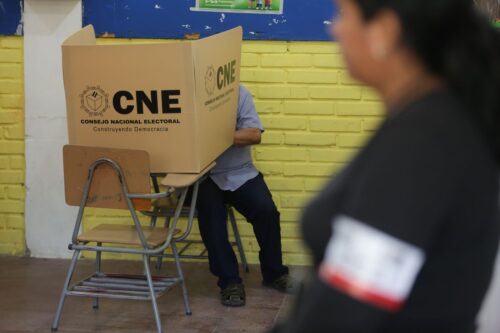
Article
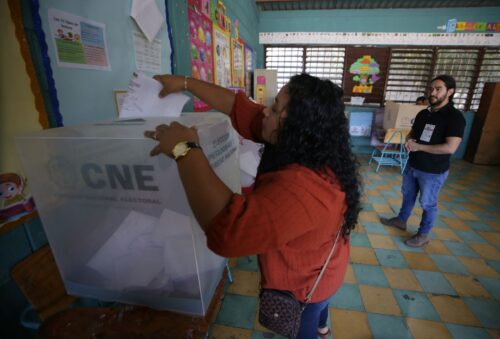
Article
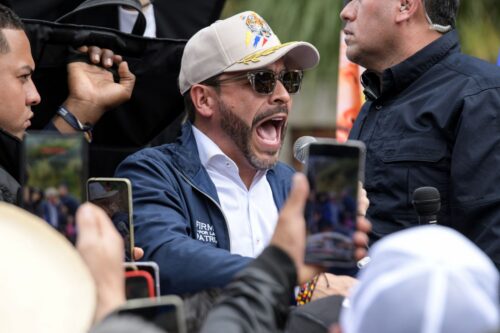
Article