


Francisco R. Rodríguez
Senior Research Fellow
Senior Research Fellow
Francisco is a senior research fellow at CEPR and a professor and fellow at the University of Denver’s Korbel School of International Studies. A native of Venezuela, he is also the founder of Oil for Venezuela, a nonprofit organization focused on finding solutions to Venezuela’s humanitarian crisis. He received an MA and a PhD in economics from Harvard University and has an undergraduate degree in economics from Venezuela’s Universidad Católica Andrés Bello.
Francisco has taught economics and Latin American studies at the University of Maryland at College Park, Wesleyan University, the University of Notre Dame and the University of Denver. He has held prominent positions in the public and private sector and international organizations, including head of the economic and financial advisory of the Venezuelan National Assembly (2000–2004), head of the research team of the UN Human Development Reports (2008–11), and chief Andean economist of Bank of America (2011–16). Francisco was also a Greenleaf Visiting Professor at Tulane University’s Stone Center for Latin American Studies; a visiting fellow at the Kellogg Institute for International Studies, University of Notre Dame; and an international affairs fellow in international economics for the Council for Foreign Relations.
Francisco is a frequent contributor to publications such as Foreign Affairs, Financial Times, The New York Times, Americas Quarterly, Foreign Policy, and the Washington Post, among others. He has published more than 80 research papers in academic outlets, including the American Economic Journal, Journal of Economic Growth, Journal of Macroeconomics, Journal of Politics, World Development and The Lancet Global Health. His most recent books are The Collapse of Venezuela: Scorched Earth Politics and Economic Decline, 2012–2020 and The Elgar Companion to the Economies of Latin America and the Caribbean, both published in 2025.
The report finds that sanctions played a larger role in Venezuela’s economic collapse than some recent research claims.
In a widely circulated paper, Dany Bahar and Ricardo Hausmann claim that sanctions on the Venezuelan economy do not lead to greater migration flows to the United States. This paper shows that their conclusions rest on a serious methodological mistake: testing for a long-run relationship through a misspecified cointegration in first-differences. This mistake invalidates their statistical approach and findings.

A new CEPR report projects that up to over a hundred-thousand US jobs could be saved were the International Monetary Fund to make a new major allocation of Special Drawing Rights, like it did in 2021.

A new CEPR report projects that up to over a hundred-thousand US jobs could be saved were the International Monetary Fund to make a new major allocation of Special Drawing Rights, like it did in 2021.
Financial Times: Francisco Rodríguez writes for the Financial Times about a major new finding on the deadly impact of economic sanctions, which are associated with around half a million deaths per year, a toll comparable to that of armed conflicts.
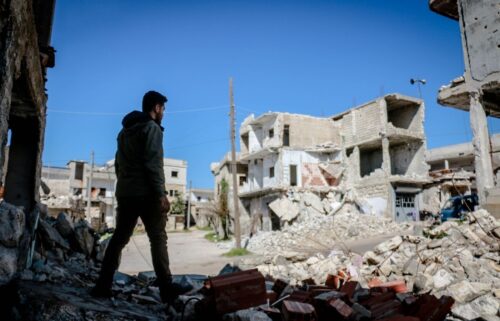
This study, published in The Lancet Global Health, estimates that unilateral sanctions were associated with an annual toll of 564,258 deaths, similar to the global mortality burden associated with armed conflict.
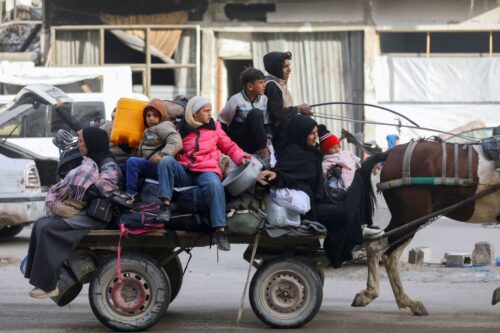
Does sanctions relief actually spur migration? Our analysis suggests a recent paper draws conclusions resulting from a coding error.
This paper provides a comprehensive survey and assessment of the literature on the effects of economic sanctions on living standards in target countries.

On May 19, 2023, the Center for Economic and Policy Research (CEPR) brought together leading experts in the study of economic sanctions to help to answer a critical, but often-ignored, question: What are the human consequences of US economic sanctions?
Western countries’ foreign policy tool of choice has a dramatic negative effect on living standards.
