

Hayley Brown
Labor and Disability Researcher
Labor and Disability Researcher, IFTPE Local 70 Unit Rep
Labor and Disability Researcher
Labor and Disability Researcher, IFTPE Local 70 Unit Rep
Hayley Brown is a Labor and Disability Researcher with CEPR. Her research spans a wide range of subject matter, including labor and worker power, disability, inequality, and public health. Hayley recently served as president of the Nonprofit Professional Employees Union, which represents the staff at CEPR and many other nonprofits throughout the United States. She previously worked in the Research, Markets, and Regulations division of the Consumer Financial Protection Bureau and for the Brookings Institution’s Metropolitan Policy Program. She studied geographical sciences and philosophy at the University of Maryland, College Park .
Workers who lose their jobs as a result of layoffs in the public sector are 20 percent more likely to be Black than workers who lose their jobs in the private sector.

Three figures compare Black and White workers in six frontline industry groups.

Mothers make up a larger share of the frontline workforce (23.8%) than they do of the workforce as a whole (16.9%).
Mothers working in frontline industries are disproportionately nonwhite compared to the general workforce, and to other mothers in the general workforce.

Illinois is one of the hardest hit states in the US by COVID-19, with more than 50,000 confirmed cases as of May 4. There are more than 1.3 million workers on the frontlines of the COVID-19 response in Illinois.

Yesterday, on Workers Memorial Day, President Trump issued an executive order that requires beef, pork, and poultry producers to continue operating. The executive order also directs the Secretary of Agriculture to issue additional orders and regulation.

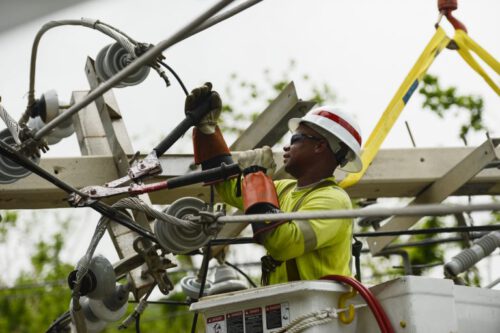
Before the COVID-19 pandemic, more than 30 million US workers were employed in six broad industries that are now on the frontlines of the response.

CEPR’s annual Union Membership Byte gives an in-depth analysis of union membership by sector, gender, race, ethnicity, age, education, nativity, industry, occupation, and by state (including the District of Columbia).
This May, millions of new graduates found themselves torn between triumph and trepidation, as looming obligations to begin repaying student loans tempered celebrations nationwide. Still others had no cause to celebrate, having accrued debt without obtaini