
Article • Data Bytes
Addressing Income Volatility Would Help Millions of Workers
Article • Data Bytes
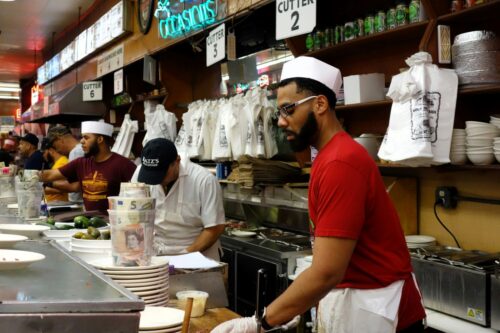
Job churn, irregular work hours, and the resulting income instability have remained persistent challenges affecting a large portion of the US workforce. Nationwide, about two-thirds of hourly workers experienced month-to-month employer-driven schedule volatility. Many employees in food service, retail, hospitality, and other customer-facing industries have schedules that change frequently based on customer demand. This leads to significant fluctuations in hours worked and take-home pay, even with the same employer. Such volatility can increase job turnover and make it challenging to budget for housing, childcare, and other recurring expenses.
The 2025 Survey of Household Economics and Decisionmaking revealed that approximately one-third of US working adults indicate that their income fluctuates frequently or occasionally from month to month. Figure 1 shows that income volatility is noticeably higher in service-sector jobs than in the broader labor market. Just over half (53.6 percent) of workers in food preparation and service jobs experience instability, followed by workers employed in other service occupations (45 percent), including health care support, protective service, building cleaning, maintenance, and personal care and service jobs. By contrast, all other jobs see a lower instability rate of roughly 31 percent. Service sector workers face less income stability, which creates financial strain and disrupts daily life.
Figure 1
An earlier report by the Board of Governors of the Federal Reserve System showed approximately 42 percent of individuals experiencing income volatility cite erratic work schedules as the cause, while another 15 percent attribute it to periods of unemployment. Congress now has the opportunity to improve the work and financial stability of millions through fair workweek or predictive scheduling legislation. The Schedules That Work Act (STWA) requires employers to provide schedules in advance, compensate workers for last-minute schedule changes, and limit the use of on-call shifts. These provisions could increase schedule predictability while allowing employers some operational flexibility.
Volatile work schedules and income swings are part of a series of policy briefs released in the CEPR’s Majority Agenda. Polling by Data for Progress shows that addressing inconsistent work scheduling has majority support across the political spectrum. Even after hearing arguments for and against the STWA bill, a majority of Americans (62 percent) believe workers should have the right to influence their work schedules without fear of employer retaliation. Support for the bill includes 55 percent of Republicans, 57 percent of Independents, and 71 percent of Democratic voters. Recognizing the impact of stable working hours is essential to improving economic stability for workers and their families.
Article

Article

Article

Article

Article

Article

Article

Article