Article • Data Bytes
August 2025 Price Preview: What to Expect in the CPI Report
Article • Data Bytes
We began to see clearer evidence of the impact of the Trump tariffs in the July price data. The overall CPI increased just 0.2 percent in July, but the core index increased 0.3 percent. This brought their year-over year increases to 2.7 percent and 3.1 percent, respectively.
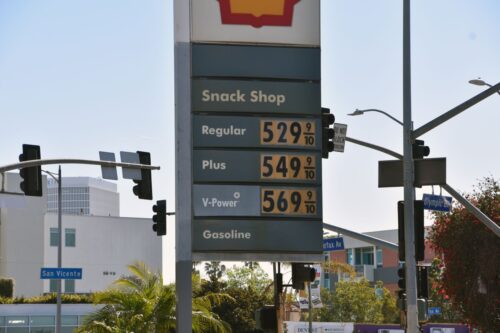
The overall CPI was held down by a 1.1 percent decline in the energy index, which was in turn largely driven by a 2.2 percent drop in the index for gasoline. This will not be repeated in August. Unadjusted gas prices rose slightly for the month. The seasonal adjustment for gas will add to this rise, likely leading to an increase of more than 1.0 percent for the month.
The other components of the energy index are also likely to show a worse story in August than July. The energy services index (electricity and piped gas) fell 0.3 percent in July. This is likely an anomaly that will not be repeated. The index is up 7.2 percent over the last year. With AI computing sectors leading to big demand increases in many areas, the general direction of electricity prices is clearly higher.
The food at home index was flat in July. We are likely to see higher food prices in August. A major factor holding July prices down was a 3.9 percent drop in egg prices, which knocked almost 0.1 percentage point off food inflation for the month. Egg prices rose sharply at the wholesale level in July. We will not see another sharp fall in the CPI in August.
Other areas are seeing the impact of either deportations or tariffs. The Producer Price finished goods index for vegetables rose 38.9 percent in July. The index for coffee rose 1.1 percent. These price increases will be showing up at retail level in August, with the CPI food index likely rising by at least 0.4 percent.
The more rapid rise in food prices, coupled with disruptions caused by deportation efforts, are increasing costs for restaurants. Prices rose 0.3 percent in July and are up 3.9 percent over the last year. The August price rise is likely to be at least 0.3 percent and could come in at 0.4 percent, although slowing wage growth will be a counteracting factor.
Inflation in the rental indexes has continued to slow from peaks in 2022. In July, both the rent proper and owners’ equivalent rent index increased 0.3 percent, bringing the year over year increases to 3.5 percent and 4.1 percent, respectively. We will likely see both indexes again increasing at 0.3 percent in August, although the inflation in the rent proper index could round downward to 0.2 percent. With the rental indexes accounting for over a third of the overall CPI and 42.0 percent of the core index, they hugely dampen movement in the index in either direction.
New cars have been one place where it seems that businesses have largely eaten the tariffs to date. This is true for imported vehicles, but also domestically produced vehicles too — where manufacturers are paying higher prices for steel and a wide range of other inputs as a result of the tariffs. New vehicle prices were flat in July after falling 0.3 percent in each of the prior two months. They are now up just 0.4 percent over the last year. It is likely that we will start to see some of the impact of the tariffs in the August data.
Used car prices are always more erratic. They rose 0.5 percent, after falling sharply in the prior four months. They are up 4.8 percent over the last year. That follows more than two years of rapid price declines in 2023-2024, when the pandemic runup was largely eliminated.
Most other tariffed goods have been showing some impact from the tariffs. Appliance prices fell 0.9 percent in July, but that followed three months in which they rose sharply. They are still down 0.3 percent year-over-year, but appliance prices had been falling sharply in 2023 and 2024. There is likely to be a rise of between 0.5-1.0 percent in the August CPI.
Apparel prices rose 0.1 percent, but are still down 0.2 percent over the last year. They have been rising modestly at the wholesale level. We are likely to see some increase in apparel prices in August, as many people doing back to school shopping would know. Household furnishing prices rose 0.7 percent in July and are up 2.4 percent year-over-year. We are likely to again see a price rise in excess of 0.5 percent.
The medical care services index rose 0.8 percent in July after rising 0.6 percent in June. As was the case before the pandemic, the price of medical services is outpacing the overall CPI, but most likely by around 1.0 percentage point, not 4-5 percentage points. With extraordinarily large price increases showing up the last two months, we will almost certainly see a much smaller price increase reported for August, with the index possibly even flat.
These three components are highly erratic and often account for a large portion of the monthly change in the CPI. For example, the 4.0 percent jump in airfares in July added 0.033 percentage points to CPI inflation for the month. Airfares had been falling sharply, dropping by an average of almost 6.0 percent in the four months from March to June. They are now up 0.7 percent year-over-year. Weakening demand should limit near-term inflation in the index.
There is a similar story with hotel prices, which fell 1.3 percent in July, the fifth consecutive month of decline. They are now down 4.8 percent year-over-year. We are likely to see continuing weakness in hotel prices, but sharp further declines are unlikely.
Car insurance prices are by far the most important of these components in the CPI, accounting for 2.8 percent of the overall CPI and 3.5 percent of the core index. Inflation in the index has been very moderate recently, rising just 0.1 percent in August for the second consecutive month. However, it had been rising at double digit rates through 2023 and 2024. The factors pushing that inflation have not disappeared, so we will likely see more rapid — even if not double-digit — inflation in the index through the rest of the year.
The impact of tariffs and deportations should be clearly visible in the August CPI, with the overall index rising 0.4 percent and the core index 0.3 percent. This will give the Fed a tough choice as to whether to combat rising inflation or labor market weakness.
Article

Article

Article
Article

Article

Article

Article