Article • Expose the Heist: Power and Policy in Unprecedented Times
Court Upholds Trump Administration’s Revocation of Key Wind Farm Plans
Article • Expose the Heist: Power and Policy in Unprecedented Times
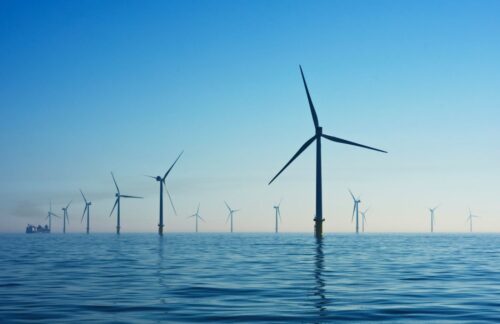
The Trump administration scored another court victory against renewable energy this month. The US District Court for the District of Columbia on November 4 ruled in favor of the US Department of the Interior, allowing the Bureau of Ocean Energy Management (BOEM) to revoke construction and operations plans for a wind farm off the coasts of Massachusetts and Rhode Island.
The root of the problem is an executive order, issued after BOEM’s initial approval of the project in January, that mandated the Secretary of the Interior to review whether existing wind energy leases should be terminated or amended. The Town and County of Nantucket had filed a lawsuit against BOEM in March, claiming that the agency’s initial review of the project, managed by Southcoast Wind Energy LLC, was rushed. The federal government requested a hold on the case in September to conduct a review. In her Nov. 4 ruling, District Court Judge Tanya Chutkan stated that “an agency does not need a remand to reconsider a challenged rule—it can do so at any time, including while challenges are pending.” Basically, if the government wants to reconsider the plans, it doesn’t have to wait for a court decision. Chutkan added that Southcoast Wind Energy LLC is not “likely to suffer immediate and significant hardship” by the pause.
Except in a separate case filed by 17 states and Washington, DC, in the US District Court in Massachusetts, Michael Brown, CEO of Ocean Winds, parent company of Southcoast Wind Energy LLC, stated that the company has spent $600 million so far on the project. And to maintain its current lease, easements, staff, office, and supply chain contracts, the company must continue spending millions of dollars while BOEM reconsiders the project.
Southcoast Wind isn’t the only company facing uncertainty. BOEM is seeking to reverse its approval for two other major offshore wind projects: the Maryland Offshore Wind project, which is scheduled to begin operations next year, and the New England Wind project.
The problem for the Trump administration is that even though support for renewable energy has declined, solar and wind power remain far more popular than nuclear power, oil, gas, and coal. According to a June poll by the Pew Research Center, 77 percent of US adults favor more solar power and 68 percent favor more wind power, with 60 percent stating that expanding renewable energy is more important than expanding fossil fuel energy. In comparison, while 48 percent approve of offshore drilling, 45 percent for fracking, and 41 percent for coal mining — with those rates skewed heavily by Republican voters’ dramatic shift against clean power over the past five years — only 39 percent of US adults approve of expanding production from fossil fuels.
All the while, the market has been shifting. Demand for coal has decreased so much that the US is projected to shut down half of its coal-fired power generation capacity by next year, according to a report by the Institute for Energy Economics and Financial Analysis. This market contraction is the result of deep, long-term problems facing the fossil fuel sector, regardless of what Trump is saying or the temporary rules his administration is pushing. Economics and public preference both strongly favor a transition toward renewable energy.
Instead of thwarting market innovation and ignoring demand, the administration should work with communities and companies to address concerns over environmental issues and the potential impact on waterfronts while increasing capacity for renewable energy. They could also address just transitions for workers in communities where the closure of coal, oil, and gas plants will affect the economy. But in typical Trump fashion, he is listening to what his donors from the fossil fuel industry want rather than the American people. Ultimately, the administration’s actions are a short-term political delay against a long-term transition toward a renewable energy economy. And yet again, the states will lead the way while Trump tries to hold the country back.
Article

Article

Article

Article

Podcast

Article
Article

Article