
Article • Dean Baker’s Beat the Press
Drugs are Cheap, Patent Monopolies Make Them Expensive: Explaining to Today Explained
Article • Dean Baker’s Beat the Press
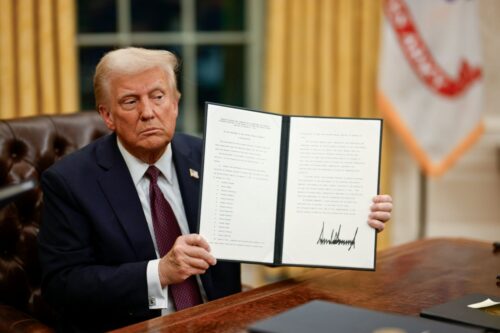
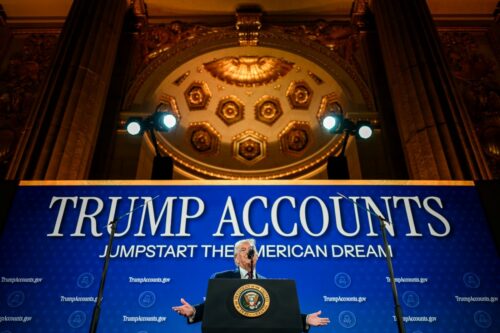
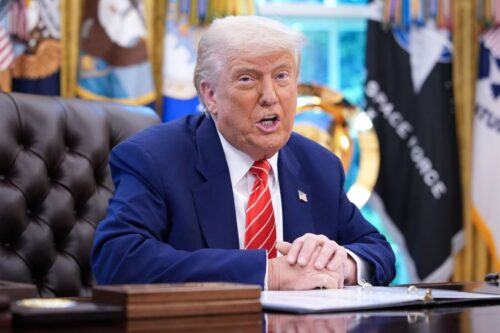
The New York Times-Vox Podcast Today Explained had a segment yesterday on Trump’s latest effort to get his name on something, TrumpRX. The piece was incredibly frustrating as it missed the real reason drug prices are high.
The gist of the segment is that Trump’s plan is unlikely to help many people. Most people will face lower co-pays for their drugs by buying them through their insurer. It also is not clear that TrumpRX will offer lower prices than many uninsured people can get now through various discount programs.
A major focus of the piece was that Trump’s plan that the United States get “most favored nation status” in the form of low-priced prescription drugs, was unworkable because we don’t know what price other countries pay. The implication was that we are just stuck paying high prices for drugs. This is not true.
First, it is important to get our eyes on the ball here. There is a huge amount of money at stake with prescription drugs. We will spend over $700 billion this year on prescription drugs and other pharmaceutical products. That is more than $5,000 per household.
If we sum spending over a decade, as we do with budget discussions, factoring in growth and inflation, we are likely talking about more than $9 trillion. That is more than twice as much as was at stake with Trump’s budget bill. So, this is real money.
But the key point is that there is one reason, and one reason only, that drugs are expensive. The government makes them expensive by granting patent monopolies. If drugs were sold in a free market, without patent monopolies, we would likely be spending around $150 billion a year on drugs. This would save us $550 billion annually or more than $4,000 a household. It is rare that a drug is expensive to manufacture or distribute; the high prices are almost always a result of government protection.
There is a purpose to the protection. The high prices, and high profits, give drug companies an incentive to develop new drugs. But there are other ways to provide this incentive — like paying people, as the National Institutes of Health used to do with $50 billion a year. If we wanted to replace the research supported with patent monopolies we would probably have to triple or quadruple this number, but we would still end up far ahead with our savings on lower drug prices.
Taking away patent monopolies would also eliminate most of the corruption in the drug industry. With huge profits at stake, drug companies have enormous incentive to misrepresent the safety and effectiveness of their drugs, which they do all the time (see opioid crisis). However, if drugs sold in a free market, and the research was paid for in advance and fully open, there would no incentive or opportunity to lie about the quality of a drug. This means we would both save money, and likely end up with better health outcomes.
This route would also eliminate much duplicative research where drug companies invest in an area not because they expect to produce a better drug, but because they think they can win part of the profits now earned by a competitor through effective marketing.
Anyhow, in a piece that was supposed to be a deep dive explainer, it is surprising that there was zero discussion of the cause of high drug prices. This is only an insoluble problem for those unprepared to think about the issue seriously.
Article

Article

Article
Article
Article
Article

Article

Article
