Article • Expose the Heist: Power and Policy in Unprecedented Times
EPA Emissions Standards: A Cycle of Repeal and Political Maneuvering
Article • Expose the Heist: Power and Policy in Unprecedented Times
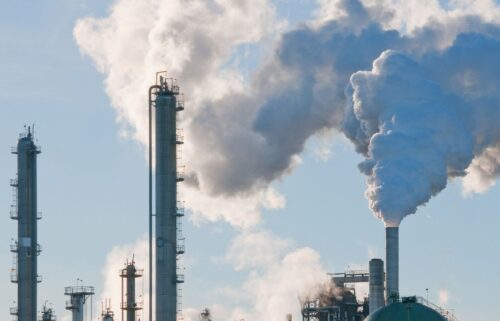
In a move that will surprise no one paying attention, the EPA announced last week it is scrapping all the greenhouse gas emissions standards for power plants under the Clean Air Act. The Trump Administration states emission standards have “imposed massive costs on coal-, oil-, and gas-fired power plants, raising the cost of living for American families.” It’s a bold statement considering the regulations invoked never fully went into effect.
To understand why, here is some background. The regulations originate from the Clean Power Plan, finalized by the Obama Administration in 2015. The plan established carbon pollution regulations through the EPA that applied not only to existing fossil fuel power plants but also to newly built, altered, and rebuilt facilities. The standards required for every type of plant to use the “best system of emission reduction,” considering factors such as technical feasibility, cost, and feedback received from public comments. Ironically, the EPA itself expected the benefits from the final rule to be negligible by 2022, as data showed that few new fossil oil-fired or coal-fired steam-generating plants would be built in the foreseeable future, and utilities and project developers were already shifting to technologies such as natural gas and renewable energy sources.
Despite evidence showing minimal impact, the Clean Power Plan was never implemented. Legal challenges, culminating in a Supreme Court stay in 2016, prevented the regulations from taking effect. The court finally struck down the plan in 2022 with its West Virginia v. EPA ruling. Chief Justice John Roberts’ opinion applied the “major questions doctrine,” which basically argued that the EPA needs congressional authorization to make significant economic and political decisions. Much like with the recent Chevron Doctrine ruling, the Supreme Court argued that the EPA had overreached its authority, despite the agency’s position as the authority on the matter.
In 2024, the Biden Administration issued a similar rule with a compliance deadline of January 1, 2032. The main difference was that the Biden rule was designed to adhere more closely to the West Virginia v EPA ruling, focusing on technologies and practices that can be applied directly at individual power plants rather than at a system-wide level. This alteration circumvented Supreme Court-set limitations on the EPA’s authority to mandate broader changes to the energy system. However, similar to the 2015 regulation, the Biden administration’s rule faced immediate legal challenges in the DC Circuit Court from a coalition of states, energy providers, and various industry organizations.
This time, however, the Supreme Court rejected striking down the rule, saying that because the compliance deadline was so far off, companies would not face harm from the regulation before the DC Circuit Court made its decision. Eventually, the DC Circuit Court rejected a stay on the regulation, and the Supreme Court reached the same conclusion in October 2024. Because the deadline was so far off, there was no immediate cost to companies, and with Trump’s election in November, the regulation’s demise was all but assured.
So, other than legal fees, did companies face “massive costs” over a regulation that was never implemented during the Obama administration and lived in limbo for five months during the Biden administration? Some companies may have started assessing the feasibility of compliance technologies and planned for potential investments or operational changes. Some may have gone as far as starting preliminary work, such as conducting engineering studies or engaging with vendors. Many companies also may have seen the writing on the wall as soon as Trump was elected. It’s hard to say.
Did the regulation raise the cost of living for families? There are a lot of variables at play, so it’s hard to pin energy prices on one thing. But, in general, average wholesale electricity prices were lower and less volatile in 2024 than in 2023. According to the US Energy Information Administration, this was likely because of “low natural gas prices, as well as increases in generation for some lower-cost renewable energy sources and new battery storage capacity.”
Let’s be honest: The cost of upgrading power plants to reduce carbon emissions does have a price, and it could be passed down to consumers. But in the long run, new technology will ultimately bring costs down. And as the EPA stated in 2015 and recent data reinforces, the industry is already moving on to newer technologies. With climate change turning extreme scenarios into a new reality, the world can’t afford to stick with technology that caused the problem in the first place. Political energy would be better spent on solutions to ensure a just transition for displaced plant workers — like California’s $40 million Displaced Oil and Gas Worker Fund and its $20 million pilot program to train unemployed workers.
Really, the Trump administration’s latest move is a gift to companies that have supported Trump. Take, for example, Peabody Energy Corp, the coal company that has previously petitioned the EPA to reconsider decisions on linking greenhouse gas emissions to climate change and — not surprisingly — contributed $100,000 to Trump’s re-election campaign committee. To them, this is a business transaction. Leading up to the 2024 election, Trump received $14.1 million in similar donations from the oil and gas industry, less than he had hoped for but more than his previous campaign.
As the world grapples with the intensifying effects of climate change, the need for effective and lasting emissions standards remains critical. This cycle of policy implementation and repeal, accompanied by pay-to-play schemes, only serves to delay progress.
Article
Article
Article

Article

Article

Article

Article
Article