
Article • Dean Baker’s Beat the Press
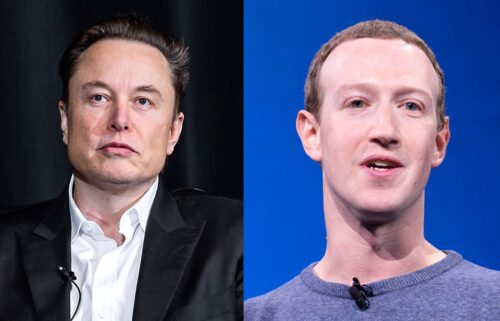
Inflation and Revisiting Section 230 – Make Musk and Zuckerberg Pay
Article • Dean Baker’s Beat the Press
The inflation data released yesterday and today were bad and worse. The CPI increased 0.5 percent in May, while the core rose 0.2 percent. That brought their year-over-year inflation rates to 4.2 percent and 2.9 percent, respectively, well above the Fed’s 2.0 percent target.
The Producer Price Index (PPI) showed that much more inflation is in the pipeline. The overall index rose 1.1 percent, bringing its increase over the last twelve months to 6.5 percent. The core PPI rose 0.8 percent. It is now up 5.1 percent over the last year.
I’ll have more to say on inflation on the weekend, but if we saw this sort of inflation under Biden, it would be hair on fire stuff. In fairness, Trump does have his war, his efforts to derail the fall elections, and his corruption scandals to distract us, but a big jump in inflation is ordinarily a big deal. (Even bigger, since Trump says he loves inflation.)
And this inflation is all of Trump’s own doing. Biden had to deal with a pandemic and Russia’s invasion of Ukraine, problems that were not of his making. When Trump was elected, inflation had been headed downward to the Fed’s 2.0 percent target. But Trump’s tariffs, his mass deportations, and his war reversed the downward path and sent inflation sharply higher. That’s a pretty bad story.
Most people are probably clueless about what Section 230 of the 1996 Communications Decency Act is. That’s the way the tech billionaires like it. It is one provision of an obscure act, which is almost unknown outside of DC policy circles.
The deal with Section 230 is that it grants social media platforms — like Elon Musk’s X, Mark Zuckerberg’s Facebook and Instagram, and Larry Ellison’s TikTok — immunity for damages caused by content posted on their sites. This means if someone wrongly says that a restaurant serves rotten meat, causing its customers to get sick and die, and millions read it on one of these platforms, none of the billionaires can be sued for defamation.
In principle, the person who posted the lie can be sued, but they may have little money to pay damages. It also may not even be possible to identify the person, since people often post anonymously on these sites.
Furthermore, the sites share responsibility for the harm caused by the post. A person standing on a street corner yelling about rotten meat is not likely to have much impact on the restaurant’s business. But if Elon Musk wholesales the lie to millions on X, it can have a very real impact on the restaurant’s business.
This is why print and broadcast media are held liable for spreading defamatory material. Fox News had to pay out $787 million for spreading lies about Dominion’s voting machines in the 2020 election. The issue was not simply whether Fox had directly lied with its paid reporters/commentators. The network was responsible for the lies said by people brought on its shows.
Section 230 protection means that the social media billionaires don’t have to be concerned in the same way about the lies they wholesale on their platforms. They are immune from damages as long as they themselves are not pushing the lies.
The argument for this protection is that social media platforms can’t possibly be expected to review the hundreds of millions of items that get posted daily. This is true, but also beside the point. Rather than reviewing material in advance, social media platforms can be required to respond to takedown notices, as is already the case with material that allegedly infringes on copyright.
I have been pushing this position for many years. To my view, this sort of requirement was largely common sense and just leveling the playing field between social media and traditional media. Why is it okay for X to carry all forms of defamatory material, but not CNN or the New York Times?
I had several exchanges with people who were ostensibly knowledgeable about the economics of social media, who insisted my idea was simply impractical. (I had proposed a carve out that would allow Section 230 protection to continue to exist for platforms that didn’t sell ads or personal information, with the idea that these subscription or donation-supported platforms would be smaller.)
Anyhow, I was told both that the loss of protection would force X and the rest to become subscription- based. (That’s okay by me.) I was also told that it wouldn’t make any difference to them; they would just hire a few more lawyers. (Also, okay by me.) Those are contradictory, but whatever.
Anyhow, a friend just called my attention to the fact that, since 2022, the European Union (EU) has had a system similar to what I proposed in effect. The Digital Services Act (DSA) requires large platforms to have a mechanism whereby users can easily file complaints over defamatory material. The platforms would have a week to remove the material, although less in cases where malice could be an issue (e.g., Elon Musk leaves up a fabricated post calling a Black political figure a pedophile). The EU actually has had this sort of system in place since 2000, although in a somewhat different form.
Anyhow, X, Facebook, TikTok, and the rest seem to operate just fine in the EU even without Section 230 protection. That might suggest that the disasters promised by opponents of Section 230 reform here might have no basis in reality.
I’m sure that the potential liability these platforms face in the EU increases their costs and lowers their profits, but so what? Anyhow, as people yell and scream about all the money these tech billionaires have and their efforts to take over politics and political debate, reforming Section 230 might be a good place to fight back.
I know these clowns would be prepared to kill to preserve their special privileges, but this seems a good place to have a battle. The social media centi-billionaires have no argument, just infinite money to buy media and politicians. But that will be true in any confrontation. It’s best to have the battle in areas where they are empty-handed when it comes to remotely plausible arguments for their position, and winning would matter.
Article

Article

Article

Article

Article

Article

Article

Article