Article • Expose the Heist: Power and Policy in Unprecedented Times
NIOSH Cuts Leave Workers Gasping for Air
Article • Expose the Heist: Power and Policy in Unprecedented Times
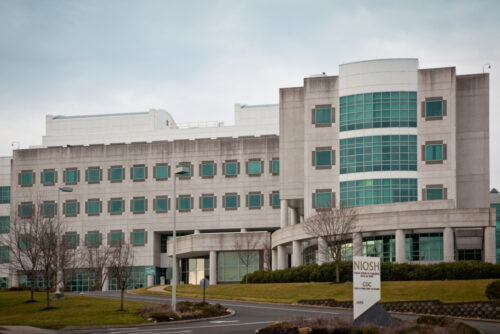
The Trump regime has gutted the National Institute for Occupational Safety and Health (NIOSH), the agency responsible for vital workplace safety research. Health and Human Services Secretary Robert F. Kennedy Jr. and the so-called Department of Government Efficiency (DOGE) have now thoroughly hollowed out this critical arm of the Centers for Disease Control and Prevention (CDC). The cuts jeopardize the mission of the Occupational Health and Safety Administration (OSHA), which relies on NIOSH findings to determine everything from standards for personal protective equipment (PPE) to exposure limits for hazardous substances like silica dust or lead.
One of NIOSH’s core responsibilities is to test and certify personal protective equipment (PPE) — especially respirators like N95s — through its National Personal Protective Technology Laboratory. NIOSH certification ensures that PPE protects wearers from airborne hazards under real-world conditions. Though PPE is the last resort in the hierarchy of controls, it is often the only thing standing between workers and serious harm when other protections fall short.
NIOSH also conducts and disseminates research on how and when different respirators should be used, contributing to evidence-based standards for industries ranging from healthcare and manufacturing to mining and firefighting. Its research supports OSHA in setting legal standards and shapes unions’ collective bargaining around workplace safety.
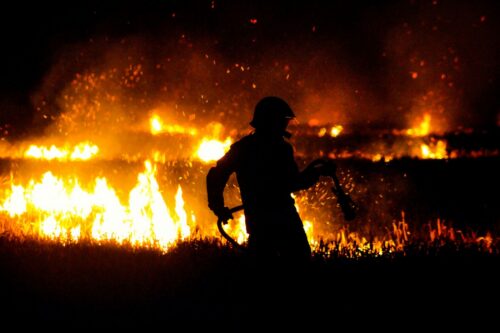
The COVID-19 pandemic further solidified NIOSH certification as an indispensable benchmark for quality and legitimacy in a marketplace flooded with unreliable products. The cuts have halted new NIOSH certifications for N95 respirators, effectively freezing the pipeline for new or improved respiratory protection when supply should be increasing. Why? For one, COVID-19 transmission continues to pose serious risks, and millions of Americans are living with Long COVID, a disabling condition that can be exacerbated by repeat infections. The recent resurgence of measles in the US has also made airborne disease hazards a more salient consideration across the country, particularly for immunocompromised individuals whose neighbors refuse safe and effective vaccines. Meanwhile, agricultural workers are confronting the mounting threat of H5N1 influenza, which continues to surge among dairy cows and other animals amid inadequate surveillance and mitigation. And it’s not just infectious disease; with climate change worsening wildfire smoke, more people are encountering hazardous air on the job. Respirators are no longer niche safety equipment; they are becoming a core tool for public health.

For many, high-quality respirators like NIOSH-certified N95s are an essential tool for participating safely in daily life, including work. Eliminating the agency that studies and certifies them is a step backward at an especially inopportune time. The cuts to NIOSH also disproportionately endanger disabled and immunocompromised people, effectively sidelining them from many forms of economic participation, while threatening to push more people into higher-risk health categories.
The wanton destruction of NIOSH also comes amid a broader pattern of hostility toward public health and workplace safety protections, as evidenced by punitive policies like the Kennedy Center’s recent crackdown on employee mask-wearing. In New York, Governor Kathy Hochul had pushed for language in the state budget that would have restricted the use of face coverings, including N95 respirators. The outright restrictions were removed amid concerted pushback from civil rights and public health advocates, but the attempt reflects a worrying political trend.
NIOSH has a range of other important responsibilities besides certifying PPE. These include the Coal Workers’ Health Surveillance Program (CWHSP), which investigates cases of coal workers’ pneumoconiosis, also known as Black Lung. This preventable but deadly disease has seen a disturbing resurgence in recent years. Like the National Personal Protective Technology Laboratory, this program has also been unceremoniously dismantled, along with it, legally mandated access to care for affected miners. Coal miners may be at the center of Trump’s industrial revival rhetoric. However, his regime seems thoroughly uninterested in either ensuring miners’ safety on the job or fulfilling its legal obligations to those who have fallen ill from their workplace exposure.
Everyone loses when workers lose access to trusted, scientifically rigorous public safety information and thoroughly vetted PPE. Gutting NIOSH makes workplaces more dangerous, undermines the rights of disabled and immunocompromised people, and increases the likelihood that misinformation and conspiracy theories will fill the vacuum. Sustainably growing the US industrial base requires investments in safety infrastructure to protect the workers who would make it possible. That means fully funding NIOSH, restoring its staffing, and respecting the role of scientific expertise in policymaking. Anything short of full restoration is unconscionable. NIOSH’s work is not optional, and we cannot build a just economy on a foundation of preventable harm.
Article
Article
Article

Article
Article
Article
Podcast
Article