
Article
Private Equity Greed Doomed Prospect Hospitals
Article
(This column originally appeared at pennlive.com)
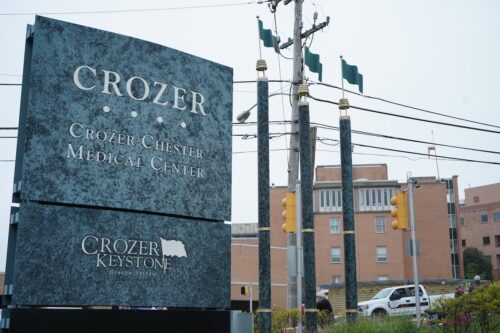
The imminent closing of Crozer Chester Medical Center and Taylor Hospital, following the 2022 shuttering in 2022 of two other Crozer Health System hospitals, is a tragic loss for the Delaware County communities they serve, and the thousands of workers who have dedicated themselves to caring for patients. But while the news is disappointing, it certainly did not come as a surprise – especially to those of us who have watched private equity investors wreak havoc on our nation’s health care system.
Prospect Medical Holdings, the California-based company that owns these facilities, was for 11 years primarily owned by the private equity firm Leonard Green & Partners. The story of what happened under their watch is sadly familiar: Private equity investors buy a company, saddle it with enormous debt, make huge cuts to company spending while selling off its assets and receiving sizable dividend payouts, and then they look for an exit – leaving behind a struggling operation.
In the case of Prospect, Leonard Green bought a majority stake in Crozer for $205 million in 2010, earned at least $476 million in dividends and fees (much of which went to top execs), and then exited a little over a decade later. Numerous investigations have revealed the decline in the quality of care at Prospect’s hospitals over these years – patients suffered, necessary supplies were scarce, and safety problems were rampant. Necessary maintenance was deferred and hospitals were allowed to deteriorate. When the company filed for bankruptcy early this year, it reported over $2 billion in debt. The combination of required maintenance and debt burden made it impossible to find a buyer.
Unfortunately, this is not the only private equity horror story. A similarly destructive strategy unraveled the Steward Health Care hospital system, which was for a time owned by the PE firm Cerberus Capital Management. These private equity schemes operate essentially as wealth extraction machines, and the targets are often safety net hospitals in economically struggling communities. So how did private equity investors get so interested in hospitals in the first place?
Many of them were betting that the Affordable Care Act would make hospitals an attractive investment. Private equity firms – led by Cerberus, Leonard Green & Partners, and Apollo Global Management – soon bought up facilities across the country. But the investors quickly turned their attention to monetizing the hospitals’ real estate. In the case of Crozer, they sold the buildings and real estate to an outside landlord, Medical Properties Trust for $1.386 billion. The hospitals were left to pay onerous rents amounting to $35 million a year on properties they once owned. The deal was great for the investors, but proved to be disastrous for the hospitals.
The Prospect saga has been dragging on for years, as lawmakers and other health care providers have tried to come up with plans to save these facilities. After a plan to sell Prospect’s Delaware County facilities to a new buyer fell through last fall, Attorney General Michelle Henry filed suit, denouncing the company’s “corporate looting.”
The involvement of private equity investors is what some have dubbed the ‘original sin’ of the Prospect fiasco. While there is plenty of evidence to support that conclusion, what can be done to rein in private equity from ravaging other health systems? In Massachusetts, a new law will prevent the kinds of real estate deals that were instrumental to the collapse of both Steward and Prospect Medical. And the law also requires more transparency about the financial performance of private equity owners.
State lawmakers in Pennsylvania have tried to respond to the Prospect crisis by working alongside health care workers and community advocates to advance bills that would address the harms that profit-seeking entities pose to health care. On the federal level, several lawmakers – most notably Senator Elizabeth Warren (D-Mass) – have been vocal critics of private equity. And a Senate Budget Committee report released last year sounded the alarm, stating that private equity could “pose a threat to the nation’s health care infrastructure, particularly in underserved and rural areas.”
In the case of Prospect Medical, that is not a threat – it’s a disturbing and dangerous reality. And it is one that political leaders in Pennsylvania and across the nation must treat as an urgent crisis.
Article
Article

Article

Report