Article • Data Bytes
September 2025 CPI Preview: What to Expect

Article • Data Bytes
Inflation steady near 3 percent: Overall and core CPI likely to rise 0.3–0.4 percent in September, keeping year-over-year inflation around 3 percent.
Food prices rising again: Tariffs and farmworker shortages are pushing up fruit, vegetable, beef, and coffee prices.
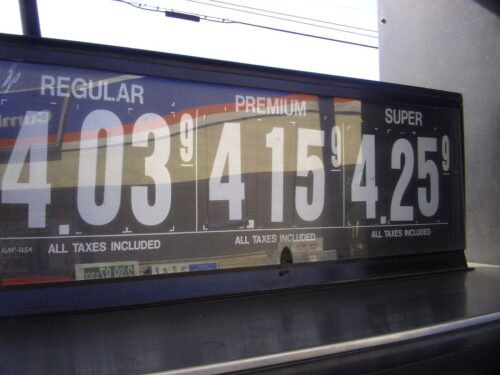
Energy costs remain high: Gasoline and electricity prices continue to climb, adding about 0.7 percent to the energy index.
Tariffs lift core goods: Prices for clothes, furniture, cars, and appliances rising as retailers pass on higher import costs.
Rents stable but elevated: Rent and owners’ equivalent rent expected to rise 0.3–0.4 percent.
Medical services rebound: After a dip in August, medical costs likely up 0.4–0.5 percent.
Fed still under pressure: Inflation remains above target, with tariffs and labor issues likely to keep it from easing soon.
The overall CPI rose 0.4 percent in August, while the core index rose 0.3 percent. This brought the rate of inflation over the last year in the two indexes to 2.9 percent and 3.1 percent, respectively.
Both indexes are likely to show similar rates of growth in September. The energy index rose 0.7 percent in August; it will likely also show a rapid rate of growth in September. The food at home index rose 0.6 percent in August; it is likely to show somewhat slower growth in September, although still more rapid than the overall CPI. Inflation in the core index is likely to again be 0.3 percent, although it may round to 0.4 percent in September.
Food prices rose rapidly in 2021 and 2022 as a result of pandemic shutdowns and supply-side bottlenecks, as well as firms with market power taking advantage of shortages to jack up profit margins. Food inflation had been slowing since the second half of 2023, and continued slowing to just under 3.0 percent as a year-over-year rate earlier in 2025.
However, tariffs and the deportation of large numbers of farm workers have started to turn this around. Fresh fruit prices rose 1.0 percent in August, while fresh vegetable prices rose 3.0 percent. Beef prices rose 2.7 percent.
Coffee prices rose 3.6 percent in August and are up 20.9 percent year-over-year. They are virtually certain to rise rapidly again in September. The Trump administration’s 50 percent tariff on Brazilian coffee took effect in August, and most of this is likely to be passed through in September. These factors should push the overall food index up by 0.4-0.5 percent.
After a large jump in energy prices in August, energy prices will likely again rise rapidly in September. Seasonally unadjusted gas prices bottomed out in August and then rose modestly last month. The seasonal adjustment will add over 1.0 percentage point to the index for gas prices.
Electricity prices are also likely to show a substantial increase. The index rose 0.2 percent in August, and was up 6.2 percent over the last year. With demand surging for data centers, there is considerable upward pressure on prices for much of the country. The index is likely to rise at least as much in September, pushing the increase in the energy index in September to near 0.7 percent.
The price of core goods, non-food or energy, had been flat or heading slightly downward at the end of 2024 and the start of this year. Tariffs have reversed this pattern. In the three months from May to August, they have risen at a 2.8 percent annual rate.
The inflation in these items — everything from clothes and furniture to cars and appliances — is likely to be at least as fast in September, implying an increase of 0.3 percent for the month. Many retailers had put off fully passing on tariff hikes with the expectation that they may not stick. Now that it looks as though the higher tariffs will be in place for some time, more of them will be passed through. It is also important to recognize that higher imported prices will also mean higher prices for the domestic goods that compete with imports.
Inflation in both rent proper and owners’ equivalent rent (OER) have slowed sharply from their recovery peaks, but it is still somewhat higher than the pre-pandemic pace. The rent proper index rose 0.3 percent in August and is up 3.5 percent from its year ago level. The index for OER rose 0.4 percent in August and is up 4.0 percent over the last year.
The difference in the indexes reflects the fact that the OER is based largely on more expensive single-family homes. Rising rental vacancy rates are putting some downward pressure on rents for moderate-income units, that seems to be less the case for the higher end of the market.
Inflation in medical services has been substantially outpacing the overall rate of inflation this year, after being quite tame earlier in the recovery. While the index is up 4.2 percent over the last year, it actually fell 0.1 percent in August. That drop was almost certainly an anomaly; it followed increases of 0.6 and 0.8 percent in June and July, respectively. We are likely to see an increase of 0.4-0.5 percent in the index in September.
These components are highly erratic and can therefore have a large impact on the CPI, even though their weight is relatively small, compared to items like rent or medical services. Car insurance has by far the largest weight in the index, at 2.8 percent. The index for car insurance has substantially outpaced the overall CPI, rising at double-digit rates through most of the recovery. It has slowed in the last year, although it still is up 4.7 percent over the last year.
The car insurance index was flat in August. That is not likely to be repeated in September. It is likely to rise 0.3-0.4 percent.
The index for airfares, which has a 0.85 percent weight in the CPI, rose 5.9 percent in August, putting it 3.3 percent above its year ago level. This jump was likely an anomaly; the index should be flat or even falling in September.
Hotel prices rose 2.3 percent in August, but they are still down 2.6 percent over the last year. This rise was also likely an anomaly; hotel prices should also be flat or falling slightly in September.
Year-over-year inflation in both the overall and core CPI is likely to be close to 3.0 percent in September, a full percentage point above the Fed’s 2.0 percent target. The level is likely to be less concerning to the Fed than the direction of change. At least until the full effect of tariffs is passed through to consumers, the inflation rate is more likely to be rising than falling. The problem is compounded insofar as new tariffs are imposed, and deportations hit more sectors. Barring a major economic downturn, it is difficult to envision a scenario where inflation hits the Fed’s target any time soon.
Article

Article
Article

Article

Article

Article

Article

Article