Article • Mark Weisbrot’s Columns
(Newsweek) Trump’s Oil Blockade of Cuba Is Economic Violence. It Must End
Article • Mark Weisbrot’s Columns
Newsweek
Near the peak of US military escalation in the Vietnam war, Martin Luther King Jr. famously said that the US government was “the greatest purveyor of violence in the world today.”
In the ensuing years the US government has developed, at an accelerating rate, a new method of delivering lethal violence to achieve its aims: broad, unilateral economic sanctions.
A study published by the Lancet Global Health medical journal, which I coauthored with economists Francisco Rodríguez and Silvio Rendón in July, estimated that unilateral sanctions take about 564,000 lives annually. This is comparable to the annual deaths worldwide from armed conflict.
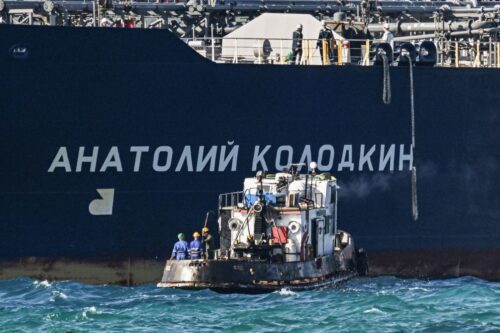
Right now we can see in real time how such deaths happen. “Life in Cuba Is Grinding to a Halt Under U.S. Oil Blockade,” was the Wall Street Journal headline a few days ago. The U.S. blockaded oil from Venezuela, Cuba’s largest supplier, shortly after it gained control over Venezuela’s oil production last month.
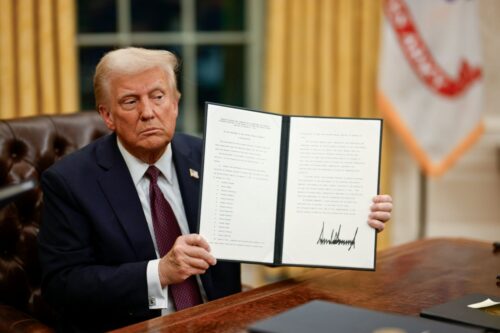
On January 29, President Donald Trump issued an executive order that threatened to impose tariffs on any country in the world that dared to export oil or petroleum products to Cuba. The country’s oil imports collapsed to nearly zero this month.
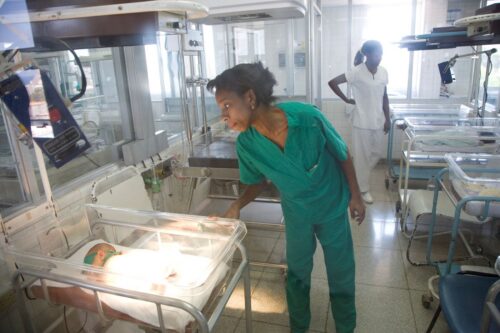
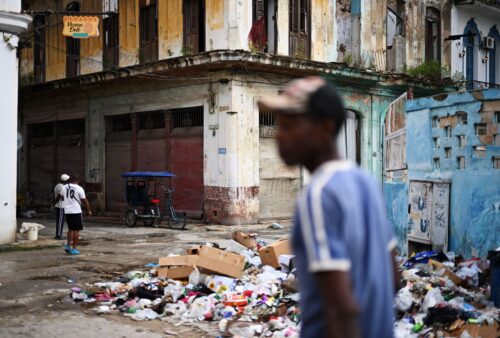
The collapse of oil imports has had immediate and life-threatening effects. More than 80 percent of Cuba’s electricity is generated from oil. Blackouts have already increased dramatically as capacity has fallen. Hospitals, health services and pharmaceutical availability have been disrupted; the UN High Commissioner for human rights has warned of “an increasingly severe impact on the human rights of the people of Cuba” from loss of water delivery—including drinking water and sanitation. Even the delivery of aid shipments is disrupted due to the lack of fuel—causing widespread food shortages and rising food prices.
Trump’s executive order, like all unilateral U.S. sanctions, is illegal under international treaties to which the U.S. is a signatory such as the charter of the Organization of American States; and according to international law. It also directly violates U.S. law, since the Cuban government has not created any “national emergency” for U.S. citizens, or any “unusual and extraordinary threat” to U.S. national security, as the order falsely claims.
While officials in Washington try to blame Cuba for the country’s worst economic crisis in 67 years, the current sanctions are piling on the damage from increased U.S. economic warfare in recent years.
In January 2021 the Trump administration decided that Cuba should be re-listed as a state sponsor of terrorism as it had been from 1982 until 2015, when President Barack Obama removed Cuba from the list. There was never any factual basis for the designation. But it had a profound negative impact on Cuba’s tourism industry, because it automatically made visits to the U.S. more difficult for citizens of European and some other countries if they went to Cuba.
The number of foreign tourists visiting Cuba has fallen by an estimated 68 percent compared with 2019. This took billions of dollars from Cuba’s foreign exchange earnings, which are necessary for essential imports (80 percent of the country’s food is imported) and for economic stability more generally.
The Trump administration also instituted other sanctions and restrictions, including some that took advantage of the “state sponsor of terror” label, to block Cuba from bank transfers, wire transfers and other interactions with the international financial system. This substantially weakened and destabilized the Cuban economy, setting it up for even more severe assaults.
If you want to see what these kinds of sanctions can do if they remain in place long enough, look at Venezuela, Secretary of State Marco Rubio’s number-two target (after Cuba) for regime change. U.S. sanctions brought Venezuela four years of hyperinflation and the most severe depression in history without a war: a 73 percent loss of real GDP from 2012 to 2020. That’s more than three times the size of the U.S. Great Depression. The first year of the Trump sanctions (2017-2018) killed tens of thousands of Venezuelans; the death toll there has almost certainly reached the hundreds of thousands today.
This is what broad U.S. economic sanctions do: they target a civilian population with economic violence in order to force political changes. U.S. officials up to the cabinet level have said this out loud for years—or decades in the case of Cuba. Trump only differs from previous leaders in that he doesn’t pretend that he is doing this to promote democracy or human rights.
Meanwhile, many governments are providing, or have committed to provide, humanitarian aid to Cuba. This includes Mexico, Vietnam, China, Venezuela, Spain, Russia, the European Union and Chile. Almost all of the world can see the difference between right and wrong here; the United Nations General Assembly voted for 33 years straight to end the embargo on Cuba. In 2024 the vote was 187-2 (with the U.S. and Israel voting against), and one abstention.
Humanitarian aid is not enough to save Cubans from the deadly impact of Trump’s oil blockade, however. They, and we, need more solidarity. Trump is threatening the whole world in order to use economic violence against Cubans. But he does not seem to care all that much about regime change in Cuba, as Rubio does. If enough countries push back, the blockade could go the way of many of Trump’s threats—and be abandoned.
Article
Article

Article

Article
Article
Article
Report