Article • Ecuador News Round-Up
Ecuador News Round-Up No. 26: Noboa’s Authoritarianism Deepens Amid Growing US Support
Article • Ecuador News Round-Up
In this edition of the Ecuador News Round-Up:
Democratic backsliding: Ecuador’s authoritarian trajectory under President Daniel Noboa has accelerated in recent months as his government and allies have moved to bar the largest opposition party and smaller ones from upcoming elections. They have irregularly pushed those elections forward, persecuted opposition figures, threatened judges, and pressured the Constitutional Court — all while judicial authorities ignore accusations of the wrongdoing perpetrated by Noboa.
Human rights and militarization: Human rights organizations and UN experts continue to document and condemn grave human rights abuses under Noboa’s militarized security policy. These abuses include enforced disappearances, curfew killings, a crackdown on civil society, and deadly malnutrition and health crises in prisons.
US security cooperation: Despite mounting concerns, the Trump administration has deepened its security ties and political support for Noboa by signing a trade agreement and launching joint operations — including strikes on a civilian dairy farm that involved the torture of its workers, prompting 20 members of Congress to call for an investigation.
Interference in Colombia’s elections: Noboa intensified a trade war with Colombia in the lead-up to that country’s first-round presidential election on May 31 and intervened by publicly backing right-wing candidate Abelardo de la Espriella and announcing the lifting of tariffs during a video call meeting with him.
Opening the door to international arbitration: A group of former UN experts and judges from 10 different countries argue that the Constitutional Court has issued a misguided ruling on an investment agreement with the United Arab Emirates, effectively reopening the door for Ecuador’s reentry to the controversial investor-state dispute settlement system in direct defiance of the country’s constitution, recent popular referendums, and the court’s own jurisprudence.
President Daniel Noboa’s authoritarianism has accelerated sharply in recent months, further deepening a trend that began soon after he first took office in 2023. During his first term, Noboa irregularly removed his vice president and raided the Mexican embassy. Since then, he has threatened Constitutional Court judges, imposed a prolonged state of emergency that has been linked to gross human rights abuses, and taken measures that shrink civic space. In recent months, through a mix of direct government actions and efforts by loyalists within key institutions, the president managed to block opposition parties from running in upcoming local elections, pursued criminal cases against political opponents, and intensified pressure on judges.
Suppression of Political Parties and the Manipulation of Election Dates
The move that has triggered the most alarm, both domestically and internationally, has been the banning of opposition parties, most notably the left-wing Citizens’ Revolution (RC). As the nation’s strongest opposition force, RC maintains both the largest member base and the most significant territorial presence in Ecuador. The party and its leadership have long faced political persecution and suppression, a pattern that continued on March 8 when an electoral judge from the Electoral Dispute Tribunal (TCE) ordered the nine-month suspension of the RC, effectively barring it from upcoming local elections that had been controversially moved forward by several months.
The decision came at the request of Carlos Alarcón, the government-aligned prosecutor general whose appointment has been challenged as illegal. It was based on an investigation he had launched in late January, alleging that RC received campaign funds “from Venezuela” during the 2023 snap elections. The case hinges solely on testimony from Santiago Diaz, an expelled parliamentarian who was himself convicted on child sexual abuse charges in May and has reportedly received preferential treatment within the prison system. Leaks of his testimony do not appear to implicate the Venezuelan government but seem to be limited to allegations that former president Rafael Correa, who remains a key figure within RC, had asked Díaz and his lawyers to take around $40,000 to Ecuador while Correa was visiting Venezuela.
In issuing the suspension, the judge did not rule on the merits of Alarcón’s investigation, nor did he give RC an opportunity to defend itself, stating instead that the move constituted a set of provisional measures against the party while the investigation proceeds at the hands of the prosecutor general. The same judge later ruled against RC’s request to have the findings of Alarcón’s investigation declassified — without which the party says it cannot mount a defense.
The suspension may prove to be a prelude to an outright ban, as Ecuadorian law mandates the deregistration of parties that fail to meet minimum electoral thresholds. With RC locked out of the ballot, Noboa and his allies will likely argue that the party failed to post any results in the local elections and should therefore be struck from the register, effectively using its exclusion as grounds for its dissolution.
Shortly after RC’s suspension, Ecuador’s other electoral authority, the National Electoral Council (CNE), voted on March 27 to move local elections up by several months — from February to November. Officially, the body — made up of several Noboa allies who issued controversial rulings in his favor during last year’s presidential elections — cited a weather report from the country’s Risk Management Secretariat (which is run by the executive) warning that the vote could coincide with heavy rains linked to the El Niño weather phenomenon. The decision triggered widespread backlash across the political spectrum and civil society. Critics view the shift as a calculated attempt to disadvantage RC; by moving the date up, the CNE significantly shortened the time line available for its members to change parties, strategize, appeal rulings, campaign, and form electoral alliances.
The head of Ecuador’s meteorological service resigned the same day the CNE announced its decision, and staff within the agency told reporters it is not yet possible to determine the scale of the weather’s impact. Analysts also note that the new election date would fall just before the high point of Ecuador’s dry season — when blackouts are likely, given early signs of an impending energy crisis. Electoral authorities attempted to explain their decision on national television, with CNE President Diana Atamaint awkwardly asserting that the “date of the election” has not changed, only the “day of the vote,” with the plan apparently being that Ecuadorians will vote in November but the results won’t be officially declared until February, something unprecedented in Ecuador’s electoral history.
Apart from RC, the revised election timetable heavily affects two other opposition parties: the left-wing Unidad Popular party and the conservative Construye party, which former presidential candidate Fernando Villavicencio — who was assassinated on the campaign trail in 2023 — belonged to. On April 26, the CNE ordered the dissolution of both parties, arguing that their membership numbers had fallen below the legal threshold required for registered political parties, a claim both organizations dispute. As with RC, this triggered a scramble to find registered parties willing to host their candidates in the upcoming election.
The parties, along with two members of the CNE itself, also contend that the decision is illegal. Ecuador’s electoral law bars the CNE from dissolving political parties more than 120 days after the calling of elections. That deadline, which would have originally fallen on August 1, was moved forward to April 3 — nearly a month before the dissolution orders were issued — after the CNE changed the election date.
The TCE appeared to agree. On June 3, after months of legal challenges from Unidad Popular, it nullified the CNE’s decision against the party, ruling that the body had acted outside the legal time frame and had failed to justify the party’s alleged drop in membership. The CNE’s ruling against Construye, however, remains in effect, possibly because the party has not challenged the decision as aggressively as Unidad Popular.
Persecution of Political Figures
RC’s leadership — not just the party itself — and its allies have also been targeted. Andrés Arauz,* the party’s presidential candidate in 2021 and vice presidential candidate in 2023, is currently on trial for the vaguely defined crime of “illicit association” in connection with the Liga2 case. Prosecutors allege that Arauz coordinated with members of an independent body to ensure the appointment of the country’s banking superintendent. Arauz says the case is politically motivated and has been marked by repeated due process violations, including the alleged unlawful manipulation and deletion of evidence by the Prosecutor General’s Office. In April, the presiding judge — currently a leading candidate to become the country’s next prosecutor general — ruled that the trial could proceed despite evidence suggesting that data on one of the accused’s phones, a key piece of evidence in the case, had been manipulated before entering the chain of custody.
In addition, Ecuador’s Prosecutor General’s Office has three ongoing cases against Aquiles Alvarez, a prominent critic of President Noboa and the mayor of Guayaquil, one of Ecuador’s largest cities. Alvarez was elected mayor in 2023 on the RC ticket. Two of the cases against him — the “Goleada” and “Triple A” cases, which have been marked by procedural errors and irregularities on the part of prosecutors — arise from the same set of allegations: accusing Alvarez of involvement in money laundering, tax fraud, and an illegal fuel sale scheme. The third case stems from a police raid in which authorities alleged that Alvarez was not wearing a court-ordered ankle monitor while inside his own home. Although he has not been convicted, Alvarez is currently being held in pretrial detention at Encuentro prison, a maximum-security facility built by Noboa and modeled after El Salvador’s notorious CECOT prison. During his detention, he has dramatically lost weight and has alleged abuse by prison staff. These allegations have emerged amid broader concerns about conditions at the facility, including reports of deaths, torture, and a tuberculosis outbreak.
On April 2, an appeals court overturned Alvarez’s pretrial detention in the Goleada case, ruling that the evidence presented by prosecutors “is not sufficient to establish the existence of the offense of organized crime for the purposes of money laundering and tax fraud.” Shortly afterward, the Prosecutor General’s Office filed complaints against the judges involved in the ruling, revised the charges against Alvarez, and brought charges against his mother and wife. Days before the ruling, prosecutors had also charged Raúl Chávez — a leader of RETO, a party that ran in coalition with RC in previous elections — in the case. On June 8, in a move widely perceived as intimidation against judicial independence, Ecuador’s National Court of Justice found that the appeal judges’ decision in the Goleada case constituted a “serious infraction” and referred the judges for potential sanctions.
Pressure on the Constitutional Court
Noboa’s pressure on the Constitutional Court has also continued to intensify. On April 1, the government-friendly national newspaper El Universo published an article based on a leaked comptroller general report alleging undisclosed assets and minor financial irregularities involving two of the court’s judges, Alí Lozada and José Luis Terán. These judges had previously ruled against sweeping security and public sector laws that President Noboa and his party had fast-tracked through the legislature. The court subsequently issued a statement “warning with concern about a climate of sustained institutional pressure since 2025 that could impact [the court’s] judicial autonomy.” This is the same court that is responsible for ruling on legal challenges to contested decisions by the CNE and TCE, and that had also been considering the constitutionality of an investment agreement between Ecuador and the United Arab Emirates.
The comptroller general has since stated that more judges are under investigation, and the cases of Lozada and Terán have been referred to the Prosecutor General’s Office. Against this backdrop, Indigenous justice expert and Constitutional Court judge Raúl Llasag resigned on April 8. He cited health reasons, though it remains unclear whether he was also under investigation. Several Ecuadorian legal experts and academics signed a letter arguing that the court is under attack and that the offices of the comptroller general and prosecutor general are carrying out “deliberate acts of intimidation and subjugation.”
Authorities Turn a Blind Eye to Allegations Against Noboa
All the while, prosecutors have largely failed to investigate allegations of wrongdoing by Noboa, his inner circle, and his government. This includes investigative reporting linking companies owned by the president’s family to drug trafficking, accusations that Noboa’s brother illegally bought and resold subsidized fuel, and alleged revelations that a government agency contracted a security firm with ties to a gang leader. There are also claims by different gang leaders that Noboa was involved in the 2023 assassination of presidential candidate Fernando Villavicencio and that, as a candidate, he coordinated with criminal organizations to recruit votes in his favor. Meanwhile, in the National Assembly, where Noboa and his allies hold a majority, his party has also blocked or declined to pursue oversight efforts targeting his administration.
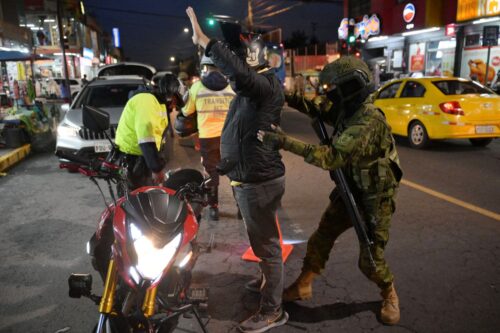
Since President Noboa declared an “internal armed conflict” against gangs in January 2024, Ecuador has remained under a prolonged state of emergency, characterized by the deployment of the military to carry out police functions, to oversee prisons, and to enforce frequent curfews. This hardline security policy has failed to reduce homicide rates and has been linked to serious human rights abuses, with rights organizations continuing to denounce enforced disappearances, arbitrary arrests, restrictions on civil society, the erosion of judicial independence, and deteriorating conditions in the country’s prisons.
In March, the UN Committee on Enforced Disappearances published its findings on Ecuador and stated that it was:
alarmed by reports of enforced disappearance of at least 51 victims, including children, allegedly committed by law enforcement agencies, including the Armed Forces, during security operations between 2024 and 2025, primarily affecting Afro-Ecuadorian citizens in Esmeraldas, Guayas, and Los Ríos. The Committee expressed concern about the militarisation of public security and the continuous declarations of states of emergency during which these disappearances took place and urged Ecuador to end this approach and strengthen civilian law enforcement agencies.
These findings made international headlines, appearing in The Guardian and in an Al Jazeera documentary that included interviews with victims’ families.
In March and May, the Ecuadorian government imposed curfews in several regions of the country, each lasting about 15 days. Although security forces presented thousands of arrests as evidence of the curfews’ effectiveness in combating crime, the vast majority of those detained were arrested simply for violating the curfew itself. Security forces killed at least 10 people during curfew operations. In one instance, soldiers shot and killed a 22-year-old university student inside a vehicle as his friends attempted to drive away from a military patrol out of fear of being arrested for breaking the curfew.
Civic space has also been shrinking under President Noboa, who, with his congressional majority, has passed a law cracking down on civil society organizations, frozen the bank accounts of critical groups, and violently repressed Indigenous-led protests in September and October. March alone brought several statements from international human rights organizations denouncing this trend. On March 10, the International Federation for Human Rights, Front Line Defenders, World Organisation Against Torture, and other groups published a joint statement expressing concern about:
The rapid deterioration of civic space, including the stigmatisation and criminalisation of human rights and environmental defenders, the use of SLAPPs (strategic lawsuits against public participation) and the violent repression of peaceful protests led by indigenous movements in the context of states of emergency, and the rapid implementation of a new regulatory framework and arbitrary practices against civil society organisations.
Similarly, four UN special rapporteurs issued a statement in which they “expressed deep concern over credible reports of a rapid deterioration of civic space affecting Indigenous Peoples and human rights defenders in Ecuador.” One of them, the UN Special Rapporteur on freedom of peaceful assembly and of association, separately added that “Ecuador continues to slide down the authoritarian path we have been reporting on, and this must be stopped,” citing a crackdown on civil society and “the worrying persecution of the Constitutional Court.”
In addition, in a 21-page letter to the Ecuadorian government, eight UN Special Rapporteurs who cover human and Indigenous rights, civil liberties, forced disappearances, and judicial independence noted that the Noboa administration had not responded to several prior communications that had raised concerns about human rights in the country. Among other things, they criticized the government’s enforcement of law with a broad definition of terrorism, argued that conditions in Ecuador do not meet the threshold of a non-international armed conflict, and expressed concern over the lack of accountability and oversight of the armed forces as well as the frequent and prolonged use of states of emergency.
Nevertheless, on June 16, President Noboa declared a new 60-day state of emergency in 10 provinces, citing “grave internal commotion” and the 879 homicides recorded in the affected areas between May 1 and June 12. The decree marked a reversal from Noboa’s position just a month earlier, when he said that he would allow the previous emergency order to expire on June 1 and had pledged not to renew it. In total, Ecuador has been under a state of emergency for almost 900 days since the beginning of 2024.
Two days later, on June 18, Noboa issued a separate decree reaffirming the existence of an “internal armed conflict” despite the concerns raised in the letter referenced above and repeated rulings by the Constitutional Court that the president had failed to adequately demonstrate the existence of such a conflict. The decree also granted immunity to “foreign personnel from cooperating states participating in actions carried out within the framework of the internal armed conflict” and promised pardons, sentence reductions, or commutations for “military, police, and civilian personnel participating in actions aimed at confronting the internal armed conflict.”
These measures have done little to improve Ecuador’s security situation. In fact, 2025 was the deadliest year on record, with a homicide rate of 51 per 100,000 people, up from 5.8 in 2017. This month alone, the bodies of eight people who had disappeared were found in plastic bags in the outskirts of the city of Babahoyo, while a prosecutor and her sister were gunned down on the streets of Manta. Monika Silva, a Polish human rights and anti-corruption activist who has lived in Ecuador for over a decade, was found dead in her home with marks on her neck. Ecuador’s Interior Minister was quick to declare she had likely taken her own life, citing a text message that he appears to have deliberately misrepresented to the media. Silva, who had been investigating corruption linked to a company owned by President Noboa, had often received death threats. Although the circumstances surrounding her death remain under investigation, the Silva family’s legal team has stated that her autopsy concluded she had been murdered.
Human rights issues in Ecuador also extend to the country’s prisons. In an investigative piece published this month, Connectas and Tierra de Nadie document a malnutrition and disease crisis in Ecuadorian prisons, finding that three people die in these facilities every seven hours — surpassing deaths from riots and massacres in Ecuador’s notoriously violent prison system. This increase coincided with President Noboa’s deployment of the military to manage prisons. The report also states that tuberculosis outbreaks in prisons have worsened during this period and that authorities have often been uncooperative in helping families identify deceased inmates and have sometimes failed to notify them at all.
Despite mounting concerns about human rights and democracy in Ecuador, the Trump administration has expanded its security cooperation with and political support for President Noboa, whose top foreign policy priority has undoubtedly been positioning his country as a key US ally in the region. Among many other moves, Noboa has ratified several security agreements with Washington, DC, and emerged as a leading supporter of the US’s so-called “war on narco-terrorism” in the region. It is of little surprise, then, that US officials — including SOUTHCOM commander Francis Donovan and the FBI’s head officer in Colombia — say that Ecuador is “one of the United States’ strongest partners” and that Noboa is “widely viewed as being one of the United States’ closest allies in Latin America.”
Cooperation between the two countries reached new heights in early March with the announcement of “Operation Total Extermination,” which involved joint strikes near the Colombian border on March 6. Ecuador and the United States said the site targeted in the strikes was linked to Comandos de la Frontera, a dissident FARC group that US officials described as a “designated terrorist organization,” even though Washington has not formally designated it as such.
Local human rights groups quickly disputed the Ecuadorian and US military’s account and alleged serious human rights abuses. Those allegations gained international attention on March 24, when the New York Times, drawing on interviews with victims, human rights lawyers, and local residents, reported that the targeted site was in fact a dairy farm with no apparent links to FARC dissidents. According to the report, Ecuadorian forces entered the area three days before the strikes, burned down the farm and other shelters, and detained farmworkers, allegedly taking them to a military base where they were interrogated and tortured. The military then returned three days later to bomb the site and post footage of the operation on social media. Subsequent reporting by USA Today corroborated the account and added that Ecuadorian security forces allegedly threatened to kill the farmworkers if they spoke publicly about what had happened. The precise role of the United States in the operation remains unclear, though the available evidence suggests a significant level of involvement, ranging from planning assistance to the execution of strikes.
The revelations about the strikes, coupled with the lack of transparency surrounding the US role in them, prompted 20 members of Congress to sign a May 13 letter to US Secretary of Defense Pete Hegseth calling for “the immediate suspension of these operations until these incidents are fully investigated.” The letter adds:
We are concerned that our military is deepening its ties with the Government of Ecuador, even as it undergoes an alarming authoritarian and anti-democratic drift.… With investigative reporting now linking President Noboa’s family business to drug trafficking and the same illicit networks he claims to be fighting, an independent and transparent investigation into these allegations is warranted.
In a separate letter dated June 11, Representatives Joaquin Castro (D-TX) and Bill Keating (D-MA) wrote to Secretaries Hegseth, Marco Rubio, and Markwayne Mullin as well as the head of the US Coast Guard seeking answers from the administration about reports alleging that US drones have struck Ecuadorian fishing vessels on the high seas. According to these accounts, crew members were subsequently detained by US-staffed vessels, transferred to the Salvadoran navy for questioning, and taken to El Salvador.
Two Ecuadorian fishing boats — the Don Maca and the Negra Francisca Duarte II — reportedly fell victim to such incidents in March. The crews of both vessels have since been repatriated to Ecuador. However, a third Ecuadorian fishing vessel, the Fiorella, has been missing since January 20, and the whereabouts of its crew remain unknown. The letter states that in the vessel’s last transmission, the captain reported “UAVs, a U.S. Coast Guard vessel, and a U.S. aircraft following the crew — an account later corroborated verbally by the” survivors of the other ships. It adds that the incidents have resulted in “credible survivor accounts of arbitrary or unlawful detention, abuse, and extrajudicial use of force by U.S. personnel.” The US Department of Defense and the US Coast Guard have denied any involvement in the alleged operations.
The May 13 congressional letter was released just as Noboa was beginning an official visit to Washington, DC. During the trip, he was repeatedly questioned about it, the New York Times report, and the boat strikes, including during a talk at the Atlantic Council and in an interview with CNN. In each instance, Noboa dismissed the allegations of human rights abuses. Regarding the joint strikes, he asserted that the operations were backed by “intelligence from our partners” and that around a dozen weapons had been recovered at the site, adding that the farmworkers’ links to criminal activity could not be disproven and that criminal groups routinely hide within civilian infrastructure. Regarding the boat strikes, he did not comment on Ecuadorian or US involvement but implied the fishermen had been engaged in suspicious activity, stating they would face prosecution if evidence of criminal conduct emerged. To date, there is no indication that the farm owner, the farmworkers, or any members of the fishing crews have been charged.
President Noboa was warmly received in Washington by Vice President JD Vance. Few details about the meeting have been made public. Spanish news outlet EFE reported that Foreign Minister Gabriela Sommerfeld said the meeting had gone “very well” and that “we shared our experience of how the fight against drug trafficking has unfolded in Ecuador, what we are doing, and how we are working together.” According to her, Vance said he “welcomes what is happening in Ecuador and wants to know how to continue cooperating.” Noboa also met with members of the Senate committees on foreign relations, appropriations, and armed services and appears to have held a one-on-one meeting with Senator Bernie Moreno (R-OH), who later visited Noboa in Ecuador and issued a letter defending the Ecuadorian president against the allegations raised in the congressional letter described above. On the House side, he met with Representatives Mario Díaz-Balart (R-FL), Henry Cuellar (D-TX), and Carlos Giménez (R-FL).
On June 15, one month after his last visit to Washington, Noboa returned for a meeting with Secretary of Defense Hegseth at the Pentagon. During the encounter, Hegseth praised Ecuador as an exemplary ally in regional security efforts, saying that Noboa had “been a model partner with us to counter these networks that threaten your homeland, that threaten our homeland and the security of our shared hemisphere.” For his part, Noboa emphasized the importance of US support and stated, “if we have … your support, the investment of the United States and joint operations, I’m sure we can solve the security issue very quickly.” Noboa later met with Stephen Miller, a senior Trump advisor who has played a central role in shaping the administration’s immigration policy and its so-called “war on narco-terrorism” in the hemisphere, to “strengthen bilateral cooperation on security matters,” according to an Ecuadorian presidency social media post.
Beyond the joint strikes, Quito and Washington have expanded cooperation in other areas. On March 13, the two countries signed a reciprocal trade agreement eliminating the Trump administration’s “reciprocal tariffs” on certain Ecuadorian products. Critics have described the deal as asymmetrical, requiring far more concessions and policy changes from Ecuador than from the United States, and argue that many of the products mentioned in it had already been exempted from tariffs in November.
In addition, the FBI has opened a permanent office in Quito, and the two governments have signed agreements on civil nuclear cooperation, information sharing and police training, and diplomatic training. Moreover, while Ecuador suddenly dismissed its ambassador to the US in April for unclear reasons, Washington has nominated a new ambassador to Ecuador after the position remained vacant for over a year: Peter Snyder, a former Republican candidate for governor of Virginia, Fox News contributor, and business executive. This strengthening of bilateral ties has not, however, stopped the Trump administration from placing Ecuador on a list of 60 countries that it plans to target with up to 12.5 percent tariffs over allegations of forced labor.
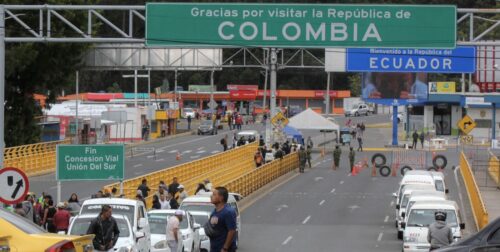
While relations between the United States and Ecuador are at their strongest in years, ties between Ecuador and Colombia are at their lowest amid a trade war initiated by Quito and Noboa’s interference in Colombia’s elections.
In January, seemingly out of nowhere, President Noboa imposed 30 percent tariffs on Colombian products, alleging that the country was not doing enough to collaborate on security matters. Colombia responded in kind by imposing 30 percent tariffs on Ecuadorian products and suspending energy exports to the country. In the last edition of the Ecuador News Round-Up, we reported on Noboa’s likely motivations:
In addition to Noboa’s public justification of the move, his decision may be motivated by a combination of factors, including an attempt to shift blame for his failure to improve Ecuador’s security situation onto Colombia as well as a response to President [Gustavo] Petro’s call the day prior for the release of former Ecuadorian vice president [Jorge] Glas, who is seen by Petro and others as a victim of judicial persecution in Ecuador. Noboa may also be seeking to trigger economic turbulence in Colombia ahead of their upcoming elections in May. Progressive candidate Iván Cepeda, a member of Petro’s coalition, is a front-runner in several polls.
Throughout February and up to mid-March, the conflict escalated. On February 26, citing security reasons again, Ecuador increased its tariffs to 50 percent. Colombia then announced it would do the same for 185 Ecuadorian products. Both countries also sued and countersued each other before the Andean Community (CAN), a regional trade bloc, over the trade policies.
The conflict soon extended beyond trade. As Ecuador launched a new “total offensive” against alleged criminal groups and initiated joint operations with the United States in March, Colombian President Gustavo Petro accused Ecuador of bombing Colombian territory and of killing 27 people after authorities discovered an unexploded bomb on their side of the border. Ecuador denied that the bomb was theirs or that anyone had been killed but acknowledged conducting operations near the border. Petro then announced that Colombia had determined the bomb was Ecuadorian, while the Colombian defense minister said the deaths were not linked to Ecuador. The two countries subsequently formed a binational investigative committee, which concluded that the bomb was in fact Ecuadorian but had likely ended up in Colombia after ricocheting across the border following a strike inside Ecuadorian territory.
After this crisis, tensions appeared to abate, only to flare up again in early April, when an Ecuadorian judge refused to grant imprisoned RC politician Jorge Glas’s petition for additional food and specialized medical care. This prompted President Petro to describe Glas as a political prisoner and to call for his release. President Noboa then accused Petro of threatening Ecuadorian sovereignty, recalled Ecuador’s ambassador to Colombia, and raised Ecuadorian tariffs on Colombian products to 100 percent. President Petro subsequently recalled Colombia’s ambassador to Ecuador and repeated claims that companies linked to President Noboa’s family are involved in drug trafficking. He also increased tariffs for certain Ecuadorian products to 75 percent. The two leaders continued confrontational exchanges in the media, with Noboa accusing Petro of “dancing merengue with the mafia” and expressing support for a right-wing victory in Colombia’s first round of presidential elections in May.
Analysts’ speculation that Noboa’s trade war on Colombia was electorally motivated was borne out on May 4, when President Noboa reduced Ecuador’s tariffs on Colombia to 75 percent following a phone call with right-wing candidate Paloma Valencia, of former president Álvaro Uribe’s party. Uribe himself had visited Ecuador shortly before Noboa raised tariffs to 100 percent, prompting accusations that the move had been coordinated between the two. Although Uribe denied meeting the president during that trip, the two have met before and are on friendly terms, with Noboa telling Colombian media, “I know him personally and have great respect and affection [for him].”
Two days before Colombia’s first round of elections on May 31, President Noboa once again intervened. With momentum on the right shifting from Paloma Valencia to Abelardo de la Espriella, Noboa appeared in a live streamed video call with de la Espriella, treating him as a counterpart who had already secured victory. At the candidate’s request, Noboa announced that Ecuador would fully eliminate tariffs on Colombian goods on June 1 “as a sign of not only goodwill, but of admiration and of hope that we can have a more peaceful region” — a move that de la Espriella promoted as his first diplomatic victory. Colombia’s foreign ministry denounced Noboa’s appearance and said his decision to drop the tariffs was, in reality, made to comply with a May 8 ruling from the CAN, which had ordered both countries to remove the tariffs within 10 days. Nevertheless, Colombia did the same, and as of June 9, tariffs between the two countries had been largely eliminated.
Since taking office, one of Noboa’s key goals has been Ecuador’s return to the investor-state dispute settlement (ISDS) system, following its effective departure from the system years earlier. ISDS mechanisms grant foreign companies and individual investors the right to sue countries in secretive international forums for alleged violations of international investment agreements or trade agreements. These often result in ISDS cases being brought against states that seek to strengthen or implement laws and regulations around environmental protection, workers’ rights, or tax evasion, among other supposed threats to current or future investor profits.
For this reason, and given the country’s negative experience with ISDS, Article 422 of Ecuador’s 2008 constitution prohibits the mechanism, a ban that nearly 65 percent of voters reaffirmed in an April 2024 referendum that Noboa held in an effort to overturn it. In a separate referendum held last year, citizens also voted down Noboa’s bid to rewrite the constitution, a campaign in which opposition to ISDS played a key role.
Nevertheless, ISDS remains a central pillar of the president’s agenda, and he recently scored an important victory. On April 2, Ecuador’s Constitutional Court issued a ruling on the legality of an ISDS-laden bilateral investment treaty (BIT) that Ecuador and the United Arab Emirates (UAE) had signed late last year. The court found the agreement to be compatible with the constitution but conditioned it for legislative approval, provided that the government makes a revision to restrict ISDS-related clauses.
In essence, the court reasoned that because the constitution prohibits ISDS “in disputes of a contractual or commercial nature,” the UAE BIT was permissible as long as it covers only investment disputes, which the court said are a separate category. It asked the government to state explicitly in the text of the BIT that contractual and commercial ISDS are prohibited. Two dissenting judges and legal experts, however, argued that the distinction among commercial, contractual, and investment disputes is inaccurate, deficient, and largely semantic and that the ruling effectively enables broader use of ISDS mechanisms.
Moreover, earlier this month, 16 former UN experts and special rapporteurs, judges, legal scholars, and former Ecuadorian Constitutional Court judges sent a letter to the court expressing their disapproval of the ruling. In addition to the arguments above, they stated that the decision departs from more than a decade of the court’s own jurisprudence and runs counter to the will of voters as expressed in recent referendums. The signatories also highlighted that the decision was handed down amid a climate of “pressures, threats, and harassment” against the judges, noting that officials from the presidency have acknowledged being in contact with the judges while they were deliberating. Separately, 26 former Ecuadorian ministers and high-ranking officials sent a similar letter to the UAE’s foreign minister, urging him not to ratify the agreement.
As CEPR has argued before, the court’s approval of the Ecuador-UAE BIT could open the door to the reintroduction of ISDS through other agreements, including a trade deal with Canada that is pending signature and constitutional review. Apart from its ISDS provisions, this agreement is concerning due to conflicts of interest involving President Noboa and his family, who hold significant stakes in Canadian mining companies that could potentially sue the Ecuadorean state should the trade deal go through.
*Andrés Arauz is currently affiliated with CEPR as a Senior Research Fellow.
Article
Article
Article
Article

Article

Article

Article
Article