
Andrés is a senior research fellow with CEPR. He is an academic and policy researcher with expertise on money and technology, government procurement, development planning macroeconomics, illicit financial flows, and finance and has authored several CEPR reports on Special Drawing Rights and Latin American economies. Andrés also has a broad policy background and experience in Ecuadorian government and electoral politics: he has served as balance of payments statistician for the Central Bank of Ecuador, financial policy advisor at the Ministry of Economic Policy of Ecuador, chief operating officer at the Central Bank of Ecuador, under secretary for public investment, deputy secretary for planning at the National Planning Secretariat of Ecuador, general director of the Ecuador’s National Service for Public Procurement Agency, and Minister of Knowledge and Human Talent of Ecuador. He has been a presidential and vice-presidential candidate.
Andrés has participated in international negotiations at the World Trade Organization, the Andean Community, MERCOSUR, UNASUR, and with the European Union, among others. He has participated in civil society forums at the World Trade Organization and the International Monetary Fund and has written reports and articles for several civil society organizations on tax justice, economic and social human rights, investor-state dispute settlement, and financial transparency. Andrés supports cooperative rural financial associations in Latin America and advises technology companies on monetary and financial issues. He is regularly invited to conferences and seminars organized by think tanks in Latin America, Europe, and the United States. Andrés is a University of Michigan alum, has a FLACSO Ecuador masters, and obtained his PhD in financial economics from the National Autonomous University of Mexico.
All from Andrés Arauz
Putting Climate at the Core of IMF Governance
This paper proposes a necessary update to the IMF’s voting formula by adding a variable representing member states’ shares of cumulative CO2 emissions since 1944.

IMF Surcharges Can Be Removed as Precautionary Balances Are Safely Within Target
With the IMF projecting a steady increase in the amount of countries that will pay surcharges, largely as a result of external economic shocks, it is the right moment for surcharges to be safely terminated.

Lula’s Victory Opens a Window of Opportunity for a New UNASUR
President Lula, designate your ambassador for regional integration and create that channel of communication now. There is no time to lose.

The US Response to the World’s Worst Humanitarian Crisis: Seize and Privatize
What is the role of central bank reserves in a contemporary functioning economy? To whom do these reserves ultimately belong? How rational is it to constitute a parallel private foundation assigned to perform the duties of a central bank?
Special Drawing Rights One Year Later, By the Numbers
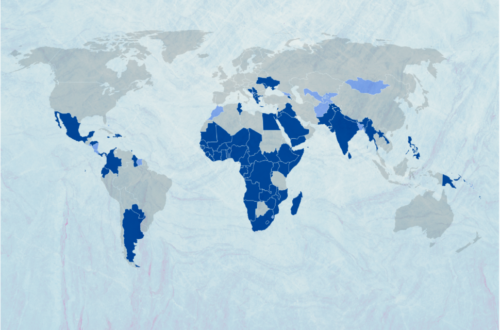
This work updates an April 2022 report and tracks how countries made use of these SDRs from August 23, 2021 to July 31, 2022.
The Reserves of Da Afghanistan Bank Belong to Afghanistan
To help end “hell on earth,” the Biden administration should release the full $7 billion to the central bank of Afghanistan.
IMF Projects No Losses if Surcharges Are Removed
Surcharges can be removed safely without threatening the sustainability of the IMF’s finances, while helping reduce debt payments for many developing countries, thereby helping to save and improve the lives of people around the world.
New IMF Trust Shows the Path Toward SDR Rechanneling Through Development Banks
With the design of the Resilience and Sustainability Trust, the IMF has set a standard for SDR liquidity.
Special Drawing Rights: The Right Tool to Use to Respond to the Pandemic and Other Challenges
Evidence from the Recent $650 Billion Allocation of Special Drawing Rights Shows Countries Made Social and Economic Gains, Supports An Additional Allocation in the Near Future

Eighty Countries Have Already Used Their Special Drawing Rights, but More of these Resources Are Needed
A preview of key findings that we will explore in greater depth in the upcoming report on the use of SDRs since August 2021.
