

Ivana Vasic-Lalovic
Senior Research Associate
Senior Research Associate
Ivana is a senior research associate at CEPR. Her work is focused on issues in the international financial architecture, the International Monetary Fund, and the intersection of the debt and climate crises in the Global South.
Previously, she worked as a data analyst and researcher in the international development and social protection fields. She is a passionate anti-war activist.
Ivana holds a Master of Public Administration from Columbia University’s School of International and Public Affairs, where she studied economic and political development, and a BA in international relations from the University of Pennsylvania.
Her research, articles and op-eds have been published by Development, Foreign Policy, The Hill, and The Bretton Woods Observer, among others.
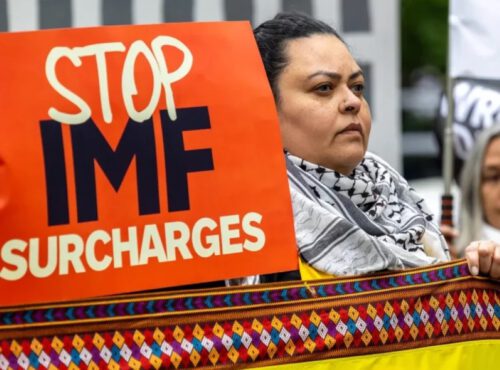
Explore the research on IMF surcharges and their effects on payment systems, banking, and public economics.
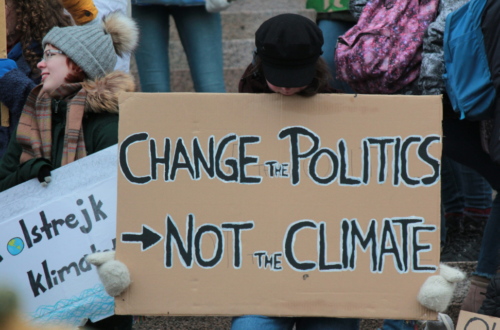
Explore the relationship between climate change and debt in developing countries. Understand how rising debt costs are adding to their vulnerabilities.
This paper presents an estimate of IMF surcharges updated as of February 2024. It shows that 22 countries are now subject to surcharges, a net increase of 6 since our 2023 estimate.

The IMF’s own data supports widespread concerns that the surcharge policy presents a tremendous burden on heavily indebted countries, which is only growing.

New calculations negate one of the main rationales the IMF has put forward to justify its unfair, unnecessary, and counterproductive surcharge policy.

Nearly 80 low- and middle-income countries are considered by international institutions as being in or at risk of debt distress.

Ahead of snap elections scheduled for August 20, 2023, this issue brief looks at some of the results of Ecuador’s economic reforms, policy, and institutional changes over the past 15 years.

This paper proposes a necessary update to the IMF’s voting formula by adding a variable representing member states’ shares of cumulative CO2 emissions since 1944.

In this paper, we will demonstrate that by turning a reserve asset that adds nothing to a country’s debt, and that has no conditions attached to it, into a loan with conditions attached, the main proposals for rechanneling SDRs have altered the nature of
