
Article • Dean Baker’s Beat the Press
Antitrust and Prescription Drugs: What Krugman and Khan Miss
Article • Dean Baker’s Beat the Press
I have tremendous respect for both Paul Krugman and former FTC Commissioner Lina Khan. That is why it was frustrating to see their brief discussion of pharmacy benefit managers (PBMs) in a longer interview that Krugman did with Khan.
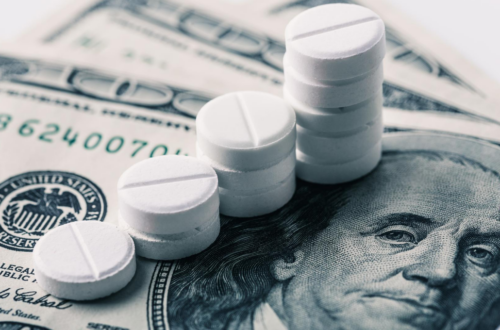
Khan noted how, in her role as FTC commissioner, she sought to crack down on anticompetitive practices by PBMs that raised drug prices. While Khan was likely right that PBMs were abusing their market power to push up prices, she and Krugman both missed the 800-pound gorilla in the room. Drugs are expensive because of the government, specifically government-granted patent monopolies.
I know I harp on this point endlessly, but it is a big deal, both in terms of money ($550 billion a year in aggregate) and because it directly affects people’s health and ability to stay alive. The key point here is that we don’t need patent monopolies to finance the development of new drugs; we can do it through other mechanisms, such as direct public funding. We already do this to a substantial extent through the National Institutes of Health and other government agencies.
There are three reasons why this is a huge deal:
In principle, public funding could be used to fill the void, but there is no reason to have a sharp break in research between developing patentable products and developing other cures and treatments. Some of us had hope that RFK, Jr. might push for more funding for research in this direction, but he seems mostly interested in pushing nonsense about vaccines and Tylenol and putting on a clown show with his exercise routines.
As FTC commissioner, Khan was not in a position to promote alternative mechanisms for financing the development of new drugs, but she is certainly free to raise the issue in the sort of wide-ranging discussion she had with Krugman. The pharmaceutical industry would be prepared to kill to preserve its current mode of operation, so even if we could get the argument on the table, it will be a long, tough road to bring about any changes. But we should be able to get the discussion started. I was disappointed that Khan and Krugman didn’t go there.
Article
Article
Article

Article
Article

Article
Article
Article