
Article • Dean Baker’s Beat the Press
Canadian Trade Policy: Good Clean Fun
Article • Dean Baker’s Beat the Press
For reasons that likely make sense only to him, Donald Trump has decided to have a trade war with Canada, our longstanding ally and second largest trading partner. Apart from wanting to annex Canada, it’s not clear what Trump hopes to get out of his great efforts to turn friends into enemies.
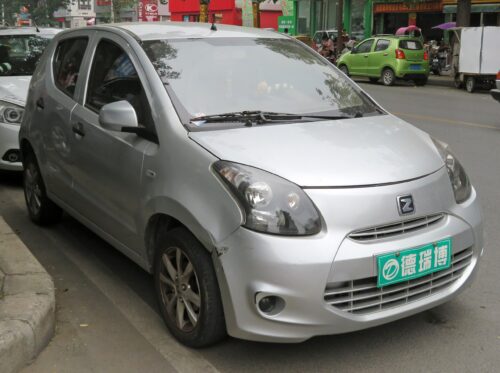
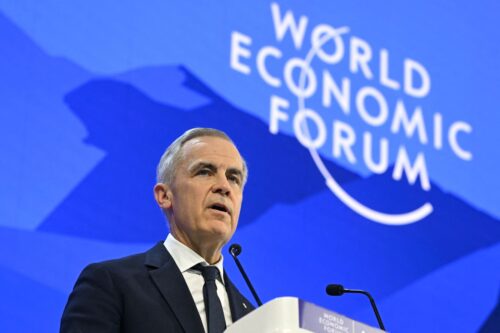
Canada’s new prime minister, Mark Carney, is working up plans to respond to Trump’s attack. While Carney is a good economist, and likely has many clever ideas, there is one that should be high on his list. Carney should look to import low-cost electric vehicles (EV) from China.
The basic story is that China is now producing high quality low-cost EVs that sell in China for as little as $10,000. It also has made rapid progress in the development of its batteries so that its newest versions can be recharged in as little as five minutes. This should present a great opportunity for Canada.
The US, Canadian, and Mexican auto industries have become thoroughly integrated over the last three decades, which was a goal of NAFTA and the USMCA, the successor deal negotiated by Trump. Trump’s tariffs throw a huge monkey-wrench in current production arrangements. Whether or not this was the intention, much of the industry is likely to shut down as companies try to adjust to a world with tariffs higher than we’ve seen in many decades.
This will cause unemployment in all three countries. However, rather than just live with the pain, Canada can look to start importing high quality low-cost EVs from China. The prospect of getting cars at considerably lower prices than the models currently available should help alleviate the pain of the trade war for many Canadians, but it goes much further.
As it lets in Chinese EVs, Canada would want to restrict sales to a limited share of its market, in order to not destroy domestic production completely. But as the price to China for opening the door, it can require the country’s car makers transfer the technology for producing EVs and batteries — so that either Canadian companies will soon be producing them, or Chinese manufacturers will be building cars and batteries in Canada, employing Canadian workers.
While the price of Chinese EVs will inevitably be pushed well above their price in China if Canada restricts the supply, in order to attract attention to the potential with these cars it could make some number available at their import cost through a lottery system. This would point out that EVs are cheap if we don’t put up barriers making them expensive.
Ceding a share of its market to Chinese EVs, while arranging for a transfer of technology, would set Canada on a path towards far more rapid conversion to EVs and clean energy. It also would pose an interesting challenge to Trump. The longer he wants to play trade war, the further Canada will go in developing its EV and clean energy industry.
Trump could continue to push for an autarkic industry that produces traditional internal combustion vehicles, but that would increasingly leave us behind Canada and the rest of the world. Our cars would effectively be 21st century Trabants, the East German car that became an international laughingstock once the Berlin Wall fell.
If Canada were to go the route of partnering with China on EVs and clean energy, it would also create a situation where the costs of Trump’s trade policy to the United States would escalate over time. As an EV industry based on Chinese technology became more securely grounded in Canada, there would be less interest in re-integrating with the US industry.
That would mean that even if Trump were to drop his tariffs at some future point, the US auto industry would still be out in the cold. That is, unless it was willing to adopt a Chinese EV based approach. That might be bad news for Donald Trump but it would be good for the planet, since it knows that global warming is real.
Article
Article

Article

Article
Article
Article

Article
Article
