Article • Dean Baker’s Beat the Press
Iran: A Brutal Dictator is Dead
Article • Dean Baker’s Beat the Press
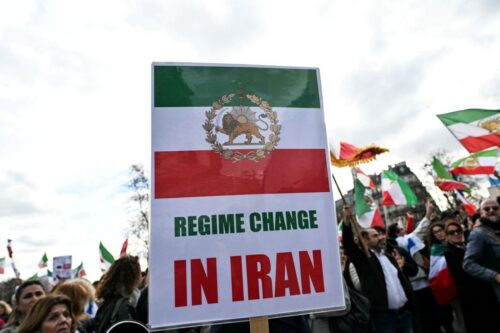
I don’t have any great insights on what is likely to happen in Iran going forward now that its top leadership seems to have been killed by US-Israeli airstrikes. I’m not sure anyone else does either, including Donald Trump.
Anyone who thinks that ridding the country of a murderous dictator is clearly a turn for the better, should take a look at Libya today. Libya had been ruled by Moammar Gaddafi from 1969 to 2011. Gaddafi jailed or killed his political opponents and probably had less claim to popular support than Ayatollah Khamenei did in Iran.
In 2011 there was an uprising in the eastern part of the country that Gaddafi mobilized to crush. At that point, the United States, France, and U.K. intervened with their air forces, attacking Gaddafi’s heavy weapons and troop concentrations. This undermined Gaddafi’s military and led to his overthrow and killing later that year.
However, this did not turn out to be a happy outcome for the Libyan people. The country has been mired in a civil war ever since Gaddafi’s overthrow, with several different factions contesting for control. The fighting has led to tens of thousands of deaths and disrupted normal life for much of the country. The country is still divided almost 15 years later. Per capita income is roughly half of its peak under Gaddafi.
Afghanistan and Iraq
If the idea is not to have boots on the ground in Iran, then the Libya case might be the most useful model, but if we look to cases where we overthrew brutal regimes and did have boots on the ground, we can just look to Iran’s two neighbors, Afghanistan and Iraq.
For those too young to remember, George W. Bush invaded Afghanistan in the fall of 2001 following the Al Qaeda attack on the World Trade Center and the Pentagon. Al Qaeda had been operating out of Afghanistan, with the Taliban government’s knowledge and likely support.
This meant we had a good case for attacking Afghanistan. Interestingly, when we did attack, we invoked NATO’s Article 5 clause for collective self-defense, the first and only time it has ever been used. Other NATO countries, notably Trump’s current enemies, Denmark and Canada, sent troops and supported the operation.
Most people probably know the basic story of the US operation in Afghanistan, since it lasted two decades and just ended in 2021. Overthrowing the Taliban proved to be relatively easy. Crushing Al Qaeda was somewhat more difficult. Its leader, Osama Bin Laden, escaped to Pakistan, where he was killed in an attack by a Navy Seals unit a decade later.
And running Afghanistan proved to be even more difficult. The Taliban continued a guerrilla war until the United States finally withdrew. The government we supported was hopelessly corrupt and it turned out that when the US troops left, no one was willing to fight for it. The Taliban quickly regained power as the US troops headed for the exit. (For those keeping score, the departure was negotiated with the Taliban by Trump, it was executed by Biden.)
The invasion of Iraq took place a year and a half later. Like Trump’s attack on Iran, it was based on a pack of lies. Bush had the top people in his administration push the line that Iraq was developing nuclear weapons. As was the case with Iran before Trump cancelled the treaty, there was an inspection team in place to ensure that Iraq did not develop a bomb. The inspectors insisted that Iraq did not have a nuclear bomb and was not close to getting one.
But Bush wanted to invade so he refused to let reality get in the way. The Bush team also occasionally pushed the line that Iraq was behind the September 11th attacks, even though Al Qaeda had almost nothing to do with Saddam Hussein and Iraq. Bush probably thought, why not throw 9-11 in for good measure, sort of like Trump claiming that Iran rigged the 2020 election.
Anyhow, as with Afghanistan, overthrowing the government was easy. Iraq’s military was no match for the air and ground forces of the US. Governing the country proved to be considerably more difficult. While Defense Secretary Donald Rumsfeld said that the Iraqis would welcome us with flowers (seriously), they more often welcomed us grenades and improvised explosive devices (IEDs).
After taking office in 2009, President Obama carried through a campaign promise to draw down US forces in Iraq. While some are still there today, the number is comparatively small. In all, more than 4,500 US solders were killed in Iraq and more than 30,000 were wounded.
As far as the Iraqi population, most were probably happy to be rid of Saddam Hussein, but they have not gotten anything close to a stable democracy. Much of the country has been involved in civil wars over the last two decades.
We can hope that a post-Khamenei future will be brighter for the people of Iran, but it is wrong to believe that we if we kill off a dictator, things will automatically get better. That is not what history shows.
Article
Article

Article

Article

Article

Article
Article

Article