Article • Dean Baker’s Beat the Press
NYT Columnist Thomas Edsall Trashes Deliverism: Should the People of Texarkana Feel Delivered?
Article • Dean Baker’s Beat the Press
There is an ongoing debate among people left of center as to whether delivering for working class people materially will translate into votes in elections. I’m agnostic on the electoral impact of delivering just because I can’t say I have studied the data closely enough. However, since the purpose of policy should be to make people’s lives better, I see delivering as essential, whether or not it translates into votes.
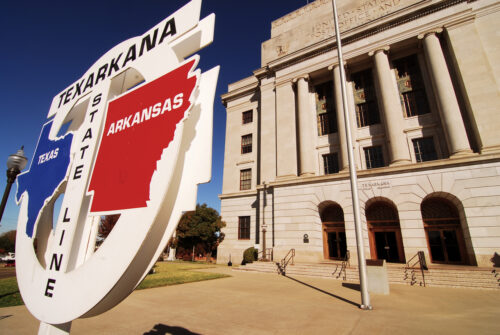
My agnosticism was not seriously challenged by a Thomas Edsall column with the headline, “Democrats Delivered Millions to Texarkana. It Didn’t Matter One Bit.” The piece describes how the Biden administration had targeted Texarkana for a large chunk of its green investments. After documenting all the investments that went to the area, Edsall tells readers:
“In 2020, Texarkana, which is made up of Miller County, Ark., and Bowie County, Texas, voted overwhelmingly for Donald Trump — 72.3 percent to 27.7 percent for Biden, a 44.6-point margin. In 2024, despite the growth of green industry and economic improvement during the Biden years, Trump beat Kamala Harris in the Texarkana counties with 75.4 percent of the vote and 24.6 percent for Harris, an immense 50.8-point margin.”
While the green investments obviously didn’t help the Democrats last fall, the case that they delivered for the people of Texarkana is much more ambiguous than Edsall indicates. Edsall reports that the unemployment rate fell from 6.8 percent in January of 2021 to 4.2 percent in January of 2025.
That is a pretty sharp reduction, but why would anyone use January of 2021 as their baseline? At that point we were still in the early phase of the recovery from the pandemic recession. If we instead used the average unemployment rate from the three months before the pandemic (December 2019 to February 2020), the unemployment rate was an identical 4.2 percent.
Flipping this over and taking employment — that stood at 60,600 in October of 2024, the last month before the election. Taking the last three months (August to October), the average employment level was 60,400. That compares to 60,500 in the last three months before the pandemic, 100 more than in the three months just before the election.
There does appear to have been a healthy jump in wages, with the real average hourly wage more than 10 percent above the pre-pandemic level by Election Day. However, even with this measure the story is more ambiguous. The real average hourly wage was well below the pre-pandemic level through most of the recovery as can be seen.

It was only in 2024 that it crossed the average for the period from October to December of 2019. (There appears to have been a dip in the two months just before the pandemic for reasons I don’t know.) After roughly matching the pre-pandemic wage level in the winter months of 2024, real wages began to rise rapidly in the spring and summer. Perhaps this should have led Texarkana’s workers to believe that the Biden-Harris administration had delivered for them, but I don’t know that we can assume that the experience of the prior three years might not have weighed more heavily.
I will also add that while people do have direct experience of the economy, their views are also affected by what they see and hear both from friends, family, and co-workers, but also from the media. And the latter influences what they hear from friends, family, and co-workers.
This was almost invariably negative, not just from right-wing sources like Fox News, but also from mainstream outlets like the New York Times and CNN. They not only almost completely ignored unambiguously positive news — like soaring wage growth for low-paid workers, an unprecedented boom in factory construction, and a huge surge in new businesses — they badly and repeatedly misrepresented major economic issues.
For example, the New York Times had several major pieces about the difficulty students have paying for college and dealing with debt, which never mentioned Biden’s very generous income-driven repayment plan (now nixed by Donald Trump). And several outlets decided that we faced a retirement crisis even though near retirees were better prepared for retirement than at any point in at least four decades (here and here).
After telling us deliverism didn’t do the trick, the piece then tells us the problem is that the Democrats focus too much on social issues like LBGT rights. This focus undoubtedly did alienate many working class voters that don’t share these views, but there is another part of this picture that Edsall chooses to skip over.
The people most identified with the Democratic Party — the Clintons, the Obamas, Nancy Pelosi, and even Joe Biden — are all very rich. It is not just a matter of having comfortable upper-middle class lifestyles, they have tens of millions of dollars and hang out with other very rich people. It’s true that Republican leaders are also very rich, but they don’t claim to speak for ordinary workers in the same way. In fact, for someone like Donald Trump claiming to be rich is a big part of his schtick. He says he will do for the country what he did for himself.
I can’t say that the wealth of Democratic leaders is a major factor pushing working class people away from the party, but the right-wing media certainly seem to think it is a useful weapon. They regularly highlight, and often invent, stories about Democrats being rich. It is a way to tell ordinary workers that they are not like them — and ostensibly, that they don’t have their interests at heart. Anyhow, if we are moving away from strictly economic determinants of voter attitudes, it might worth asking about whether the extreme wealth of leading Democrats matters.
It probably also doesn’t help that the Democrats are associated with policies that played a major role in redistributing income upward over the last four decades. These would include trade deals (including the intellectual property provisions) like NAFTA and China’s entry to the WTO and the bank bailouts following the collapse of the housing bubble.
I will still say that I consider myself agnostic on the deliverism question. If Democrats were able to give the country a good national health care system and affordable housing, my guess is that they would be rewarded at the polls. But perhaps not, it would be nice to be able to test that one.
Article
Article
Article

Article

Article

Article
Article

Article