
Article • Data Bytes
The $2.13 Subminimum Wage: When is Enough Enough?

Article • Data Bytes
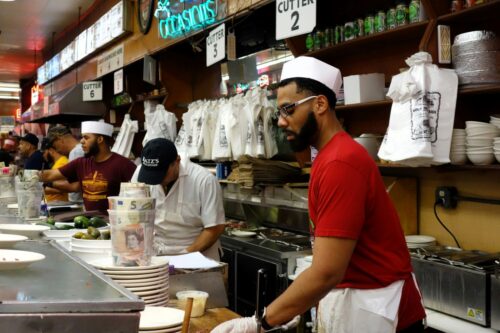
The federal subminimum wage has been stuck at $2.13 since 1991. This has unquestionably been a boon for employers; as the price of everything else has increased substantially, the cash wages paid to the tipped workforce have not budged in three and a half decades. But even though it has been frozen this long, that doesn’t mean it cannot be changed.
The subminimum wage policy disproportionately benefits the full-service restaurant industry, which is the largest employer of tipped workers. It was their lobby, the National Restaurant Association, that used it as a bargaining chip that ultimately froze it in perpetuity through the 1996 Fair Labor Standards Act Amendment. Thus, it is only through the passage of another amendment to the FLSA via Congress that this federal policy could be changed. Such an amendment may seem impossible given the political climate in the country. However, it does not have to be the case.
The federal subminimum wage was included among fourteen policy briefs featured in CEPR’s recently released Majority Agenda series. The Majority Agenda highlighted an array of policy issues where Americans express a significant degree of agreement regardless of party affiliation.
And here public opinion is clear. As a matter of fact, likely voters don’t want an increase in the $2.13 subminimum wage —they want it eliminated. A Data for Progress poll reported that nearly three out of four (73 percent) likely voters favored full elimination of the subminimum wage in favor of all workers being paid at least the regular minimum wage, including 82 percent of Democrats, 75 percent of Independents, and 62 percent of Republicans.
It is hard to imagine many issues that garner such broad support across the political spectrum. And yet there is little evidence that Congress is serious about addressing this issue. The Living Wage for All Act, introduced in April, calls for an increase in the minimum wage to $25 an hour and the eventual elimination of the subminimum wage.
This is encouraging news. The fact that Congress has not done enough to seriously consider ways to address the now nearly meaningless $2.13 subminimum wage represents a breakdown of democracy and democratic values, and one that comes at a considerable cost to many hard-working Americans.
Article
Article

Article

Article
Article

Article
Article
Article