
Article • Dean Baker’s Beat the Press
The Washington Post Says We Should Stop Paying Interest on Government Bonds Because It All Goes to the Rich

Article • Dean Baker’s Beat the Press
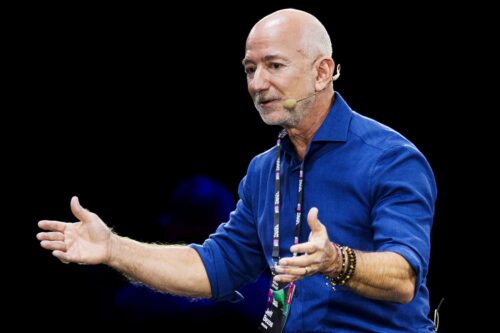
Of course, Jeff Bezos’ opinion section didn’t advocate a measure that would hurt his rich friends, it gave a version this absurd argument as a reason to get rid of Social Security. It lent space to right-wing commentator Ramesh Ponnuru to tell people “Don’t Save Social Security.”
Ponnuru quickly tells us of Social Security’s fatal flaw:
“As two experts on the program recently wrote, Social Security sends only 7 percent of its benefits to the poorest 20 percent of senior citizens. The richest 20 percent receive 29 percent.”
To all of us familiar with the Social Security system, this does not seem strange at all. The rich contributed far more to Social Security system than the poor. If someone earned $150,000 a year their whole life, they would have paid ten times as much into the system as someone who earned $15,000 a year.
In fact, the gap in contributions is likely to be even larger since higher income earners are less likely to experience long periods of unemployment or missing work due to poor health. For these reasons, it is not surprising that higher income people get more money back from Social Security each year than lower income people.
In this way, it is similar to government bonds. If you own $1 million in bonds you get far more in interest than if you own $10,000, and even more than if you didn’t own any at all, which is true for most low-income households. No one would see this inequality as a problem for paying interest on government bonds, nor should they see it as a problem for Social Security.
Social Security is a public pension system, with an important social insurance component. The social insurance component takes three forms. It includes disability benefit if people become unable to work, a situation faced by almost a fourth of all workers at some point in their lives. It has a survivor benefit for surviving spouses and minor children, and it has a highly progressive payback structure for benefits.
Under Social Security’s payback structure, workers get 90 percent of their first $15,000 of average earnings, and 32 percent of their average earnings between $15,000 and $93,000. They get just 15 percent of their average earnings over $93,000 up to the cap on taxable income of $184,500. (These earnings numbers are all inflation and wage-indexed, which makes the story a bit more complicated, but this simple arithmetic captures the basic picture.)
This means that a worker who earned $15,000 a year their whole life would get $1,250 a month in benefits. The worker who earned $150,000 a year would get $3,920 a month. Therefore, a worker who paid ten times as much into the system gets a bit more than 3 times as much back in monthly benefits.
This is the third social insurance aspect of the program. People’s lifetime earnings outcomes depend in large part on their skill and effort, but there is also a huge element of luck. Some people with very promising careers end up in accidents or get hit with serious illnesses and end up earning far less than they anticipated when they were young.
Or, they just have bad luck with their careers. Maybe AI makes their hard-earned skills worthless, or they ended up working for Myspace (look it up) rather than Facebook. Social Security’s progressive payback structure provides insurance against these bad outcomes so that even if someone had not fared well in their working career, they still can count an income that will keep them out of poverty in retirement.
There is certainly a strong argument for making it more progressive. Increasing monthly benefits for low-earning workers by say $200 a month, while phasing it out for those higher up the ladder, would cost little but make a huge difference to these retirees. The cap on taxable income can also be raised.
One of the main reasons Social Security faces a shortfall is that a much larger share of wage income goes over the top and avoids taxation. Back in 1982, the last time the program had major changes, only 10 percent of wage income was above the cap and avoided taxation. Now it is close to 18 percent of wage income that escapes the payroll tax.
This was a direct result of government policies in areas like trade, labor management conflict, and anti-trust which all had the effect of shifting income upward. With less money coming into the program, it is less able to pay benefits.
Also, contrary to what Ponnuru tells readers, this is mostly not an issue of living longer. Increased longevity is largely a story of better off workers living longer. Those with college degrees now have a life expectancy of 84.3 years. Those with just a high school degree have a life expectancy of 77.3 years and those who didn’t get a degree have a life expectancy of just 73.5 years.
This gap also shows up in life expectancy by state. Massachusetts, one of the richest states, has a life expectancy of 79.6 years. Louisiana, whose governor Jeff Landry wanted to send hospital ships to Greenland, has a life expectancy of 72.2 years. It doesn’t make sense to reduce retirement benefits for low and middle-income workers because better paid workers are living longer lives.
Social Security Is Incredibly Efficient
One aspect of the Social Security system that is underappreciated, probably because politicians lie about it, is that it is incredibly efficient. The administrative cost of running the program is just 0.4% of the benefits paid out. By contrast, the cost of managing a typical 401(k) account run between 1.0-1.5% of the account’s holdings.
The cost of a 401(k) account is both the overall fee charged by the institution that manages the account and also the cost charged by individual funds. The latter fees by themselves can run as high as 1.0%.
The other part of this story that is often misrepresented is that this 1.0-1.5% is on the stock of money in an account, not the annual payout. If a typical dollar sits in a 401(k) for 20 years by the time a retiree gets their payout, this means they will have paid 20-30% of the eventual payout in fees to the financial industry.
That makes the cost of private accounts 50 to 75 times as large as the administrative cost of Social Security. And this is before even adding a cost of 10 percent or so that the insurance industry charges to convert a stock of money in a 401(k) into a monthly payment in the form of a life-time annuity.
If Elon Musk and his DOGE boys were serious about promoting efficiency, they would have taken their chainsaw to the financial sector. That is where the big waste in the economy lies.
The Goal of Jeff Bezos’ Opinion Section Is to Make the Rich Richer
It is not a surprise that Bezos would run a column trashing Social Security. After all, it is a program that benefits hundreds of millions of moderate and middle-income Americans. In other words, people he doesn’t give a damn about. If the program was privatized, it could mean hundreds of billions of dollars a year for his friends in the financial industry. That’s real money even in billionaire land. Look to see many more columns attacking Social Security in the Jeff Bezos Washington Post.
Article

Article

Article

Article

Article
Article

Article
Article