Article • Dean Baker’s Beat the Press
The Power of Trump’s New India-China Alliance
Article • Dean Baker’s Beat the Press
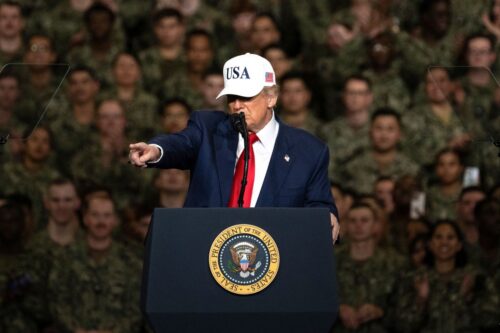
Donald Trump is a true pro at taking credit for things he didn’t do. For example, last week he had his Transportation Secretary, Sean Duffy, boast about the new Amtrak Acela trains, which were funded and built due to President Biden’s infrastructure bill. In his quest to get a Nobel Peace Prize, Trump has been taking credit for all sorts of peace agreements that either he had little to do with or did not bring peace.
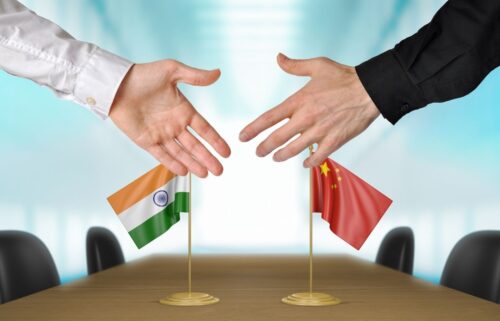
The latter effort seems to have had the perverse effect of pushing India’s Prime Minister, Narendra Modi, into overcoming decades of enmity and seeking closer ties with China. To be clear, this is probably a great thing for the world. The world’s two most populous countries, each with more than 1.4 billion people, stand much to gain by cooperating with each other economically and politically, rather than continuing hostile relations that have occasionally led to armed conflicts.
However, this reversed a longstanding effort by the United States to cultivate India as a counterweight to China. While still far poorer than China, India was rapidly building up its infrastructure and industrial capacity so that it could be an alternative source of manufacturing for many items now produced in China. The 50 percent tariffs on imports from India — that Trump seems to have imposed in a temper tantrum — pretty much ends that dream.
The issues that have arisen between China and India over decades are not going to disappear overnight. It’s not clear how far the shared dislike of Donald Trump will take these countries in becoming allies, but it is worth noting how formidable they would be if they actually could integrate their economies.
The media grossly understate the size of India’s economy by expressing its GDP in dollar terms. If instead they used a purchasing power parity (PPP) measure of GDP, a measure that applies the same set of prices to goods and services produced everywhere in the world, India would already be the world’s third largest economy more than twice the size of countries like Japan and Germany.
The I.M.F. puts India’s GDP in PPP terms at $17.7 trillion this year, almost 60 percent of the size of the U.S. economy. It is projected to grow by more than a third by 2030. There are reasons why the dollar measure of GDP can be more useful, notably in terms of a country’s ability to invest or provide aid elsewhere in the world.
That matters in the case of India more than with China, which has a PPP measure of GDP more than a third larger than the United States. China has long run massive current account surpluses, which gives it trillions of dollars to hold as reserves and to invest where it pleases.
Here’s the picture if we envision the unified economies of China and India compared to the United States.
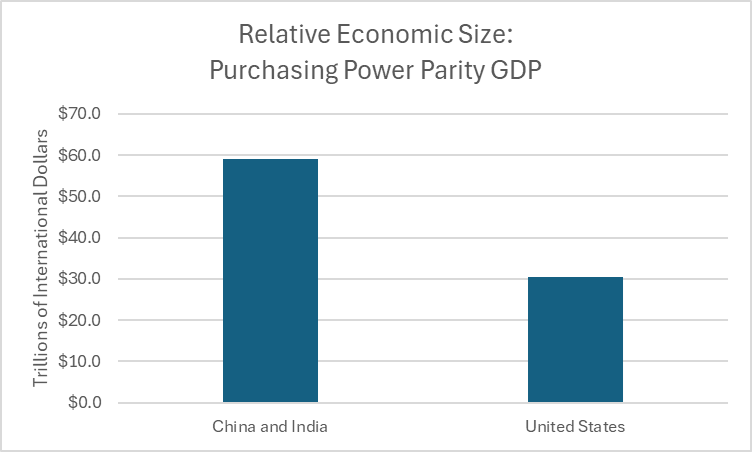
In years past someone could reasonably object that the US bar should include the economies of our allies in the European Union, Canada, the UK, and elsewhere. But thanks to Donald Trump’s America First policy, the US bar appropriately stands alone. I suppose we should give him credit for that.
Article
Article
Article

Article

Article
Article
Article
Article