Article • Dean Baker’s Beat the Press
What Do You Know, Overtime Pay Is Still Taxable!

Article • Dean Baker’s Beat the Press
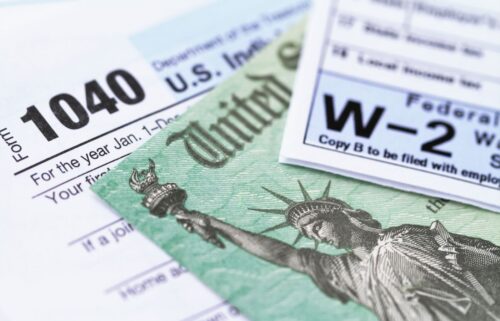
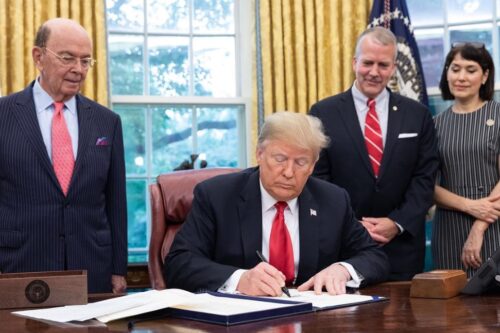
In his campaign last fall, one of Donald Trump’s “populist” tax cuts was a promise to end taxes on overtime pay. This made little sense as policy, for reasons I’ll get to below, but it undoubtedly had some political appeal.
While most workers don’t work overtime (or get paid for it if they do), many workers in manufacturing and a few other industries often get paid overtime. The idea of making the pay for these extra hours tax free probably sounded pretty good to these workers. It likely helped win Trump votes, which was the point of the promise.
Now that the “Big Beautiful Bill” (BBB) has passed, it turns out that tax-free overtime may not mean what many workers thought. The most obvious interpretation of making overtime tax-free is that workers would not pay taxes on the wages they received for putting in more than 40 hours a week. This means that if a worker’s base pay was $30 an hour, and they got an overtime pay premium of $15 an hour for their hours beyond 40 a week, they wouldn’t have to pay taxes on the $45 they earned for each hour of overtime.
However, that is not what the BBB says. The BBB only exempts the overtime premium — $15 an hour in this case — not the full $45 an hour. The amount of money that workers would save would be one-third of what many were expecting. That likely will disappoint many workers getting overtime pay.
As I said above, exempting any amount of overtime pay is bad policy. The most obvious reason is that it is incredibly inequitable. Suppose a worker has two jobs, as many do. If they work 30 hours a week at one job and 20 a week at their second job, they would not get any overtime pay.
That already puts them at a disadvantage compared to a worker who puts in 50 hours at one job. But now we are making the inequity worse by giving a tax benefit for the overtime hours. It’s hard to see how that makes sense.
But if gets worse. One of the main reasons for establishing the overtime wage premium in the 1937 Fair Labor Standards Act (FLSA) was to discourage employers from forcing workers to put in long hours. It is important to remember that most overtime is not voluntary. Employers tell workers that they will work 50 or even 60 hours a week, and if they don’t like it, they can get a new job. Only if workers have a union contract that explicitly prohibits forced overtime, do they have the option to say no.
The FLSA doesn’t give workers the option to say no, but it does force employers to pay a premium. The goal was to get them to hire more workers, rather than make workers put in long hours. The goal of many people at the time was to shorten the workweek further as gains in productivity allowed us to produce more in less time. We could reduce the standard work week, before the premium kicked in, to 38 hours, or even 35 hours, as several countries in Europe have done.
Making overtime tax exempt goes in the exact opposite direction. It is effectively having the taxpayers subsidize employers who force workers to put in long hours. It turns out that the subsidy in the BBB is apparently not as large as I and many others had thought. In that sense, the policy is not as bad as I had previously believed.
But it is still unfortunate that many voters might have been deceived about tax-free overtime. Politicians should be honest about their campaign promises, even when they are bad policy.
Article

Article

Article

Article
Article

Article
Article
Article