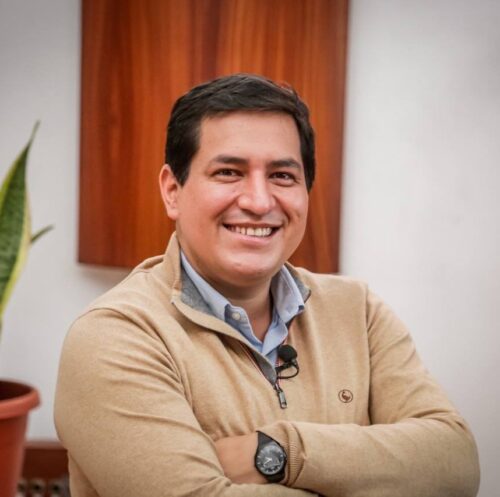

Andrés is a senior research fellow with CEPR. He is an academic and policy researcher with expertise on money and technology, government procurement, development planning macroeconomics, illicit financial flows, and finance and has authored several CEPR reports on Special Drawing Rights and Latin American economies. Andrés also has a broad policy background and experience in Ecuadorian government and electoral politics: he has served as balance of payments statistician for the Central Bank of Ecuador, financial policy advisor at the Ministry of Economic Policy of Ecuador, chief operating officer at the Central Bank of Ecuador, under secretary for public investment, deputy secretary for planning at the National Planning Secretariat of Ecuador, general director of the Ecuador’s National Service for Public Procurement Agency, and Minister of Knowledge and Human Talent of Ecuador. He has been a presidential and vice-presidential candidate.
Andrés has participated in international negotiations at the World Trade Organization, the Andean Community, MERCOSUR, UNASUR, and with the European Union, among others. He has participated in civil society forums at the World Trade Organization and the International Monetary Fund and has written reports and articles for several civil society organizations on tax justice, economic and social human rights, investor-state dispute settlement, and financial transparency. Andrés supports cooperative rural financial associations in Latin America and advises technology companies on monetary and financial issues. He is regularly invited to conferences and seminars organized by think tanks in Latin America, Europe, and the United States. Andrés is a University of Michigan alum, has a FLACSO Ecuador masters, and obtained his PhD in financial economics from the National Autonomous University of Mexico.
All from Andrés Arauz
Bolivia’s Streets Have Erupted. Here’s Why.
Bolivia is facing growing unrest as fuel shortages, rising prices, and economic uncertainty spread across the country. With reports of a possible IMF loan, many Bolivians fear a return to the austerity policies of the past, including subsidy cuts and other measures that could further increase the cost of living.
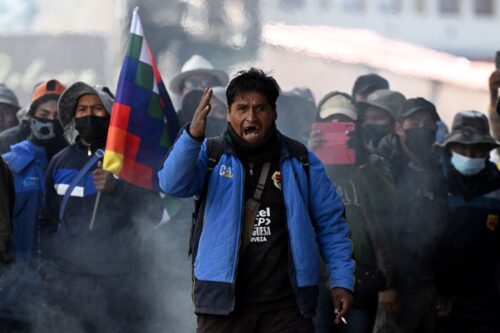
Producing Scarcity: Sanctions on the Venezuelan Central Bank
Central bank sanctions have paralyzed Venezuela’s financial system, making economic recovery difficult even as some restrictions ease.
An SDR Playbook for the IMF
A new working paper shows how an IMF playbook could boost the global economy by providing guidance to countries on how best to maximize use of the Special Drawing Rights they receive.
Surcharge Reform: Three Scenarios for the IMF Board
Discover the scenarios for surcharge reform proposed by the IMF Board. Learn why CEPR advocates for the elimination of these punitive fees.
Three Years After SDRs Were Issued, Debt-Based SDR Rechanneling Has Failed
Gain insights into the allocation of Special Drawing Rights (SDRs) and the disparities between wealthy nations and developing countries.
The Case for the Complete Removal of IMF Surcharges: Historical Precedents and a Growing Burden
Explore the research on IMF surcharges and their effects on payment systems, banking, and public economics.
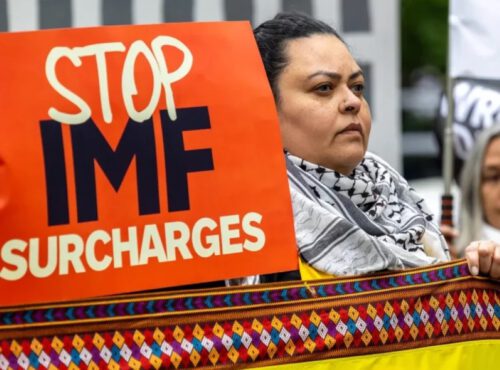
The IMF’s Effective Lending Rate for Large Borrowers Is Now at Over 8 Percent
The IMF is considered a “super-senior” creditor for developing countries, but it is now charging over 8 percent for disbursements to its most indebted borrowers, due in part to surcharges.

No More Excuse for Surcharges: the Target for Precautionary Balances Has Been Reached
New calculations negate one of the main rationales the IMF has put forward to justify its unfair, unnecessary, and counterproductive surcharge policy.
More SDRs for Latin America and the Caribbean: An Effective Tool in an Era of Multiple Crises
This report explains how issuances of Special Drawing Rights (SDRs) by the International Monetary Fund (IMF) are an effective tool to mitigate the effects of the multiple crises that Latin American and Caribbean countries currently face.

Realism About Investment Treaties
As EU member states withdraw from the Energy Charter Treaty en masse, developing economies should call for an overhaul of many more investment treaties.