Article • Expose the Heist: Power and Policy in Unprecedented Times
The Troubling Precedent of Federal Immunity for Corporate Pollution
Article • Expose the Heist: Power and Policy in Unprecedented Times
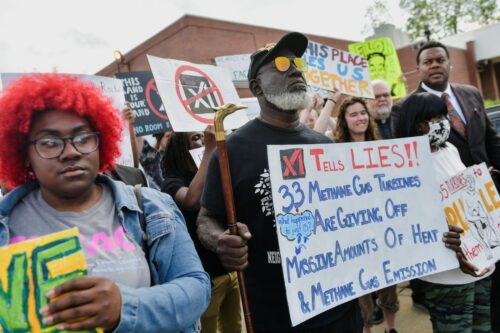
Last week, the Department of Justice (DOJ) filed a notice in a US District Court to dismiss a case between the NAACP and Elon Musk’s xAI based on “federal policy, national security, and the public interest.” The case revolves around a gas turbine plant dubbed the Colossus Gas Plant that residents complain is pumping toxic pollutants into nearby neighborhoods. But the DOJ states that the turbines are essential to nearby data centers that power xAI’s Grok, an AI tool the government says is critical to military operations in Iran. DOJ’s lawyers are also arguing that citizens don’t have the right to sue, a stance that is quickly becoming the de facto position within the administration on pollution.
It all started in 2025, when residents of Boxtown, a predominantly Black neighborhood in Memphis, Tennessee, saw the arrival of Musk’s xAI, which took over an old manufacturing factory to build its Colossus 1 data center. To power the data center, the company installed methane-burning, or gas, turbines. Per the Environmental Protection Agency’s (EPA) own site, these turbines emit pollutants, including nitrogen oxides, sulfur oxides, and carbon monoxide, which are linked to increased rates of asthma, respiratory diseases, heart problems, neurological issues, and certain cancers.
Residents pushed back, but city leaders, including the Greater Memphis Chamber of Commerce, sided with the company, stating that the pollution produced by the gas turbines needed to power the center would be negligible. However, researchers at the University of Tennessee, Knoxville, found that the average concentration of nitrogen dioxide in South Memphis has increased by 3 percent, with peak levels reaching 79 percent above pre-xAI levels in areas immediately surrounding the data center and by 9 percent in nearby Boxtown.
Then, between August and December 2025, xAI and MZX Tech LLC installed and began operating 27 gas turbines in nearby Southaven, Mississippi, which borders South Memphis, to power its Colossus 2 data center. Plans are underway for another facility, dubbed Colossus 3, which will be even closer to the Colossus Gas Plant.
In April 2026, the NAACP filed suit seeking to cease operations of the Colossus Gas Plant in Mississippi. The NAACP’s main argument is that xAI did not receive Clean Air Act permits from the EPA, which would require the company to determine the best available control technology (BACT) to reduce the plant’s emissions and to use that technology throughout the plant’s operating life. The NAACP is arguing that until xAI obtains the permits and implements the necessary pollution controls, the plant should shut down.
The DOJ notice states that shutting down the plant could threaten AI innovation and national security interests. The DOJ also argues that the Clean Air Act grants “primary enforcement authority” to the EPA and state regulators, not citizens. DOJ states that Mississippi reviewed xAI’s plan and did not request permits and approval.
What’s concerning is that some of the DOJ’s arguments bear a passing resemblance to a recent Supreme Court decision in Louisiana. In the decision on Plaquemines v. Chevron, the Supreme Court overturned a lower court ruling requiring the oil company to pay $745 million to the parish for damages to its wetlands. The parish had alleged that Chevron lacked the required permits and that certain uses of the state’s coastal zone had been started in violation of Louisiana’s State and Local Coastal Resources Management Act. The Supreme Court, however, sided with Chevron’s argument that its role in refining aviation fuel for the US Army during World War II means it was essentially performing the duties of “Federal Officers.” Like the DOJ’s argument over Grok’s use during the war with Iran, Chevron stated it was essentially a contractor for the government and that the case is a federal matter, not a local one.
The main difference between these cases is that the Supreme Court did not throw out the suit entirely. The decision only stated that the case should be decided in federal court. The danger is in the interpretation of the decision. If environmental damage caused by companies can be linked even indirectly to federal responsibilities, companies like Chevron and xAI can be granted a kind of special protection, allowing them to do what they want.
In the end, cases like these establish a troubling precedent, effectively stripping regulatory power from local communities that are forced to endure the environmental fallout of corporate pollution. Until state regulators or a more environmentally friendly administration steps in to enforce rules that have been in place since the 1970s, these communities will suffer. And all for an AI chatbot that once dubbed itself “MechaHitler” and spewed vitriolic racist content before the company shut it down for an update.
Article
Article
Article
Article

Article
Article

Article
Article