


Dean Baker co-founded CEPR in 1999. His areas of research include housing and macroeconomics, intellectual property, Social Security, Medicare, and European labor markets. His blog, Beat the Press, provides commentary on economic reporting. His analyses have appeared in many major publications, including The Atlantic, The Washington Post, the Financial Times (London), and the New York Daily News. Dean received his BA from Swarthmore College and his PhD in economics from the University of Michigan.
Dean has written several books, including Getting Back to Full Employment: A Better Bargain for Working People (with Jared Bernstein, Center for Economic and Policy Research, 2013); The End of Loser Liberalism: Making Markets Progressive (Center for Economic and Policy Research, 2011); Taking Economics Seriously (MIT Press, 2010), which thinks through what we might gain if we took the ideological blinders off of basic economic principles; and False Profits: Recovering from the Bubble Economy (PoliPoint Press, 2010), about what caused — and how to fix — the 2008–2009 economic crisis. In 2009, he wrote Plunder and Blunder: The Rise and Fall of the Bubble Economy (PoliPoint Press), which chronicled the growth and collapse of the stock and housing bubbles and explained how policy blunders and greed led to catastrophic — but completely predictable — market meltdowns. He also wrote a chapter (“From Financial Crisis to Opportunity”) in Thinking Big: Progressive Ideas for a New Era (Progressive Ideas Network, 2009). His previous books include The United States Since 1980 (Cambridge University Press, 2007), The Conservative Nanny State: How the Wealthy Use the Government to Stay Rich and Get Richer (Center for Economic and Policy Research, 2006), and Social Security: The Phony Crisis (with Mark Weisbrot, University of Chicago Press, 1999). His book Getting Prices Right: The Debate Over the Consumer Price Index (editor, M.E. Sharpe, 1997) was a winner of a Choice Book Award as one of the outstanding academic books of the year.
Among his numerous articles are “The Benefits of a Financial Transactions Tax,” Tax Notes 121, no. 4 (2008); “Are Protective Labor Market Institutions at the Root of Unemployment? A Critical Review of the Evidence” (with David R. Howell, Andrew Glyn, and John Schmitt), Capitalism and Society 2, no. 1 (2007); “Asset Returns and Economic Growth,” with Brad DeLong and Paul Krugman, Brookings Papers on Economic Activity (2005); “Financing Drug Research: What Are the Issues,” Center for Economic and Policy Research (2004); “Medicare Choice Plus: The Solution to the Long-Term Deficit Problem,” Center for Economic and Policy Research (2004); “Professional Protectionists: The Gains From Free Trade in Highly Paid Professional Services,” Center for Economic and Policy Research (2003); and “The Run-Up in Home Prices: Is It Real or Is It Another Bubble?,” Center for Economic and Policy Research (2002).
Dean previously worked as a senior economist at the Economic Policy Institute and an assistant professor at Bucknell University. He has also worked as a consultant for the World Bank, the Joint Economic Committee of the US Congress, and the OECD’s Trade Union Advisory Council. He was the author of the weekly online commentary on economic reporting, the Economic Reporting Review, from 1996 to 2006.
All from Dean Baker
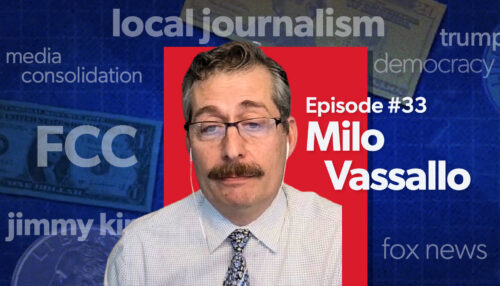
Mostly Economics – Episode 33
Dean speaks with Milo Vassallo, Executive Director of the Media and Democracy Project, about combating news deserts and the power of citizen journalism.
Trump’s “Big” Drug Savings Do Not Measure Up
Trump’s drug pricing proposal would modestly reduce costs while keeping US drug prices among the highest in the world.

April 2026 Jobs Preview: What to Expect
The unemployment rate should remain stable, but is not clear that workers are able to secure wage gains — a concerning development in a time of rising inflation.
AI Productivity Boom and Shorter Workweeks
Even if AI boosts productivity, history shows the solution is shorter work time, not panic over mass unemployment.

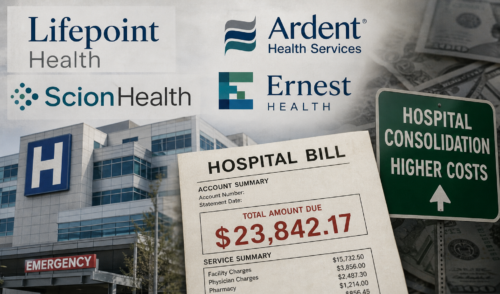
Monopolization in the Hospital Industry is a Problem, but Patent Monopolies Make It Worse
While hospital monopolies raise prices, patent protections on drugs and medical equipment are a deeper driver of high health care costs and inefficiency.
Is Chinese AI the Remedy to Inequality?
Rising Chinese AI competition could lower costs and limit extreme wealth concentration, countering both US tech dominance and inequality.

Purdue Pharma Bites the Dust: Can We Learn Anything?
The opioid crisis shows how drug patent incentives can drive harmful behavior without meaningful reform.

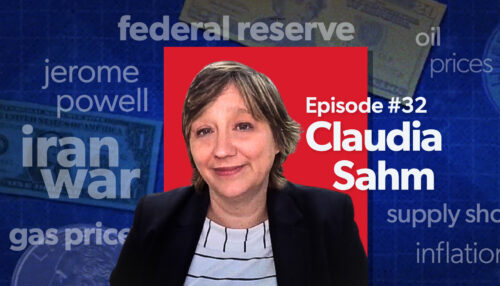
Mostly Economics – Episode 32
In this episode, Dean Baker and renowned macroeconomist Claudia Sahm discuss the economic shocks from attacking Iran and the Federal Reserve’s policy stance amid geopolitical tensions.
Five Big Takeaways from the First Quarter GDP Report
The Q1 GDP report shows modest growth masking deeper weaknesses, including fragile demand, rising inflation, declining manufacturing investment, and no sign of an AI-driven productivity boom.

Investment and Government Spending Boost First Quarter GDP, Inflation Jumps to 4.5%
The first quarter GDP report shows modest growth and rising inflation. With so much spending concentrated in health care and data centers, the outlook is not good.