
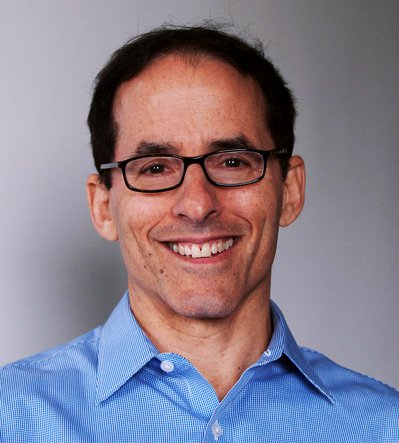
Mark Weisbrot
Senior Economist and Co-Director, Center for Economic and Policy Research
- [email protected]
- 202-293-5380 x122
Senior Economist and Co-Director, Center for Economic and Policy Research
Mark is a Senior Economist and Co-Director of CEPR. He received his PhD in economics from the University of Michigan. He is author of the book Failed: What the “Experts” Got Wrong About the Global Economy (Oxford University Press); is coauthor with Dean Baker of Social Security: The Phony Crisis (University of Chicago Press); and has written numerous research papers on economic policy.
His opinion pieces have appeared in The New York Times, The Washington Post, the Los Angeles Times, The Guardian, and almost every major US newspaper as well as in Brazil’s largest newspaper, Folha de São Paulo. He appears regularly on national and local television and radio programs.
The Nation: The government of Ecuador reached an agreement on Monday with leaders of the protests that have rocked the country for the last two weeks.
MarketWatch: It’s likely that Trump is preparing to end this distraction and move on to the next one. We can only hope that it’s not something more violent and destructive, such as an actual shooting war.
The Guardian: In the coming weeks, the IMF will almost certainly choose a new, affluent white European to head the institution. Progressive members of Congress, who care about what US foreign policy does to the rest of the world, should weigh in with some demands for reform.
The New York Times: Millions of Argentines remember the last depression and the role the IMF played. Many also remember the rapid improvement in people’s lives over the ensuing decade.
July 2019, Mark Weisbrot and Andrés Arauz
The New Republic: Donald Trump won the presidency–despite losing the popular vote by 2.8 million—with a campaign that careened wildly from one distraction to another. He has clung to this as a Twitter and governing strategy ever since. As there are 190 countries in the world, and the United States trades with most of them, trade wars so far have provided a shovel-ready supply of such diversions.
The Los Angeles Times: The Board has a new plan that is more optimistic, and less realistic, than the old one. There is a serious risk that it will again get caught in a downward spiral of austerity to pay for unsustainable debt service, more emigration, and continued economic
In our paper, “Sanctions as Collective Punishment: The Case of Venezuela,” we looked at some of the ways in which the sanctions on Venezuela imposed by the US government curtail access to essential and life-saving imports, and some of the data on impacts

April 2019, Mark Weisbrot and Jeffrey Sachs

The New Republic: The Trump administration’s sanctions and push for regime change in Venezuela mirror past U.S. interventions in Latin America, causing massive civilian suffering and revealing that the effort is about power, not democracy or human rights.