
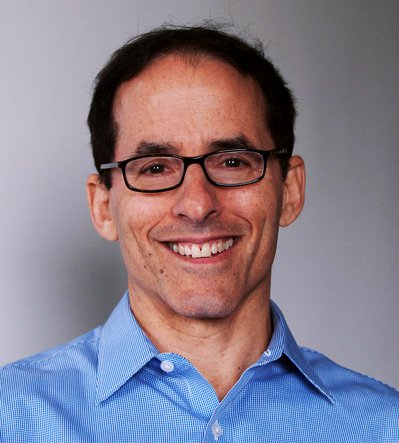
Mark Weisbrot
Senior Economist and Co-Director, Center for Economic and Policy Research
- [email protected]
- 202-293-5380 x122
Senior Economist and Co-Director, Center for Economic and Policy Research
Mark is a Senior Economist and Co-Director of CEPR. He received his PhD in economics from the University of Michigan. He is author of the book Failed: What the “Experts” Got Wrong About the Global Economy (Oxford University Press); is coauthor with Dean Baker of Social Security: The Phony Crisis (University of Chicago Press); and has written numerous research papers on economic policy.
His opinion pieces have appeared in The New York Times, The Washington Post, the Los Angeles Times, The Guardian, and almost every major US newspaper as well as in Brazil’s largest newspaper, Folha de São Paulo. He appears regularly on national and local television and radio programs.
The Detroit News: Joe Biden has surged since the South Carolina primary, mainly because of the perception by his voters that he was the most electable candidate against Trump. But there are some potential pitfalls that have not yet surfaced.

MarketWatch: The vast majority of older Americans have a lot to gain from Medicare for All, but you wouldn’t know it from the polls. Perhaps the relevant information has not been as widely available as it should be.
The Guardian: Mark Weisbrot for The Guardian: Joe Biden has an issue that hasn’t played out yet in this election: his role in the launch of the Iraq War.

MarketWatch: As Bernie Sanders continues to increase his standing in the Democratic primary, and his opponents in both parties feel the pain, there is an effort to paint him as an extremist of some sort.
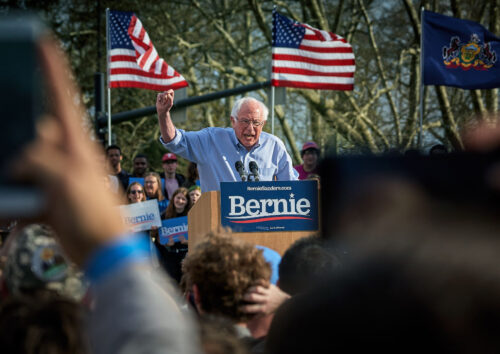
The Sacramento Bee: Maybe it took the Great Recession and more than 8 million Americans losing their homes to make so many people understand how the US economy had been so profoundly transformed. But most voters now want someone whom they can really trust to take this countr
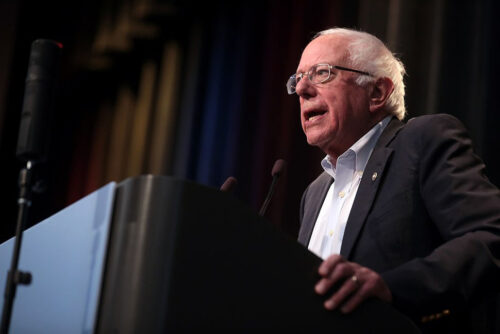
Latin America Advisor: The Trump administration’s current and future behavior in Bolivia can best be forecast by its strong support for the military coup that overthrew the democratically elected government of Evo Morales on November 10.

The Guardian: There’s a lot at stake, and a lot could go wrong, as policy-makers decide how to close the gap that is continuously brought about by people living longer.
MarketWatch: I am offering a $500 reward for the first journalist who can get a substantive answer to these questions from an OAS official, on the record. Even if turns out to be a lie.
The Nation: Multilateral organizations like the Organization of American States (OAS) have a certain perceived impartiality because they are, in theory, controlled by a diverse group of nations. But sometimes a great power can wield a disproportionate influence.
October 2019, Andrés Arauz, Mark Weisbrot, Andrew Bunker and Jake Johnston