Article • Dean Baker’s Beat the Press
Trump Agrees with Mark Carney: The Old Order is Very Dead
Article • Dean Baker’s Beat the Press
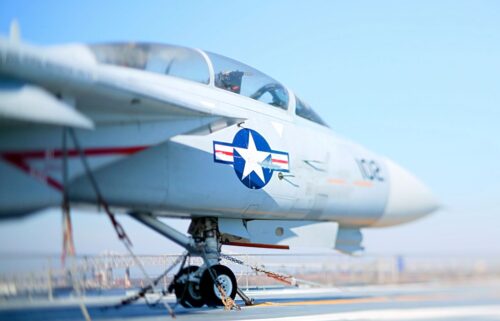
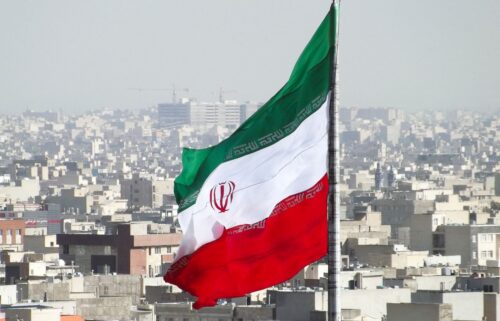
Two months ago, at the rich people’s forum in Davos, Canadian Prime Minister Mark Carney gave his famous speech pronouncing the old U.S.-led world order dead. Donald Trump’s unprovoked war on Iran seems to be about as clear a confirmation of Carney’s contention as possible. The United States is not acting as a leader of any sort of international coalition of democracies. It is acting unilaterally on Donald Trump or Benjamin Netanyahu’s personal whim.
That was pretty much obvious from the first day of the war. It doesn’t appear that U.S. allies in Europe, East Asia, or elsewhere were consulted or even informed about Trump’s plans. As the war has proceeded, it has become clear that Trump never considered the consequences for U.S. allies, most obviously the spike in the price of energy and other commodities following the closure of the Straits of Hormuz.
Former U.S. allies need to take the lessons from this episode very seriously. First and foremost, they need to understand that the United States under Donald Trump does not give a damn about the well-being of any of its allies, with the exception of Israel. Europe, under the leadership of German Chancellor Friedrich Merz and French President Emmanuel Macron, seem to have gotten the message.
They need to count on their own militaries not only to protect against aggression from Russia, but also possibly the United States. With Donald Trump endlessly musing about seizing Greenland, a conflict with the United States might be more likely at this point than a conflict with Russia that goes beyond Ukraine.
Trump routinely demonstrates his contempt for European democracies. He had a temper tantrum because the UK opted not to provide full-fledged support for a war that they were not consulted about. He has threatened a U.S. trade embargo against Spain because it does not want to have its territory used by the U.S. military in support of the war.
The Trump administration has also openly supported neo-Nazi forces in Germany and other European countries. It is likely that it will do whatever it can to have them take power through elections or other means. Remember, in 2020, Donald Trump tried to overturn an election in the United States; he would have no qualms about overturning elections in other countries to put his friends in power.
Most of Europe, and obviously Canada, understand the New World Order. It’s not clear that the United States former allies in East Asia do yet, but Trump’s outing in Iran should help educate them about the new reality. Not only does the war impose high costs on the countries of East Asia, which are far more dependent on oil than Europe, but Trump quite directly showed how little defense of the region matters to him.
He withdrew a Thaad anti-missile system from South Korea for use in the Middle East. If the United States would so cavalierly withdraw a system deemed necessary for South Korea’s defense for a war of choice in the Middle East, can anyone seriously believe that the United States would risk real money and its soldiers’ lives to defend South Korea against North Korea and China? Japan and Taiwan should be paying serious attention here.
When it comes to defending themselves against potentially hostile neighbors, the countries of East Asia are on their own. This fact could not be any clearer if Donald Trump put up neon signs at the White House.
Going cold turkey on trade with the United States would be painful for our former allies, but fortunately, it is not necessary. For all his ignorant bluster, Donald Trump is not about to cut off trade with the rest of the world. Furthermore, even though Trump may not realize it, his “punitive” sanctions against countries or leaders who have angered him is more a punishment for U.S. consumers than our trading partners.
All the research shows that importers and consumers pay the overwhelming majority of the tariffs, not the exporting countries. There is a reason Donald Trump is one of the most unpopular presidents in history, and that is even before starting his war against Iran.
There is a lot of sloppiness in discussions of trade. Trade does, in general, offer benefits to both countries, but the nature and size of these benefits can be hugely overstated. South Korea exports a bit less than $40 billion a year in cars to the United States, roughly 2.0% of its nominal GDP.
Suppose this was cut in half by a very high tariff. To some extent, Korea would replace this with exports elsewhere and increased domestic purchases, but a substantial number of people employed in producing these cars would lose their jobs, and Korea’s major auto manufacturers would see a big hit to their profits and sales.
But these would be transitory issues. The workers employed in Korea’s auto factories can work in other sectors. They would not be condemned to be unemployed for the rest of their careers. This is a problem of lack of demand.
This should be contrasted with a supply-side problem, for example, being unable to get oil or having to pay a far higher price. This means a reduction in living standards for people in Korea, at least until another energy source can be found.
No one should trivialize the impact of the unemployment that can result from the loss of a major export market. This sort of job loss in manufacturing was a major cause of the rise of Trumpism in the United States over the last two decades. But government policies can alleviate the harm. By contrast, when the cost of oil soars, there is no government policy that can prevent the country from seeing a decline in living standards.
The middle powers, as Mark Carney dubbed them at Davos, need to establish a new economic and security system that does not view the United States as a protector, or necessarily even as an ally. It certainly is not a reliable trading partner. India can suddenly face a 50% tariff because its prime minister won’t nominate Donald Trump for a Nobel Peace Prize, and Brazil faces a 50% tariff because it is prosecuting a Trump friend for trying to overthrow the government.
The United States, under Trump, is not a trading partner that countries want to rely upon. If his successor is a Democrat, there will again be more respect for treaty obligations and other commitments, but no one can rule out that another Trump-like figure will come to power in the future. It would not be wise for countries to again be dependent on their economic ties to the United States.
In this context, the rest of the world really needs to turn to China as a trading partner and source of investment and technology. To be clear, China is not a democracy and does not respect human rights. But it has demonstrated a much greater allegiance to international law and its past commitments than the United States under Trump.
The best example here is the alliance that the United States and the UK had with the Soviet Union in World War II. Roosevelt and Churchill had no illusions about Stalin being a fan of democracy, but they recognized the need to act collectively in defeating Hitler.
The middle powers need to have the same approach to China. This is especially the case in the movement towards electric vehicles and clean energy. China is by far the world leader in these areas. It can help the rest of the world move quickly away from dependence on fossil fuels.
Donald Trump’s war on Iran has shown clearly the need to lessen this dependence, even apart from the need to slow global warming. Given the enormous advances in this technology, the switch to EVs and clean energy will be saving money and improving living standards, in addition to cleaning up the environment.
Two months ago, Mark Carney laid out the case for a new world order that does not have the United States playing a leadership role. With his needless attack on Iran, Donald Trump has driven home Carney’s message far better than any conference speaker could ever hope. The United States former allies need to move as quickly as possible to adjust to this new reality.
Article
Article

Article
Article
Article
Article
Article
Article