Article • Sanctions Watch
CEPR Sanctions Watch February 2026
Article • Sanctions Watch
In this edition of Sanctions Watch, covering February 2026:
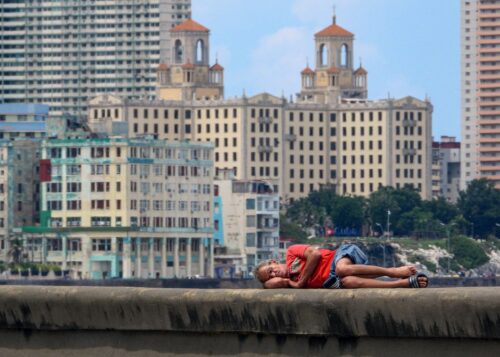
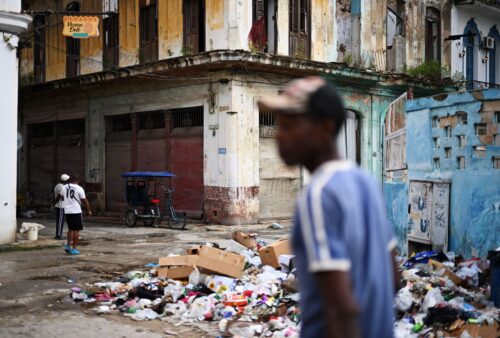
As a result of President Donald Trump’s administration’s efforts to deprive Cuba of fuel, the economic and humanitarian situation on the island has continued to deteriorate, in what The New York Times calls the worst economic situation since before the 1959 revolution. The consequences touch every aspect of life, in what one Cuban told the Associated Press amounts to “a war.… The only thing that’s missing here in Cuba … is for bombs to start falling.” Without fuel, blackouts are common. As water pumps rely on electricity, access to clean water is limited, forcing some to go days without showering. Trash has piled up in the streets of Havana as there is no fuel for garbage trucks. Businesses, schools, and public transportation are operating at limited capacity or not at all. Food is in short supply. Hospitals are canceling surgeries. One Cuban told AP that he has moved out of Havana because of the blackouts to a rural farm where he could cook with charcoal. Considering selling his motorized farm equipment for a horse, he says, “We need to go back in time” to survive.
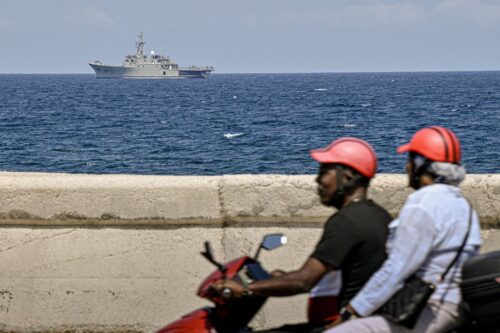
The US Supreme Court ruled this month that Trump did not have the authority to impose tariffs under the International Emergency Economic Powers Act, striking down the tariffs that Trump had threatened to impose against countries providing oil to Cuba. However, the underlying national emergency declaration remains, and Trump may yet use sanctions, other tariff authorities, or other forms of leverage to ensure that Cuba remains deprived of fuel. Indeed, The New York Times reports that US armed forces have begun intercepting ships in the Caribbean Sea in what amounts to a “blockade” that is “strangling Cuba.” An anonymous official told The New York Times that this was a deliberate part of an as-yet-unannounced blockade policy. The Trump administration has given no legal justification for a blockade that is widely understood as an act of war. Late in February, the Trump administration expressed plans to assure energy companies that they can export fuel to the country’s private sector, seemingly in response to widespread outrage over the humanitarian impacts of the blockade. Anonymous US officials described the policy as “part of a plan to make the island more reliant on the US for supplies, increasing Washington’s leverage to bring about political and economic change.”
UN High Commissioner for Human Rights Volker Türk called for the lifting of the oil blockade, characterizing it as a violation of fundamental human rights. Four independent UN human rights experts also condemned Trump’s policies, calling it
an extreme form of unilateral economic coercion with extraterritorial effects.… Cuba is already experiencing severe energy shortages, due to previous US sanctions, with blackouts lasting up to 20 hours in many areas, affecting refrigeration for food and medication, and contributing to public health crises.… Interfering with fuel imports could lead to a severe humanitarian crisis with knock-on effects for essential services.
Writing in Newsweek, CEPR Co-Director Mark Weisbrot called the policy “lethal violence … target[ing] a civilian population.” Comparing the policy to Gaza, Congresswoman Alexandria Ocasio-Cortez (D-NY) said it signaled “a new era of depravity.” Rep. Rashida Tlaib (D-MI) said Trump’s policies would “kill countless innocent Cubans.… Homes, schools, hospitals without power. Children without food or medicine. Cuba poses no threat to the US. This is pure cruelty.” Rep. Nydia Velázquez (D-NY) called it “economic warfare designed to starve the Cuban people. Families will go without electricity, hospitals will close, food won’t reach those who need it. The vulnerable will suffer most.” Congressman Jim McGovern (D-MA), long a champion of normalizing US-Cuba relations, introduced a bill along with 19 cosponsors to not just reverse Trump’s latest policies but to end the embargo of Cuba in its entirety. McGovern also cowrote a letter with Massachusetts Senators Ed Markey (D-MA) and Elizabeth Warren (D-MA), urging the administration to lift the embargo. Over 40 US-based civil society organizations, including human rights and faith groups like the Alliance of Baptists and Presbyterian Church USA, sent a letter urging Congress to press the Trump administration to reverse the fuel blockade and end the embargo, writing, “Policies that deliberately impose hunger and mass hardship on millions of civilians constitute a form of collective punishment, and as such are a grave violation of international humanitarian law.”
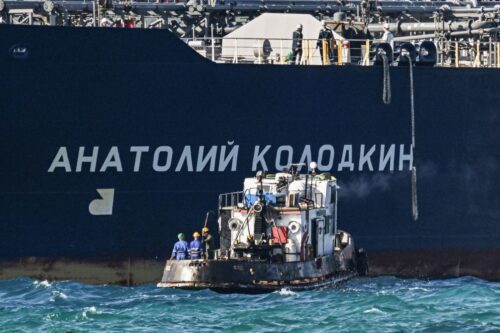
Though condemnation of the measures is widespread, the multilateral response has been somewhat muted. While Trump’s threats have thus far deterred Mexico from resuming fuel shipments to the island, Claudia Sheinbaum’s administration has provided Cuba with shiploads of humanitarian aid, including food and personal hygiene products. Canada, too, has announced plans to provide humanitarian assistance, as has Spain, whose Congress of Deputies also denounced Trump’s Cuba policies. Guatemala, however, announced that it would be ending its involvement with Cuba’s medical program, which provides the country with hundreds of medical workers and has operated for almost 30 years, likely as a result of US pressure. Honduras followed shortly thereafter, expelling over 100 medical workers. Russia — one of the few providers of oil to Cuba that might withstand US pressure — vowed to continue oil shipments to the island. However, a tanker of Russian oil attempting to deliver fuel to the island was recently forced to divert, presumably in response to the US military blockade.
Trump’s strategy in depriving the island of resources appears aimed at inducing a humanitarian crisis, either to increase pressure for negotiated concessions or to instigate a total regime change. Trump himself told reporters this month that he is aiming for a “friendly takeover” of the country. While Trump had previously claimed that talks were underway, Drop Site News reported earlier this month that this, at least at the time, was not the case — and that US Secretary of State Marco Rubio may be misrepresenting the extent of negotiations to Trump to sabotage the possibility of real talks in favor of his preferred option of total regime change. Nevertheless, multiple outlets have since reported that the US Department of State has secretly met with Raúl Guillermo Rodriguez Castro, grandson of former president Raúl Castro.
Read more:
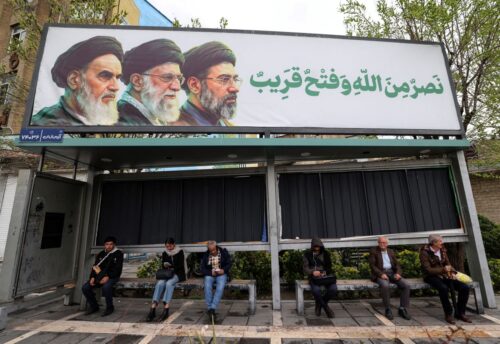
The US and Israel launched military strikes against Iran on Saturday, killing (among others) Iranian Supreme Leader Ayatollah Ali Khamenei and well over 100 girls at an elementary school and prompting retaliatory attacks from Iran across the region. Trump has said that the renewed warfare could last weeks. Congressional Democrats plan to force a vote on a bipartisan War Powers Resolution to prohibit unauthorized military action against Iran early this week. In a statement condemning the “war of aggression,” Congresswoman Tlaib (D-MI) also noted that “our government has imposed brutal sanctions that have destroyed the Iranian economy and the lives and livelihoods of millions of people.”
The unilateral strikes came despite the US and Iran reportedly making progress in negotiations that had resumed in February over the country’s sanctions and nuclear program. Following two initial rounds of talks earlier in the month, which Iranian President Masoud Pezeshkian said produced “encouraging signals,” the parties held a third round on Thursday, February 26, in Geneva. While they failed to reach an agreement, both sides agreed that the discussions had been productive and that they should meet again.
The Trump administration had signaled that it might be open to allowing Iran to continue limited non-weapons-grade nuclear enrichment for civilian purposes — long a red line for Iran, which maintains that low-level enrichment is its sovereign right. Other major points of discussion included access to Iranian oil. Iran said that it is willing to allow the US to be an economic “partner” with Iran but that the country “would not hand over control of its oil and mineral resources.” The sanctions have long stifled Iran’s economy, the effects of which ignited last year’s mass protests.
Asked about the possibility of war with Iran in an interview with POLITICO prior to the strikes, Congresswoman Nancy Pelosi (D-CA) openly called to “use economic force.… There are ways to cripple their economy.… Weaken their economy, and it weakens the support that they do have.… We have to make them feel the pain.” These remarks echo similar candid comments from US Secretary of the Treasury Scott Bessent while testifying before the House Committee on Financial Services in February:
With respect to Iran: President Trump, upon entering office, instructed [the] US Treasury to implement a maximum pressure campaign, and we saw the fruits of that campaign in December as the Iranian economy has collapsed. We had a large bank collapse there. The central bank was forced to bail it out, created inflation. And the brave Iranian people have taken to the streets.
Asked about the issue again in the same hearing, Bessent continued:
What we have done is created a dollar shortage in the country.… [Our strategy] came to a swift and grand culmination in December when one of the largest banks in Iran went under. There was a run on the bank. The central bank had to print money. The Iranian currency went into freefall. Inflation exploded. Hence, we’ve seen the Iranian people out on the street.
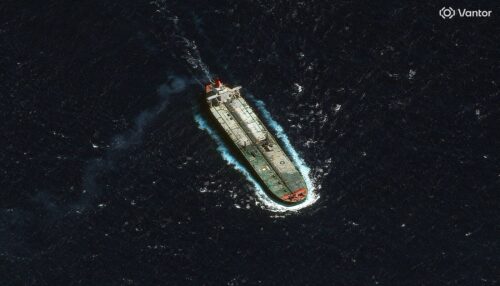
Also this month, the US Department of Treasury imposed sanctions on over a dozen vessels it accuses of being part of a “shadow fleet” transporting Iranian oil in contravention of US sanctions. Canada also announced sanctions against seven individuals allegedly connected with human rights abuses committed by the Iranian government.
Read more:
The US Department of Treasury issued a slew of new general licenses this month to ease US sanctions on Venezuela. General License (GL) 47 authorizes the export of US-origin diluents — a product needed to transport and refine the extra-heavy crude oil found in Venezuela’s Orinoco Belt — to Venezuela. GL 48 authorizes transactions “ordinarily incident and necessary to the provision from the United States or by a U.S. person of goods, technology, software, or services for the exploration, development, or production of oil or gas in Venezuela.” GL 49 allows for negotiation and entry into contingent contracts for investment in the oil or gas sectors. And GL 50A gives particular companies broader authorization to operate in the oil and gas sectors; at the time of this writing, these companies are BP, Chevron, Eni, Repsol, Shell, and Maurel & Prom. Separately, India-based refiner Reliance Industries received a specific license to purchase Venezuelan crude. These moves follow last month’s GL 46 (later amended to 46A), which authorizes certain transactions with the Venezuelan government and state oil company related to “lifting, exportation, reexportation, sale, resale, supply, storage, marketing, purchase, delivery, or transportation of Venezuelan-origin oil, including the refining of such oil, by an established US entity.”
Together, these licenses represent a considerable easing of sanctions on Venezuela’s oil sector, sparking some speculation, and some skepticism, regarding a potential Venezuelan “oil rush.” Reuters reported of GL 46A that “buyers of Venezuelan oil say that the general license has not facilitated trade as much as needed. The broad nature of the general license has left many conditions open to interpretation, raising questions about what is permitted and what is off limits, sources said.” One major outstanding question is that of recognition. While US Secretary of Energy Chris Wright claimed that the US did not recognize the government of Delcy Rodríguez, Trump himself, when asked about recognition, said, “Yeah, we have done that. We are dealing with them, and really right now they have done a great job.” CEPR Senior Research Fellow Francisco Rodríguez notes that the GLs effectively imply a recognition of the current government. As Jake Johnston writes in the CEPR Live Updates tracker, “The question of recognition continues to hang over billions in Venezuelan assets abroad, including the country’s SDR [special drawing rights] holdings at the IMF, as well as myriad ongoing US court cases.”
Secretary of Energy Wright says that sales of Venezuelan oil controlled by the United States are expected to reach $2 billion by the end of February. Proceeds from the sales had originally been placed into a bank account in Qatar, with disbursements made to Venezuela at the discretion of the Trump administration. Wright reported late this month that the Qatari account has since been removed from the process, with proceeds deposited directly to an account “handled by” the US Department of Treasury.
Also this month, US armed forces intercepted and seized a third tanker carrying Venezuelan oil in the Indian Ocean — the 10th such seizure since last December. The sanctioned tanker was one of over a dozen that left the Venezuelan coast shortly after the abduction of (former) President Nicolás Maduro and had been tracked from the Caribbean Sea.
Read more:
The European Commission (EC) proposed its 20th sanctions package against Russia this month. The measures include sanctions on over 20 banks in Russia and abroad, a ban on all cryptocurrency transactions, tighter export and import restrictions, and the designation of 43 vessels as part of Russia’s so-called “shadow fleet,” a network of ships used by Russia and other countries to circumvent US and EU sanctions. A statement from the EC also notes that the EU “will activate for the first time the Anti-circumvention tool,” prohibiting certain exports to third countries that often reexport to Russia. However, on the same day as the announcement, the EU’s sanctions envoy told The Guardian that “no [non-EU] country in the world is under any obligation to respect our sanctions.”
The most significant measure is a proposed ban on maritime services. This would prevent European providers — such as insurers, banks, and shipping companies — from offering services to vessels carrying Russian oil. Currently, Russian oil is subject to a G7 price cap, and tankers transporting oil within that cap are still allowed to receive such services. The maritime services ban would effectively end the EU’s price cap — which the EU had lowered from $60 per barrel to $47 in its 18th sanctions package and to $44 in January — and instead function as a full ban on any tankers transporting Russian oil, without exception, likely encouraging increased use of the shadow fleet. The EC is also reportedly considering sanctions on ports in Georgia and Indonesia that handle Russian oil, a move that has generated hesitation among some EU member states. The EC is seeking to implement the maritime services ban in coordination with the G7 but has indicated that it may proceed alone if other countries do not follow suit.
EU officials had hoped to secure approval of the package from member states on February 23, ahead of the fourth anniversary of Russia’s second invasion of Ukraine in the ongoing Russo-Ukrainian War the following day. However, Hungary vetoed the sanctions, arguing that it will not support the measures until the flow of Russian oil through a pipeline to Hungary that passes through Ukraine is restored. Kyiv says the pipeline was damaged in a Russian drone strike, while Budapest claims that Ukraine is deliberately refusing to restart oil flows. It is unclear whether there will be another vote on the package, though one may be likely after further negotiations with Hungary.
In its announcement, the EC boasted about the impacts its sanctions have had on Russia, stating:
Russia’s fiscal revenues from oil and gas dropped by 24% in 2025 compared to the previous year, the lowest level since 2020, widening its fiscal deficit. Oil and gas revenues in January will be the lowest since the war began. Interest rates stand at 16%, inflation remains high.
This confirms what we already knew; our sanctions work, and we will continue to use them until Russia engages in serious negotiations with Ukraine for a just and lasting peace.
Although the EU failed to pass its latest sanctions package, in cooperation with France, Belgium intercepted and seized a suspected Russian shadow fleet tanker for the first time late on February 28. This follows a string of tanker seizures by the United States and France last month.
A group of lawmakers, led by Rep. Michael McCaul (R-TX), is also seeking to target Russian oil. On February 11, McCaul and five other members of Congress — including four Democrats — introduced the Decreasing Russian Oil Profits Act, a bill that would require “targeted sanctions on any foreign person or entity involved in the purchase, importation, or facilitation of Russian-origin crude oil and petroleum products.” Senators McCormick (R-PA), Warren (D-MA), Chris Coons (D-DE), and Jon Husted (R-OH) introduced a companion bill in the Senate.
Meanwhile, on February 24 the UK announced its largest sanctions package against Moscow since Russia’s second invasion of Ukraine. The measures target nearly 300 individuals and entities, including a major pipeline transporting Russian oil, a shadow fleet operator, 48 oil tankers, banks, nuclear energy and gas companies, and others. Australia and New Zealand also sanctioned a total of 280 entities, individuals, and vessels linked to Russia.
Read more:
Early this month, Israel reopened the Rafah crossing between Gaza and Egypt for the first time in nearly two years, though only on a limited basis. Just 100 people were permitted to cross daily — 50 entering Gaza and 50 (primarily medical patients) departing. While aid organizations, the United Nations, and the European Union welcomed the reopening, they asserted that the measure was insufficient and called for the crossing to facilitate humanitarian aid deliveries. Save the Children urged that all restrictions be lifted, warning that, under the limited opening, it would take over a year to evacuate those who require treatment outside Gaza. The Gaza government’s media office reported on February 19 that the daily limit was not being met, with authorities allowing only one-third of the expected travelers to pass. With the start of the US and Israeli war on Iran on February 28, Israel closed all crossings into Gaza, including Rafah, “until further notice,” stating without evidence that the current stock of food within the Gaza Strip was sufficient to last during this period.
A coalition of 37 aid groups challenged an Israeli order to shut down their operations in the Occupied Palestinian Territories by March 1. Filing a petition with the Israeli High Court, the groups stated:
Efforts to force closures could begin as early as 28 February 2026. The effect would be immediate, extending well beyond individual organisations to the wider humanitarian system. In Gaza, families remain dependent on external assistance amid continuing restrictions on aid entry and renewed strikes in densely populated areas. In the West Bank, including East Jerusalem, military incursions, demolitions, displacement, settlement expansion and settler violence are driving rising humanitarian needs.…
Alongside UN agencies and Palestinian partners, international NGOs [nongovernmental organizations] support or implement the delivery of more than half of all food assistance in Gaza, 60 per cent of field hospitals’ operations, nearly three quarters of shelter and non-food item activities, all inpatient treatment for children suffering severe acute malnutrition and 30 per cent of emergency education services, in addition to funding over half of explosive hazard clearance.
On February 27, the High Court issued a temporary injunction blocking the Israeli government’s order, allowing the groups to continue operating while their petition is considered.
Meanwhile, Israeli restrictions continued to hamper a humanitarian response in Gaza. A February 16 report from the UN Office for the Coordination of Humanitarian Affairs (OCHA) notes:
OCHA warns that humanitarian operations continue to face significant impediments.
Shipments from Jordan are restricted to a route that requires multiple offloading and reloading points.…
Inside Gaza, humanitarian movements that require coordination with Israeli authorities also continue to face obstacles. Of nearly 50 such movements coordinated between 6 February and 11 February, just over a half were fully facilitated.
Israel’s blockade of Gaza has also had a devastating impact on the Gaza Strip’s elderly population. According to new research by HelpAge International and Amnesty International:
Older people in Gaza are suffering an overlooked physical and mental health crisis amid Israel’s ongoing blockade of aid and essential medicines and the recent ban on humanitarian organizations, new research by HelpAge International and Amnesty International has revealed.
In a health survey by HelpAge International, older people said that food scarcity had caused them to skip meals, including to ensure other family members could eat, while others said they had to ration medications for serious health conditions because of lack of access.
Internally displaced older people also described to Amnesty International how their lack of access to nutritious food, adequate shelter and healthcare was causing extreme harm due to the continuing blockade imposed by Israeli authorities. Interviewees had been displaced multiple times since October 2023.…
Despite a reduction in scale of attacks since the October 2025 ceasefire agreement, there has been no meaningful change in the conditions Israel is inflicting on Palestinians in Gaza and no evidence to indicate that Israel’s intent to commit genocide has changed.
Read more:
The UN Security Council committee on North Korea has reportedly approved sanctions exemptions for humanitarian projects to be carried out in the country by UN bodies and certain aid organizations from the United States and South Korea, according to Reuters. The approval was reportedly unanimous and included support from the United States, which The Wall Street Journal notes had “frozen approvals for months because of concerns about the diversion of aid supplies.” Analysts interviewed by AFP believe the US approval of the exemption is meant as a signal of openness for talks between President Trump and North Korean leader Kim Jong Un. An article by the outlet states:
North Korea’s economy has for years languished under heavy Western sanctions on everything from oil to seafood, measures that aim to choke off funding for its nuclear weapons programme.…
With the move, Washington and Seoul “are essentially removing a technical and moral alibi for Pyongyang’s refusal to engage. It is a low-cost, high-optics maneuver,” Seong-Hyon Lee, a visiting scholar at the Harvard University Asia Centre, told AFP.
North Korea has repeatedly indicated that any such engagement would require the United States and South Korea to abandon their longstanding policy of seeking North Korea’s total denuclearization. Kim Jong Un reiterated this position during a party congress this month. According to The Washington Post, he said, “North Korea is open to restarting talks with Washington only if the United States ends its ‘hostile’ policies and accepts Pyongyang’s nuclear status.” He also reportedly added, “The prospect of DPRK-U.S. relations depends entirely on the attitude of the U.S. side.”
Writing for The American Conservative, James Park of the Quincy Institute argues that North Korea’s denuclearization is no longer a realistic goal. He suggests the US should accept Pyongyang’s baseline and pivot negotiations toward arms control and stable relations between the two countries, partly using sanctions relief as an incentive for engagement:
To get Pyongyang on board with negotiations, Washington would, of course, have to be willing to meaningfully accommodate Pyongyang’s security concerns and interests, which could involve sensitive issues — such as easing sanctions, scaling back U.S.-South Korea joint military exercises, and downsizing the U.S. military presence in Korea. Such concessions may seem like too much to give up, but they might be more manageable than one would assume.
Sanctions against North Korea may once have been a valuable bargaining chip not to be used in the early stage of negotiations. Nevertheless, the value has now diminished in the absence of Russian and Chinese support. There is a case to be made that relaxing sanctions gradually as a form of diplomatic reassurance — in accordance with North Korean constructive participation in negotiations — could be a more productive use of sanctions than merely maintaining them for their own sake, especially under current geopolitical circumstances.
Read more:
The UN Security Council unanimously voted on February 12 to extend the mandate of the UN Afghanistan sanctions monitoring team for another year and to continue enforcing UN sanctions on the country. Nevertheless, China’s delegate, while voting in favor, called for increased humanitarian aid to Afghanistan and urged “countries concerned to unconditionally unfreeze and return Afghanistan’s overseas assets and cease illegal unilateral sanctions on the country.” The delegate also highlighted the need for the 1988 UN sanctions regime to be systematically reviewed, including lifting the travel ban on Afghan officials to promote international cooperation. Compared with unilateral sanctions — particularly those imposed by the United States, which in practice restrict most economic activity with Afghanistan and constrain the operations of its central bank — UN sanctions are more limited in scope. In addition to an arms embargo, they primarily target specific Taliban officials with asset freezes and travel bans.
In an article for Foreign Policy in Focus, Afghan journalist Nasratullah Taban wrote that the hardships caused by the Taliban’s repression of minorities, women and girls, and free speech are compounded by “economic collapse,” noting that:
international sanctions, combined with the reduction of foreign aid, have left millions at risk of hunger. Nearly half of Afghan households rely on humanitarian aid, and over 23 million people face food insecurity, including nearly 10 million on the brink of famine, according to the United Nations. Restrictions on women’s work have further reduced household income, while humanitarian agencies struggle to deliver aid because female staff are barred from many essential roles.
Read more:
Canada announced this month that it will be taking steps to significantly ease its sanctions on Syria. Amid the broad lifting of sanctions, particularly those imposed by the US, Syrian officials project that the coming year could see nearly double-digit economic growth. According to Bloomberg News, “The moves [to ease sanctions] are already bearing fruit. Chevron Corp. last week signed a memorandum of understanding with state-owned Syrian Petroleum Co. and Qatar-based UCC Holding to explore for oil off the Mediterranean coast. Syria expects similar deals with other companies — especially US ones — ‘soon.’” Syria also signed a major multibillion-dollar investment deal with Saudi Arabia in February “spanning aviation, energy, real estate and telecommunications,” per Al Jazeera. The rapid recovery following the lifting of sanctions is further indication that US economic sanctions had been causing significant harm to the country’s economy and therefore everyday Syrians.
Read more:
Representatives Velázquez (D-NY), Ramirez (D-IL), Chuy García (D-IL), Tlaib (D-MI), and 14 colleagues introduced a bill this month seeking to annul the Monroe Doctrine and develop a “‘New Good Neighbor’ Policy” toward Latin America and the Caribbean. Among other things, the bill recognizes the profound civilian harm caused by broad US economic sanctions targeting Cuba and Venezuela along with their contribution to migratory pressures. The bill would “terminat[e] all unilateral economic sanctions imposed through Executive orders” and calls for Congress to repeal all statutory unilateral economic sanctions and to reform the International Emergency Economic Powers Act and the National Emergencies Act “to ensure robust congressional oversight over the imposition of unilateral sanctions through Executive orders, as per the original intent of the authors of those pieces of legislation.”
Late last year, the Cambridge University Press published an open-access book titled Economic Sanctions from Havana to Baghdad. Edited by legal scholar Joy Gordon, renowned for her work on the legal and ethical implications of economic sanctions — and featuring other preeminent experts such as CEPR’s Francisco Rodríguez, Esfandyar Batmanghelidj, and Alena Douhan — the book features the latest scholarship on the effects of sanctions on economic development, infrastructure, access to health care, and more.
Read more:
Economic sanctions have become one of the main tools of US foreign policy despite widespread evidence that they can cause severe harm to civilian populations (which may, in fact, be the point). Though now a defining feature of the global economic order, sanctions and their human costs receive relatively little attention in most US media outlets.
CEPR’s Sanctions Watch news bulletin aims to generate more awareness on the use and impact of sanctions through monthly round-ups of news and analysis on US sanctions policy.
Previous editions of the Sanctions Watch can be found here. CEPR’s US Sanctions Policy FAQ can be found here.
Article
Article
Article
Article
Article

Report
Article
Article