Article • Sanctions Watch
CEPR Sanctions Watch July 2025
Article • Sanctions Watch
In this edition of Sanctions Watch, covering June 2025:
President Donald Trump continued to fulfill his promise to end the Syria sanctions regime this month and issued an executive order that fully repealed many of the sanctions that had previously only been waived. The order also directed government agencies to begin the process of reviewing other sanctions that could not immediately be lifted by the president himself, including Hayat Tahrir al-Sham’s (HTS’s) Foreign Terrorist Organization designation, Syrian President Ahmed al-Sharaa’s “Global Terrorist” designation, and Syria’s State Sponsor of Terrorism designation. Shortly thereafter, the US Department of State followed through on the first of these, ending HTS’s designation. Export controls thus far remain in effect, and while sanctions required by the Caesar Act have been temporarily waived, the law remains in force. Meanwhile, the US is urging the UN Security Council to adjust its sanctions on Syria.
A bill introduced by Rep. Michael Lawler (R-NY), which would amend the Caesar Act to extend the length of time that its sanctions provisions can be waived and condition further sanctions relief, was passed out of the US House Committee on Financial Services this month. Reps. Ilhan Omar (D-MN) and Ana Paulina Luna (R-FL) have introduced their own bill to permanently repeal the Caesar Act and other Syria sanctions legislation. In a press release announcing the bill, Congresswoman Omar said:
Sanctions should never be used as a blunt instrument to starve a population or collapse an entire economy. They do little to improve human rights or democratic outcomes and instead devastate civilian populations and fuel instability. If we are serious about supporting peace and regional stability, we must end the failed policy of economic warfare.
Late this month, three UN human rights experts expressed their support for the lifting of sanctions on Syria. According to the UN press release:
“Despite being targeted and providing for humanitarian exemptions, the sanctions had the unintended consequences of seriously impeding the human rights of the Syrian people and the delivery of humanitarian relief,” the experts said. The rights affected included the rights to life, food, health, housing, an adequate standard of living, water and sanitation, education, a healthy environment, development, and access to essential financial services and the internet.”
In Responsible Statecraft, CEPR’s Michael Galant and Eleonora Piergallini write that Trump’s shift in sanctions policy toward Syria has come with an open admission of what was long denied: Sanctions were hurting the Syrian people all along. A new investigation in In These Times reveals some of these horrendous human impacts: hospitals without anesthesia or even blankets, dialysis patients left waiting as machines break down, and families that are forced to buy their own surgery supplies on black markets.
Read more:
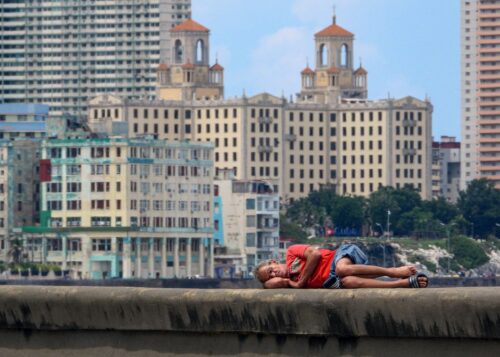
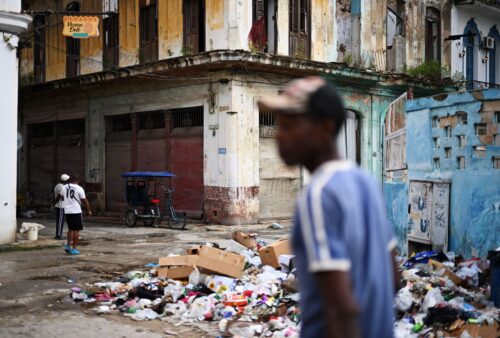
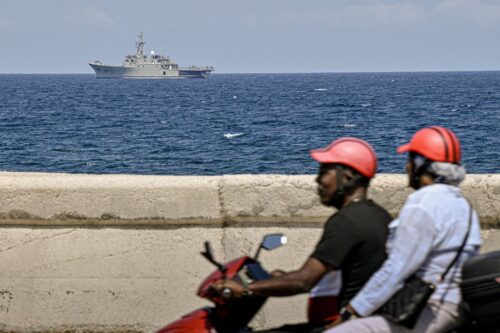
On the last day of June, President Trump signed National Security Presidential Memorandum (NSPM) no. 5 directing his top cabinet officials to strengthen enforcement of sanctions on Cuba. While the embargo — considered by many to be a blockade for its extraterritorial effects — is already perhaps the most comprehensive in the world, Trump is seeking to cut off any remaining sources of revenue for the resource-strapped island. The memorandum — which strongly resembles Trump’s 2017 NSPM that reversed former president Barack Obama’s Cuba normalization policy — instructs US agencies to review their Cuba regulations on commerce and travel within 30 days. Although NSPM no. 5 includes few significant changes to current policy, it could lead to the tightening of travel restrictions and the use of secondary sanctions against foreign companies even indirectly involved in transactions connected to the country’s military. The last of these, if applied aggressively, would be particularly likely to scare away foreign investors. Council on Foreign Relations fellow Will Freeman writes that this policy would “deepen Cuba’s economic crisis, worsening conditions for ordinary people and driving further migration.”
In a new brief for the Quincy Institute for Responsible Statecraft, William LeoGrande and Geoff Thale make the case that it is in the US’s own interest to reject the failed “maximum pressure” approach to Cuba and to pursue instead the promising path of “pragmatic engagement.” Pursuing the former, they argue, not only causes immeasurable harm to Cuban civilians but also forces migration to the United States, impedes cooperation on combatting narcotrafficking, and strains US relations with other governments in the region and around the world. As an alternative, LeoGrande and Thale outline a series of concrete, measurable steps toward pragmatic engagement that would serve the interests of the United States while simultaneously easing the suffering of Cuban civilians.
Read more:
Israel’s near-total blockade of humanitarian aid to Gaza — combined with a severely inadequate aid distribution system that is funded and supported by the US — is driving a surge in malnutrition and starvation among Palestinians. By late July, news outlets were reporting on starvation-related deaths on an almost daily basis as well as the fainting of humanitarian workers due to hunger and exhaustion. The UN-backed Integrated Food Security Phase Classification (IPC), which monitors global food insecurity, declared on July 28 that the “worst-case scenario of Famine is currently playing out in the Gaza Strip.” As documented by the UNRWA since May, Israel has also killed 1,000 aid-seeking Palestinians, most of whom were shot by Israeli forces near aid distribution points in what the agency described as a “sadistic death trap.”
On July 23, more than 100 human rights and humanitarian organizations signed a letter warning that “mass starvation” is spreading across Gaza and urging governments to intervene and press Israel to lift the restrictions. The letter also stated that a deal — which was intended to allow more aid into the territory — reached between the EU and Israel earlier this month has not led to any “real change on the ground.” Israel maintains that there is “no starvation in Gaza” and that the lack of aid is a result of Hamas’s diverting supplies to deliberately orchestrate starvation to pressure Israel, claims for which the UN, the EU, and even Israeli military sources say there is no evidence. Israel has also accused the UN of failing to distribute aid, while the UN counters that Israel has not granted the necessary approvals for the aid to be delivered and distributed. Israel’s position is further undermined by explicit statements from its ministers declaring, among other things, that the Israeli government “is racing ahead for Gaza to be wiped out.”
While Western governments have largely avoided taking concrete action against Israel and have opted instead to issue statements of condemnation, a group of 30 countries convened in Colombia for an emergency meeting under the auspices of The Hague Group — a coalition of eight nations that coordinates legal and diplomatic efforts in support of Palestine. Following the meeting, 13 participating countries — all from the Global South — committed to implementing against Israel six measures, including blocking the transfer of arms and munitions and reviewing public contracts for links to Israel’s actions in Palestine, among other steps. Meanwhile, more than 80 Members of Parliament in the UK signed a letter urging the government to impose sanctions on Israel. In a separate letter, 18 Members of Congress, led by Rep. Rashida Tlaib (D-MI), called on the Trump administration to “stop the Israeli government’s mass starvation of Gaza and killing of hungry Palestinians.”
On July 27, the international outcry over images of starvation in Gaza prompted Israel to announce daily pauses in military operations, the establishment of new aid corridors, and the beginning of aid airdrops — measures that aid organizations have condemned as a “grotesque distraction” unlikely to improve the situation. It also led President Trump to acknowledge that “real starvation” is occurring in Gaza and to announce that the US will work with European countries to establish “food centers.” On July 24, President Emmanuel Macron of France — reportedly motivated by the humanitarian crisis in Gaza — announced plans to recognize a Palestinian state in September.
Israel has refused to renew the visa of a senior UN official responsible for overseeing humanitarian operations in the Gaza Strip and the West Bank. The United States, for its part, imposed sanctions on Francesca Albanese, the UN Special Rapporteur on the Occupied Palestinian Territories, following the publication of her report detailing the complicity of private companies in what she described as Israel’s “genocide.” Top UN human rights officials have condemned the decision as an attack on the international human rights system and have called for it to be reversed.
Read more:
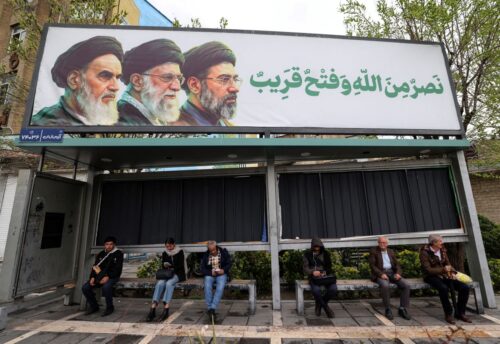
Early in July, the Trump administration imposed sanctions on a network of companies allegedly being used to smuggle Iranian oil. These were the first new sanctions since Iran and Israel agreed to a ceasefire following US strikes in June. Then, on July 30, the administration announced another round of oil-shipping-related sanctions, calling it “the largest Iran-related action since 2018.”
Since the June attacks, Iran has suspended cooperation with the International Atomic Energy Agency and has thus far refused to resume nuclear negotiations with the US. France, the United Kingdom, and Germany announced mid-July that they would trigger “snapback” provisions that reimpose sanctions lifted under the 2015 nuclear deal if progress were not made toward an agreement by the end of August. Iranian negotiators threatened that, if this were to occur, they would withdraw from the 1970 Nuclear Nonproliferation Treaty, which the New York Times describes as “one of the last remaining international safeguards on its nuclear program.” The three European countries and Iran met in Istanbul late this month to discuss the standoff. Following “serious, frank, and detailed” conversations, both sides agreed to continue talks.
In a speech on the Senate floor objecting to a congressional resolution that would have expressed US support for the snapback sanctions, Sen. Rand Paul (R-KY) said,
Diplomacy cannot be all stick and no carrot. … The Washington establishment doesn’t seem to be familiar with Einstein’s famous definition of insanity. Sanctions have been consistently ineffective at altering Iran’s behavior in a manner favorable to US interests. … Sanctions are often counterproductive. Sanctions immiserate the civilian population to such an extent that they rally around the regime in opposition to foreign interference.
Read more:
President Trump appeared to have set aside his long-standing reluctance to impose sanctions on Russia this month. Since his inauguration, both he and his administration have argued that such measures would hinder diplomatic efforts to end the war in Ukraine and harm the US economy. Now, under mounting pressure from Congress and in response to Russia’s failure to take meaningful steps toward ending the conflict, Trump has given Moscow a 50-day deadline to agree to a ceasefire, or 100 percent secondary tariffs will be imposed on countries that import Russian goods. Such tariffs (deployed effectively as sanctions) could have far-reaching consequences; Reuters reported they could throw farms in Mexico, Brazil, Colombia, and other Latin American countries into disarray due to their heavy reliance on Russian fertilizer. The move has provisionally satisfied bipartisan demands for stronger action against Russia, prompting congressional leadership to pause the advancement of a bill proposing 500 percent tariffs on Russian oil importers. On July 28, Trump said he may shorten the deadline to 12 days.
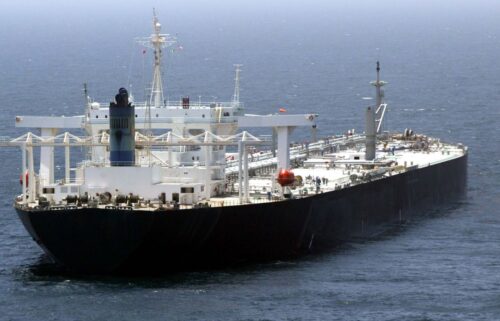
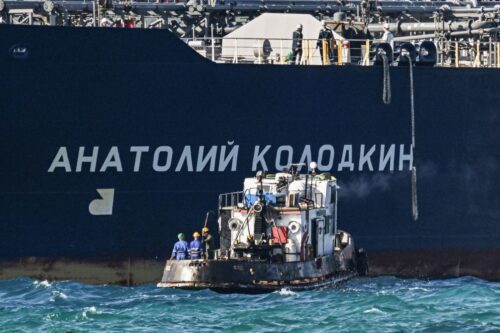
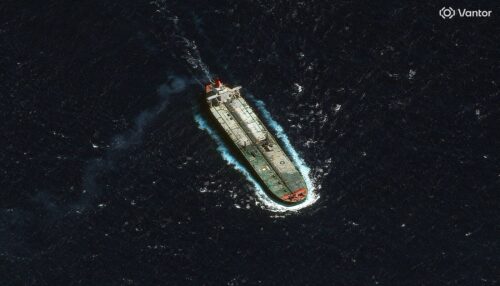
The European Union, meanwhile, finally approved its 18th sanctions package after several failed negotiation rounds, largely due to Slovakia’s veto over its opposition to a separate proposal to ban Russian gas imports. After receiving sufficient guarantees, Bratislava supported the package, which includes sanctions targeting dozens of Russian banks, seven Chinese companies and banks, Russia’s sovereign wealth fund, Russia’s “shadow fleet” of oil tankers used to circumvent sanctions, and a ban on transactions involving the Nord Stream pipelines, which deliver natural gas from Russia to Europe. The package further lowers the price cap on Russian oil from $60 to $47 through a reform that introduces a floating mechanism, setting the cap at 15 percent below the global market rate. The United Kingdom imposed its own sanctions on Russia’s shadow fleet and adopted the EU’s revised oil price cap. The United States, however, continues to maintain the original $60 cap.
The head of Euroclear, a Belgian clearinghouse holding most of the 200 billion euros in Russian assets frozen by European countries, has warned against a proposal to invest the funds — whose income from low-risk investments at the Belgian Central Bank currently supports a $50 billion G7 loan to Ukraine — in riskier ventures aimed at boosting revenue. Euroclear’s chief executive called the plan “expropriation” and warned that it could provoke further retaliation from Moscow and undermine the institution’s role in the global financial system. Other proposals under discussion include the outright confiscation of the assets — a move backed by the European Parliament this month — or their use to purchase US weapons for Ukraine under a scheme proposed by President Trump. However, because these assets are protected by sovereign immunity, such measures face significant legal obstacles. A Dutch court backed this principle on July 22 and ruled that the seizure of a Russian state-owned energy company’s assets was unlawful.
Read more:
The Wall Street Journal reported late this month that the Trump administration has granted Chevron a limited license to produce oil in Venezuela — a reversal from the February decision to let a similar license expire. The exact terms of the license, and the decisions that led to it, are so far unknown. However, it appears tied to a prisoner swap completed the day prior. This prisoner swap saw 10 US citizens released from Venezuelan prisons — including an ex–US marine convicted of triple homicide — in exchange for over 200 Venezuelans who had been deported from the US to El Salvador’s “Terrorism Confinement Center” where they were reportedly subjected to physical and psychological abuse. This followed reporting earlier in the month that there had been strong differences within the Trump administration over the strategy for securing the release of the US prisoners, with US Secretary of State Marco Rubio advocating for prisoner exchange and Special Presidential Envoy for Special Missions Ric Grenell prioritizing the reinstatement of the Chevron license. Venezuelan interior minister Diosdado Cabello suggested that the move was a sign of Trump’s abandonment of the “Crazy Cubans” — congressional hardliners who forced Trump to scuttle a similar oil license months ago. Advocates of a more pragmatic, negotiated approach to Venezuela in the Trump orbit have argued that sanctions contribute to migration and leave a vacuum that will be filled by China.
Indeed, despite the tightening of sanctions under Trump up to this point, oil production and exports both increased slightly in June, with shipments to China — made at a discount due to Venezuela’s restricted options — offsetting, to a small degree, the lost US and European markets. Former Biden National Security Council senior director Juan Gonzalez remarked, “This result is the foreign policy equivalent of the US cutting off its nose to spite its face.”
Read more:
A recent surge in deportations of Afghan refugees from Iran and Pakistan is “creating a multi-layered human rights crisis requiring the urgent attention of the international community,” according to a statement from the Office of the UN High Commissioner for Human Rights. The statement notes that in just over seven months, 1.9 million Afghans have returned from Pakistan and 1.5 million from Iran. Since the Taliban’s return to power in 2021 — and the subsequent economic sanctions and freezing of Afghanistan’s sovereign assets by the US and its allies — the country has been plunged into a severe economic and humanitarian crisis, with 10 million people facing hunger. This crisis has been further exacerbated by cuts in aid funding from the US and other countries. The sudden influx of returnees is therefore expected to place an even greater strain on the country and its already fragile services.
During a UN General Assembly vote this month on a resolution concerning Afghanistan, China’s delegate said that countries “should immediately lift the illegal unilateral sanctions against Afghanistan, unconditionally unfreeze and return its overseas assets and create conditions for Afghanistan to rebuild its financial system, develop its economy and people’s livelihoods.”
Read more:
A new study published in the prestigious, peer-reviewed British medical journal The Lancet Global Health finds that unilateral economic sanctions lead to about 564,000 excess deaths around the world each year. The findings by CEPR economists Mark Weisbrot and Francisco Rodríguez and economist Silvio Rendón show that this human toll is roughly equivalent to total deaths from wars, including civilian casualties, and is more than the annual number of battle-related casualties.
The study analyzes the health impact of economic sanctions using a dataset of age-specific mortality rates and sanctions events for 152 countries from 1971 to 2021. It finds a significant association between sanctions and increased mortality, with the “strongest effects for unilateral, economic, and US sanctions” and “no statistical evidence of an effect for UN sanctions.” The study is the first to systematically examine the effects of sanctions on age-specific mortality in cross-country data using methods designed to address causal questions on observational data.
Congressman Jesús “Chuy” García (D-IL) reacted to the study with a tweet stating, “Unilateral sanctions kill civilians, as once again demonstrated in a peer-reviewed study. They’re not just morally wrong, they also drive migration, damage economic interests, and hurt the US standing in the world. It’s past time for us to rethink our sanctions-first approach.”
On July 9, President Trump sent a letter to Brazilian President Luiz Inácio Lula da Silva, threatening to impose 50 percent tariffs on Brazilian exports by August 1. Trump justified the move in part by condemning the Brazilian Supreme Court’s trial of his ally, former president Jair Bolsonaro, who is facing charges for allegedly plotting a coup to prevent Lula from taking office after the 2022 presidential elections. “This Trial should not be taking place. It is a Witch Hunt that should end IMMEDIATELY!” the letter states. Trump also cited Brazilian judicial decisions proscribing social media postings deemed to be a threat to democracy as well as what he described as an uneven trade relationship with Brazil. In response, President Lula issued a statement emphasizing that the Brazilian judiciary is an independent branch of government and pointing out that, according to US government data, the United States currently holds a trade surplus with Brazil. Shortly afterward, Secretary of State Rubio revoked the US visas of 8 of Brazil’s 11 supreme court justices. Then, on July 31, Trump declared a national emergency under the International Emergency Economic Powers Act of 1977 to impose an additional 40 percent tariff on Brazil, bringing the total tariff to 50 percent. That same day, the US Department of the Treasury imposed Magnitsky sanctions on Brazilian Supreme Court Justice Alexandre de Moraes.
In late June, the Trump administration announced that it would be imposing sanctions on three Mexican financial institutions, which it accused of facilitating money laundering operations for drug cartels seeking to purchase chemicals that are needed to produce fentanyl and that were provided by Chinese companies. No evidence was provided to support these allegations, which may have been intended to pressure Mexico to reduce its trade relations with China. President Sheinbaum condemned the decision, arguing that it was a baseless violation of Mexican sovereignty. “We’re no one’s piñata,” she declared. The move sent a shudder through Mexico’s financial system.
Separately, the Trump administration announced new restrictions on Mexican airlines flying to the United States and threatened to end a partnership between Delta Airlines and Aeromexico. The move is allegedly in response to a Mexican decision made three years ago to switch the arrival location of certain airlines from one Mexico City airport to another, though some analysts believe it’s an attempt by Trump to build leverage ahead of the coming review of the United States-Mexico-Canada Agreement.
Late last month, US Representatives María Elvira Salazar (R-FL), Joaquín Castro (D-TX), and other lawmakers introduced the Protect Honduran Democracy Act. The bill directs the Secretary of State to establish a strategy for monitoring the Honduran general elections in November of this year, and it states that the US president shall impose visa restrictions on foreign actors, including Honduran officials, for interfering in the vote. The bill’s implementation, if passed, could prove controversial depending on the performance of the ruling LIBRE party. A fearmongering press release announcing the legislation states that it aims to “prevent the current socialist government from stealing the elections,” despite no evidence supporting this claim.
Read more:
Economic sanctions have become one of the main tools of US foreign policy despite widespread evidence that they can cause severe harm to civilian populations (which may, in fact, be the point). Though now a defining feature of the global economic order, sanctions and their human costs receive relatively little attention in most US media outlets.
CEPR’s Sanctions Watch news bulletin aims to generate more awareness on the use and impact of sanctions through monthly round-ups of news and analysis on US sanctions policy.
Previous editions of the Sanctions Watch can be found here. CEPR’s US Sanctions Policy FAQ can be found here.
Subscribe to Sanctions Watch here
Article
Article
Article
Article
Article

Report
Article
Article