Article • Sanctions Watch
CEPR Sanctions Watch March 2025
Article • Sanctions Watch
In this edition of Sanctions Watch, covering March 2025:
Reuters reported this month that sanctions on Afghanistan make it difficult for airlines to pay the country’s overflight fees — fees paid to countries for transiting through their airspace — forcing them to rely on third parties and increasing the risk of money laundering, legal disputes, and illicit activities.
In reporting on a briefing given by the UN Special Representative for Afghanistan — where China called for sanctions to be eased — a UN News article states, “Afghanistan’s economy grew by 2.7 percent in 2024, driven largely by regional investments in infrastructure. However, this modest growth cannot offset the sharp decline in foreign aid or the country’s continued isolation from the international system.” A recent report by ACAPS on Uzbek-Afghan bilateral engagement, though, notes that even these investments in infrastructure are partly hampered by sanctions: “Relying on multilateral development banks for funding regional projects, including in Afghanistan, is complicated without falling foul of international sanctions on members of the [interim Taliban administration].… With Afghan central bank assets frozen in accounts abroad, including in Geneva, the Afghan state lacks the ability to provide guarantees for Afghan commercial banks, let alone large-scale infrastructure projects.”
Human Rights Watch urged Pakistan to stop pressuring Afghan refugees to return to Afghanistan, warning that they face persecution and severe economic hardship if forced back. Their report highlights that: “Following the Taliban takeover, Afghanistan lost access to the international banking system and almost all foreign development aid, which had largely funded the former Afghan government. As a result, its economy contracted sharply, with a loss of tens of thousands of jobs.” Similarly, the International Committee of the Red Cross stated: “In 2024, communities in Afghanistan continued to face a dire situation marked by persistent economic challenges, natural disasters and the consequences of decades of armed conflict. International sanctions and reduced foreign aid created further challenges, contributing to a grim situation in a country where millions of people are grappling with poverty, food insecurity and difficulties in accessing essential services like health care.”
Read more:
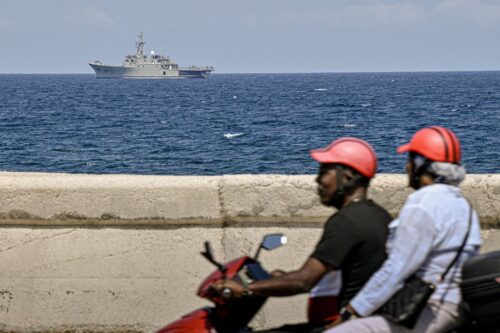
US Secretary of State Marco Rubio’s announcement late last month of the expansion of visa restrictions for individuals involved in Cuba’s international medical missions was met with fierce resistance by leaders of developing countries that depend on these missions. Prime Minister Mia Mottley of Barbados, widely seen as a global development champion, said that Barbados “could not get through the pandemic without the Cuban nurses and Cuban doctors…. If the cost of [this] is the loss of my visa to the US, then so be it.” The foreign minister of Grenada noted that: “Our health infrastructure would collapse without the generous intervention of Cuba.” They and other leaders from across the Caribbean were particularly forceful in denouncing Rubio’s allegations that the medical missions constitute human trafficking. Rubio traveled to the Caribbean at the end of the month to speak with some of these leaders, including Jamaican Prime Minister Andrew Holness, who denied the accusations of exploitation and said that “the Cuban doctors in Jamaica have been incredibly helpful.” Hundreds of thousands of medical professionals have served under Cuba’s medical missions, providing essential health support to over 150 countries, including Haiti following the 2010 earthquake and cholera outbreak, West Africa during the Ebola outbreak, and even US allies such as Italy in response to COVID.
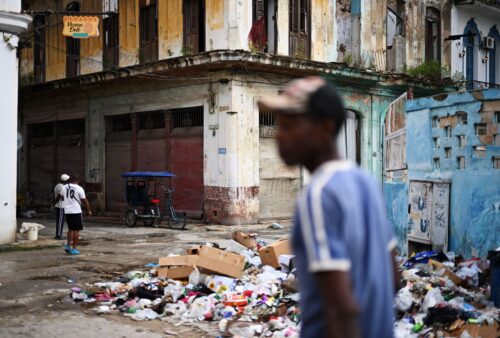
The Trump administration ended the Biden-era humanitarian parole program for Cubans, Venezuelans, Haitians, and Nicaraguans and moved to revoke the legal status of over half a million migrants protected thereunder. This move comes despite the fact that, as a new CEPR issue brief makes clear, US sanctions policy is itself a leading driver of migration from Cuba, with Trump- and Biden-era policies contributing to a mass exodus of over 10 percent of the country’s population in two years alone. One clear example of how US sanctions have made life worse for everyday civilians is access to energy: millions of Cubans were left without power for multiple days this month in the fourth nationwide blackout in five months. As France 24 reports: “Cuba has been suffering through an economic crisis marked by widespread food and fuel shortages, and it struggles with an ageing electric system,” in part because “the US embargo in place since 1962 makes it difficult to import fuel” as well as parts to repair the ailing electric grid.
In a discussion at the Stimson Center, former ambassador Jeffrey DeLaurentis discussed the advantages of reopening US-Cuba relations, noting in particular that it would “ultimately benefit Americans as much as it benefits Cubans.”
Read more:
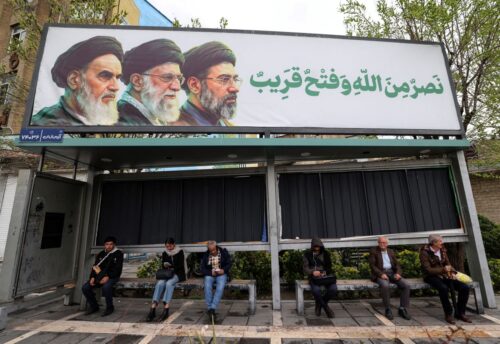
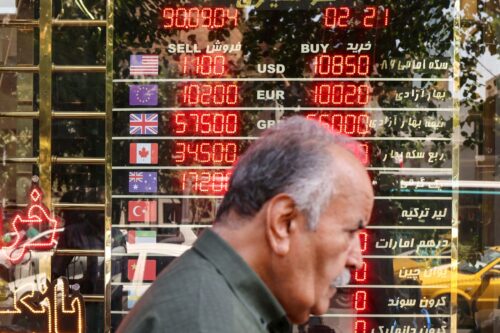
President Donald Trump began the month by not only sending a letter to Iran requesting a start to negotiations for a new nuclear deal but also threatening war and making extensive demands — including the dismantling of Iran’s entire nuclear program — that are nonstarters for the Iranian government. At the same time, Trump has escalated his use of sanctions, targeting among others a major Chinese buyer of Iranian oil. The Wall Street Journal editorial board called the move “the first real proof that ‘maximum pressure’ sanctions are on their way back.” US Treasury Secretary Scott Bessent openly stated that the goal of these sanctions is to “collapse [Iran’s] already buckling economy,” effectively admitting that mass civilian suffering is integral to sanctions policy. Iran has reacted firmly, with Foreign Minister Abbas Araghchi indicating a willingness to talk but not in the current context of maximum pressure sanctions and military threats. On the other hand, Supreme Leader Ali Khamenei, who previously gave a green light to negotiations but has since sought to distance himself, threatened retaliation.
Also this month, the Trump administration discontinued a waiver that had allowed Iraq to import electricity from Iran since 2018. The waiver required funds paid to Iran to be placed in a restricted account that could only be used for humanitarian purposes. The change in policy is expected to exacerbate the regular power outages experienced in the country, particularly during the hot summer months.
Read more:
The Quincy Institute’s James Park wrote in Responsible Statecraft this month that President Trump appears interested in engagement with North Korea, noting that “Trump has shown that his willingness to engage with North Korea is not all talk. He brought back many of the key officials and veteran negotiators who were heavily involved in the summit diplomacy with North Korea during his first term and placed them in even more influential positions.” The author also encourages engagement, as “the Biden administration failed to recognize the urgency of the situation, simply waiting for North Korea to yield to Washington’s economic and diplomatic pressure and return to dialogue. The reality is that time has not been on America’s side. The more time wasted, the more advanced Pyongyang’s nuclear program will become.”
The US Treasury lifted sanctions on Tornado Cash, a cryptocurrency firm that North Korea has allegedly used to launder stolen funds from cyberattacks. “For the North Korean regime, stolen crypto has become a lifeline, especially as international sanctions and the covid-19 pandemic crimped their already limited trade,” notes an article in The Economist.
Read more:
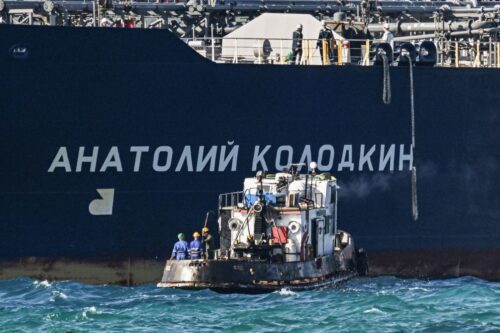
Amid ongoing US-Russia negotiations over the war in Ukraine, the Trump administration has continued to use sanctions — and the prospect of lifting them — as both carrot and stick. Treasury Secretary Bessent threatened Russia on March 6, saying the US could go “all in” on sanctions on Russia’s energy sector, adding that sanctions “will be used explicitly and aggressively for immediate maximum impact.” The following day, President Trump wrote in a Truth Social post that he is considering “large scale Banking Sanctions, Sanctions, and Tariffs on Russia until” a ceasefire or final peace agreement is reached. The US also quietly tightened sanctions on Russia by letting a license expire that had allowed energy payments to certain Russian banks.
At the same time, European officials have noted that the US has scaled back its participation in several groups dedicated to sanctions enforcement. The White House also pledged to lift certain sanctions on Russia’s financial, agricultural, and fertilizer sectors as part of Moscow’s acceptance of agreements with Ukraine concerning the use of the Black Sea and a limited ceasefire for energy targets. However, Russia has stated that it will not abide by the agreement until sanctions — particularly those on its state agricultural bank and its exclusion from the SWIFT payments system — are lifted. This would require authorization from the EU, which has been excluded from negotiations and remains opposed to lifting sanctions.
Canada, for its part, sanctioned 10 Russian individuals and 21 entities, including paramilitary groups and military officials, for their activities in Africa and Ukraine. In addition, the EU renewed its sanctions on Russia for another six months after making concessions to Hungary that included lifting sanctions on certain Russian businessmen.
Meanwhile, talk of seizing Russia’s nearly $300 billion in frozen assets is gaining momentum. This month, the UK’s foreign minister and the EU’s top foreign policy official met to discuss the legal and financial justifications for such a move. Divisions are emerging within the European Central Bank — which has cautioned against the seizure over its potential negative effects on the euro — with the heads of the Latvian Central Bank and officials from other Baltic central banks expressing support. France, though opposed to the move, saw its legislature pass a resolution urging the EU to seize Russia’s frozen assets — and the European Parliament may soon follow suit. Similarly, a bipartisan group of US senators signed a letter urging the Trump administration to seize Russia’s frozen assets and press allies to do the same. However, concerns over Russian retaliation, financial market instability, and potential breaches of international law are fueling opposition in key EU states, particularly Germany and Belgium, where most of the frozen assets are held. Belgium’s prime minister has even called the move an “act of war.” The profits generated from Russia’s frozen assets are currently being used to back a $50 billion G7 loan to Ukraine. The UK and EU issued new disbursements of the loan this month totaling around $2.1 billion.
Read more:
A number of US allies took steps to loosen sanctions on Syria this month, continuing a gradual easing process begun following the fall of the Assad government. The UK lifted sanctions on dozens of entities, including the state-owned oil company, state airline, and perhaps most critically, the Syrian central bank, becoming the first to unfreeze all Syrian central bank assets. Canada announced a plan to lift sanctions, along with nearly $60 million in humanitarian assistance, and appointed an ambassador to the country. The EU pledged over $6 billion in grants and loans while affirming their existing commitments to ease sanctions after bloody attacks against the Alawite minority left over one thousand dead. “At this moment, if we want to prevent further violence, we need to give the people hope in Syria,” EU High Representative Kaja Kallas said. The US, for its part, has yet to ease sanctions beyond the limited license announced in January but reportedly gave Syria a list of conditions that must be met in exchange for partial sanctions relief, including destroying chemical weapons stores, cooperating on counterterrorism, and excluding foreign fighters from senior government roles.
Demands for the further easing of sanctions continue to grow. The Washington Post editorial board published an op-ed calling to lift sanctions on Syria, noting that they “have crippled Syria’s economy” while “Assad and his retinue were barely touched.” “Ninety percent of Syrians live below the poverty line, 1 in 4 are jobless and half of the children are out of school,” they note. The Economist made a similar plea, warning that without reprieve, Syria risks becoming a failed state: “Damascus gets only a couple of hours of electricity a day. The price of bread has risen eight-fold since December.… Western sanctions, originally designed to punish the Assad regime, are [in part] to blame.” The foreign ministers of Turkey, Iraq, Jordan and Lebanon (all countries that border Syria) met in Amman this month and unanimously urged the lifting of sanctions. And US Senator Elizabeth Warren (D-MA) and Representative Joe Wilson (R-SC) sent a joint letter to the Secretaries of State and Treasury warning that US sanctions “risk undermining US national security objectives and impeding Syria’s reconstruction.”
Read more:
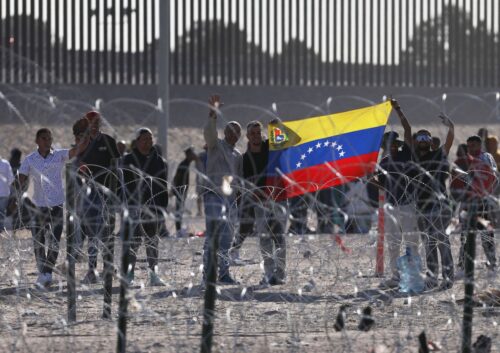
This month, the Trump administration took a series of extraordinary measures to crack down on Venezuelan migrants, which have faced serious legal challenges. These include ending the Biden-era parole program and revoking the protected status of its beneficiaries, deporting Venezeluans to El Salvador’s notorious prisons without evidence or due process, and threatening the Venezuelan government with additional sanctions should they not accept unlimited deportation flights. This comes without recognizing that the Trump administration’s “maximum pressure” policies are a major root cause of migration. As a new CEPR issue brief explores, US sanctions are responsible for the migration of millions of Venezuelans over the last decade, and CEPR Senior Research Fellow Francisco Rodríguez estimates that the maintenance of “maximum pressure” could lead to one million more in the next five years.
As a part of this “maximum pressure” approach, the Trump administration announced in late February that it would be revoking Chevron’s limited license to operate in Venezuela, which had been granted by the Biden administration in October 2022. Trump followed through on that announcement early this month, initially granting a 30-day wind-down period but later extending the deadline to May 27 seemingly in response to the company’s lobbying efforts and concerns over oil prices. Toward the end of this month, Trump announced “secondary tariffs” of 25 percent on trade with any country that purchases oil or gas from Venezuela. This unprecedented move further blurs the already nebulous boundary between tariffs and sanctions and amounts to an extraterritorial extension of unilateral coercive measures. (CEPR Senior Research Fellow Rodríguez breaks down some of the implications of the “deeply problematic policy that breaks with both precedent and logic” here and here.) So far, however, China has responded by purchasing more Venezuelan oil than it has in years.
Read more:
This month, CEPR’s Michael Galant and Alex Main published a new issue brief highlighting the major role that economic sanctions have played in fueling migration to the United States, particularly from Cuba and Venezuela. The brief and its accompanying summary find overwhelming evidence that poor and deteriorating economic conditions drive migration and that economic sanctions often fuel economic hardship. The work cites a recent, peer-reviewed study by scholars Jerg Gutmann, Pascal Langer, and Matthias Neuenkirch finding that US-EU sanctions cause an over 20 percent increase in migration on average. The brief also cites a report by CEPR Senior Research Fellow Rodríguez which finds that four million Venezuelans migrated as a result of US sanctions and related policies and that an additional million are likely to do so if “maximum pressure” policies are maintained. Cuba, for its part, saw the emigration of over 10 percent of its population following the tightening of sanctions by the first Trump administration.
The issue brief was launched on the same day that CEPR hosted a congressional briefing and webinar in which Gutmann, Rodríguez, CEPR Co-Director Mark Weisbrot, and Georgetown University Professor Denisse Delgado Vázquez further explored this evident link between sanctions and migration. The webinar can be viewed here.
Also this month, The Wall Street Journal editorial board penned an op-ed expressing concern that Trump’s use of the International Emergency Economic Powers Act (IEEPA) to authorize tariffs demands legal challenge, as IEEPA powers require an underlying national emergency and the claim that a “national emergency” exists in the present case is unjustifiable. The same can be said for sanctions, the vast majority of which are similarly imposed under IEEPA based on highly dubious claims that, for example, the situation in Venezuela represents an unusual and extraordinary threat to the United States. As the Quincy Institute’s Marcus Stanley notes in a recent op-ed, this executive overreach has long been the subject of criticism, and just this year, Representative Andy Biggs (R-AZ) introduced legislation that would rein in such unrestrained national emergency powers.
Others have critiqued Trump’s reckless use of economic coercion by noting their likelihood of backfiring. Sanctions scholar Nicholas Mulder writes in Foreign Affairs that “maximum pressure” sanctions against countries like Venezuela and Iran in Trump’s first term “had a crippling economic effect but produced no political shifts.” Economic coercion, Mulder writes, has the strongest track record when used against allies but in the long term will likely push even them to seek alternative arrangements that reduce their dependence on the United States. Treasury Secretary Bessent acknowledged a similar argument, stating that “overuse of sanctions could affect the US dollar’s supremacy.… Not unlike the overuse of antibiotics, the target becomes immune and mutates. Lackadaisical sanctions simply create new markets which then must be sanctioned and so on.”
On March 2, Israel announced a ban on all aid entering Gaza and, days later, declared it would also cut electricity to the strip. These measures, implemented at the end of the first phase of the ceasefire agreement, violate the framework of the negotiations and aim to pressure Hamas to continue releasing hostages without Israeli commitments to end the war or withdraw troops.
In response, several humanitarian organizations, UN experts, and regional governments accused Israel of engaging in collective punishment and of using aid as both a tool of extortion and a weapon of war. The UN aid chief stated that Israel’s actions threatened to undo the progress made during the ceasefire, which had allowed aid to enter Gaza after an earlier Israeli blockade left the population on the brink of or, in the view of some organizations and experts, already experiencing famine. The halt in aid has caused prices to rise and supplies that had previously entered Gaza to dwindle, with signs of malnutrition, especially among children, quickly becoming evident. Philippe Lazzarini, the head of UNRWA, stated on March 23, “It’s been three weeks since the Israeli Authorities banned the entry of supplies to Gaza. No food, no medicines, no water, no fuel. A tight siege longer than what was in place in the first phase of the war.… Banning aid is a collective punishment on Gaza: the vast majority of its population are children, women & ordinary men.”
A new report by a UN Independent International Commission accused Israel of employing “sexual, reproductive and other forms of gender-based violence against Palestinians as part of a broader effort to undermine their right to self-determination and carried out genocidal acts through the systematic destruction of sexual and reproductive healthcare facilities.” A press release states:
The Commission found that Israeli forces have systematically destroyed sexual and reproductive healthcare facilities across Gaza. They have simultaneously imposed a siege and prevented humanitarian assistance, including the provision of necessary medication and equipment to ensure safe pregnancies, deliveries and post-partum and neonatal care. These acts violate women’s and girls’ reproductive rights and autonomy, as well as their right to life, health, founding a family, human dignity, physical and mental integrity, freedom from torture and other cruel, inhuman, or degrading treatment, and self-determination and the principle of non-discrimination.
Read more:
Economic sanctions have become one of the main tools of US foreign policy despite widespread evidence that they can cause severe harm to civilian populations (which may, in fact, be the point). Though now a defining feature of the global economic order, sanctions and their human costs receive relatively little attention in most US media outlets.
CEPR’s Sanctions Watch news bulletin aims to generate more awareness on the use and impact of sanctions through monthly round-ups of news and analysis on US sanctions policy.
Previous editions of the Sanctions Watch can be found here. CEPR’s US Sanctions Policy FAQ can be found here.
Article
Article
Article
Article
Article
Article
Article

Report