Article • Sanctions Watch
CEPR Sanctions Watch January 2026
Article • Sanctions Watch
In this edition of Sanctions Watch, covering January 2026:
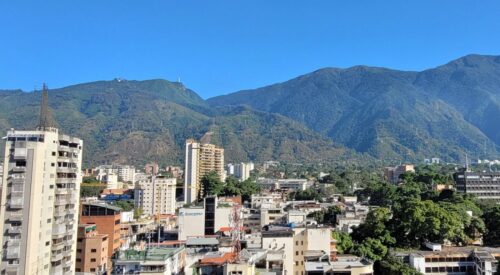
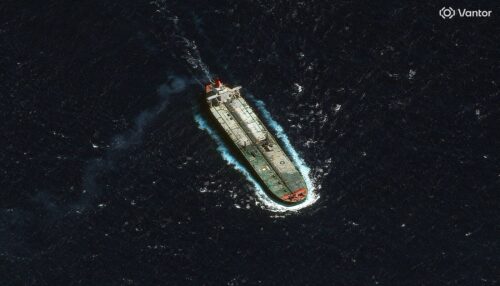
On January 3, at the direction of President Trump, US forces invaded the Venezuelan capital of Caracas, killing over 100 people and abducting Venezuelan President Nicolás Maduro and First Lady Cilia Flores. The operation — the first direct US military attack against a South American state in over 100 years — was widely condemned as a violation of both US and international law. Following the abduction, Trump announced that the United States would “run” the country, and that US companies would be managing its oil infrastructure to ensure that oil continues to flow. Secretary of State Marco Rubio backpedaled the comments, suggesting instead that the US would exert its will on the new government of Delcy Rodríguez through a de facto blockade on Venezuelan oil that began in December. Since that time, US forces have seized at least three more oil tankers allegedly carrying Venezuelan oil.
The New York Times reports that even prior to Maduro’s abduction, the blockade was expected to “shutter more than 70 percent of the country’s oil production this year and wipe out its dominant source of public revenue … If the blockade held, the Venezuelan government expected national oil production to collapse from about 1.2 million barrels per day late last year to less than 300,000 later this year.” CEPR Senior Research Fellow Francisco Rodríguez told the Times that, if maintained, this sudden collapse in oil revenue would lead to a humanitarian disaster for Venezuelan civilians: “We would see a massive recession. You will get either a famine or mass migration.” This civilian harm would not be incidental. In a speech on the Senate floor, US Senator Chris Murphy (D-CT) observed that the current blockade “is absolutely an act of war.” UN experts have similarly described it as “an armed attack under article 51 of the [UN] Charter.”
Three days after the invasion, and as the blockade began to seriously impact Venezuela’s economy, Trump announced that the authorities in Caracas “will be turning over” up to 50 million barrels of oil — roughly one to two months of total production. Anonymous officials subsequently said that the 50 million would only be the first tranche, and that Venezuela would turn over its oil sales to the administration “indefinitely.” The proceeds, Trump wrote, “will be controlled by me” and used to benefit the people of both Venezuela and the US. Trump then issued an Executive Order blocking the funds from being subject to the legal claims of Venezuela’s many creditors.
On January 14, the White House announced that the first US-managed sale of Venezuelan oil, worth $500 million, had been completed. The proceeds from these sales were deposited into an account at a Qatari commercial bank, with disbursements controlled by the US government. Senator Elizabeth Warren (D-MA) criticized the move, noting,“There is no basis in law for a president to set up an offshore account that he controls so that he can sell assets seized by the American military.” On January 20, the government of Delcy Rodríguez announced that the country had received $300 million of the sale, which was sent to private banks in order to strengthen the country’s currency, the bolivar. The end use for the remaining $200 million is unknown. The infusion is likely to be a boon for the economy that has long been dollar-starved as a result of US sanctions, among other factors.
Under US pressure, Delcy Rodríguez has pushed for domestic reforms that would make it easier for foreign companies to participate in — and profit from — Venezuela’s oil sector. The fate of Venezuela’s oil industry, however, still hinges largely on US sanctions policy. According to chemical engineer Robert Rapier, writing for Forbes, sanctions were not the spark of Venezuela’s economic crisis, but they did “accelerate the decline.” Sanctions “cut off Venezuela’s largest customer, restricted payments, blocked diluent imports, and complicated shipping and insurance … Venezuela’s immediate oil future hinges less on geology than on whether the sanctions landscape changes.” The New York Times notes that “the country is subject to more than 400 restrictions,” and companies seeking to do business there are still required to go through a lengthy legal process of requesting a license to participate from the Treasury Department. The same article notes that US sanctions imposed on Venezuela since 2017 “were designed to hurt the country’s economy in order to force the Maduro regime to end its human rights abuses and antidemocratic actions. The campaign crushed the Venezuelan economy and led to a humanitarian crisis.”
On January 29, the Trump administration announced a new general license authorizing certain transactions with the government and state oil company that are “ordinarily incident and necessary to the lifting, exportation, reexportation, sale, resale, supply, storage, marketing, purchase, delivery, or transportation of Venezuelan-origin oil, including the refining of such oil, by an established US entity.” CEPR Senior Research Fellow Francisco Rodríguez described the measure as only a “limited license that essentially aims to facilitate the marketing of Venezuelan oil while ensuring that revenues remain centralized under US control.” As Naveena Sadasivam notes in Grist, these measures are likely to benefit Venezuela’s economy, though Trump is effectively attempting to “restore an oil industry he helped destroy.” CEPR’s Mark Weisbrot told Sadasivam: “When they cut off the ability of the government to export their oil and access international finance, it was all downhill from there. It was economic violence to punish Venezuelans.”
Writing in Phenomenal World, CEPR’s Alex Main and Ivana Vasić-Lalović highlight another opportunity to spur Venezuela’s economic recovery: unfreezing its nearly $5 billion worth of Special Drawing Rights — a unique reserve asset issued by the International Monetary Fund to its member countries, to which Venezuela has been denied access since the US and certain allies ceased recognizing Maduro as the head of government of Venezuela in 2019.
For the latest on Venezuela, follow CEPR’s Live Update tracker.
Read more:
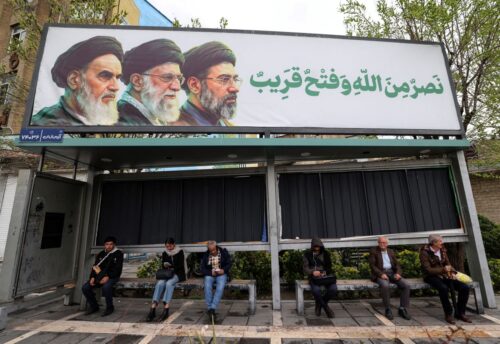
Major protests have roiled Iran since late December. While the demonstrations have since taken on a wider set of demands, including broad opposition to the government, they were sparked by a plunging currency and the skyrocketing cost of living — themselves the result, in part, of US sanctions. As noted in The Guardian, Iran is “under some of the world’s most intense sanctions, which have spurred inflation as the country struggles to access frozen funds abroad and foreign exchange, something exacerbated by its growing reliance on imports.” The New York Times reports that “sanctions reimposed by both the United States and Europe have sunk Iran’s economy to new lows.” Bloomberg also partially attributes the currency crisis to sanctions: “The rial has been under pressure for years due to Western sanctions and systemic corruption … While Iran sits on huge oil reserves, the crude is off-limits to most foreign buyers due to the sanctions imposed by the US and its allies. … the sanctions have left Iran bereft of inward investment and modern technology as foreign companies and well-known brands pulled out.”
In an interview at the World Economic Forum, Treasury Secretary Scott Bessent was unusually candid about how these macroeconomic challenges and resulting political instability were the intentional result of US sanctions:
Last March, I said that I believed the Iranian currency was on the verge of collapse — that if I were an Iranian citizen, I would take my money out. President Trump ordered Treasury, and our OFAC division — Office of Foreign Assets Control — to put “maximum pressure” on Iran. And it’s worked, because in December, their economy collapsed. We saw a major bank go under. The central bank has started to print money. There is a dollar shortage. They are not able to get imports. And this is why the people took to the streets. So this is economic statecraft.
Senator John Fetterman (D-PA) made a similar admission, responding to news that the Iranian government planned to make direct cash payments to its citizens, with, “This is a testament to how our nation and Israel broke Iran.”
The Trump administration responded to the demonstrations, and the bloody government crackdown that followed, with additional economic restrictions. On January 13, Trump announced via Truth Social that any country “doing business with the Islamic Republic of Iran will pay a Tariff of 25% on any and all business being done with the United States of America.” How this policy will be implemented remains unclear, though it appears intended to pressure China, Iran’s largest trading partner. On January 15, Treasury designated 20 individuals and entities alleged to be involved in repressing the protests, including top security officials, a major prison, and bankers tied to laundering profits from oil sales. The following week, Treasury announced sanctions on eight entities and nine vessels reportedly tied to the “shadow fleet” used to sell Iranian oil. On January 29, the European Union agreed to list Iran’s Islamic Revolutionary Guard Corps as a “terrorist organization,” a designation that entails sanctions for the group that has significant business interests across the country.
Read more:
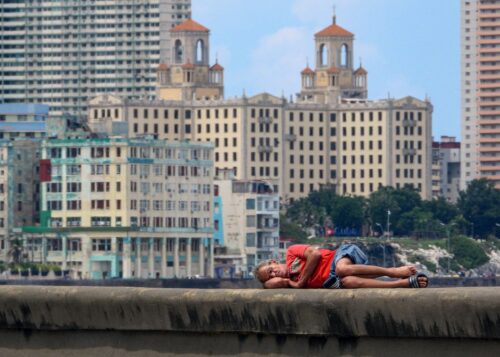
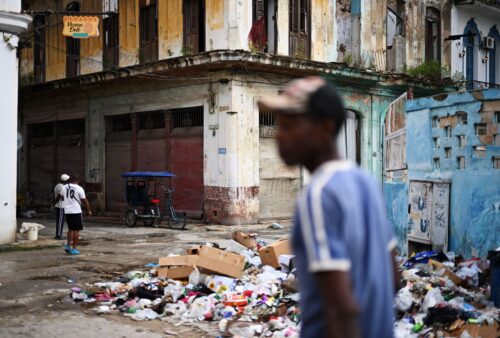
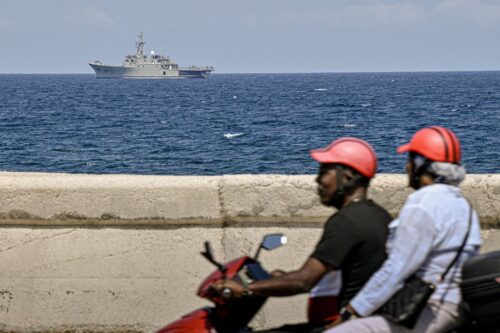
President Trump issued an executive order late this month declaring the government of Cuba an “an unusual and extraordinary threat to the national security and foreign policy of the United States” and invoking emergency economic powers to threaten tariffs against any nation that sells oil, directly or indirectly, to Cuba. The Cuban foreign minister called the move a “brutal act of aggression against Cuba and its people … who are now threatened with being subjected to extreme living conditions.”
The decision follows reporting earlier in the month that the Trump administration was considering imposing a naval blockade to cut off all Cuban access to oil. “Energy is the chokehold to kill the regime,” noted an anonymous official. Following the abduction of Venezuelan President Nicolás Maduro and First Lady Cilia Flores, the administration appears to have turned its sights to regime change in the island nation, which has been experiencing a dire economic and humanitarian crisis since the first Trump administration reversed Obama-era sanctions relief. Trump’s decision to blockade Venezuelan oil exports in December pushed Cuba’s “long-suffering” economy — which had relied on subsidized Venezuelan oil for roughly half of its oil imports — into “free fall,” reports The New York Times. The resulting crisis has seen widespread blackouts; shortages of food, fuel, and medicine; and the spread of preventable diseases. This human suffering, CEPR’s Michael Galant told the Associated Press, is not incidental. The goal of Trump’s policies, and the US embargo of Cuba generally, is “to cause such an indiscriminate suffering in the civilian population as to instigate some sort of uprising, regime change.” Indeed, Congresswoman María Elvira Salazar (R-FL) appeared to recognize the human impacts of US policy, stating that “a mother’s hunger, a child that needs immediate help. … short-term suffering” are worthwhile costs if it leads to the overthrowing of the Cuban government in the long term.
Mexico — historically Cuba’s second-largest source of oil after Venezuela — paused a planned oil shipment, seemingly in response to Trump’s pressure, though President Sheinbaum was quick to frame the decision as a sovereign one. Sheinbaum vowed to continue to show “solidarity” with Cuba, though what this will mean in practice, and the future of Mexican oil shipments to the country, particularly following the new tariff threats, remain unclear. The Financial Times reports that Cuba “only has enough oil to last 15 to 20 days at current levels of demand and domestic production.”
House Foreign Affairs Committee Ranking Member Rep. Gregory Meeks (D-NY) said of the proposed blockade: “Crippling economic sanctions on Cuba for the past 60+ years have disproportionately hurt the Cuban people while the government remains unaffected. Trump and Rubio doubling down on this failed policy will deepen the humanitarian and energy crisis. We should be supporting the Cuban people, not contributing to their suffering.”
Congressman Jim McGovern (D-MA) called it:
Outdated, obsolete, Cold War thinking—unsurprisingly coming from the oldest person ever to assume the presidency. We’ve had an embargo against Cuba for over 60 YEARS! History has proven that it does not hurt the elites or the government—it punishes regular people and families. The best way to promote political change? Lift the embargo, step up diplomacy, and boost cultural exchange and tourism. That’s how we give the Cuban people hope—not with another 60+ years of bullying and cruelty.
But it’s not just Democrats that are skeptical. Panelists on Fox Business asked: “[Is] a decapitated Cuba, but impoverished, what you want in your hemisphere?” and “Every voter’s going to ask ‘What’s in it for me? What am I getting out of that’ … People who voted for President Trump voted for getting out of the meddlesome [sic] business.” In The American Conservative, Reed Lindsay makes the “America First Case for Ending the Cuban Embargo,” noting that “tougher sanctions have made Cuba less stable—and the States less secure—by destabilizing the island’s economy, accelerating unprecedented migration to the U.S. border, undermining counternarcotics efforts, hurting U.S. companies, and incentivizing closer relations with Russia and China.” And a CIA intelligence report from earlier this month found that while Cuba’s economy — and people — are suffering, prospects of regime change were less conclusive.
Read more:
US sanctions imposed in November on Russia’s oil sector are still being felt through global energy markets. Oil Price reports that India’s imports of Russian oil — one of Moscow’s largest buyers — “are set to be close to the three-year low in December as refiners avoid sanctioned cargoes and sellers and look to diversify sourcing to appease the U.S. Administration.” Russian oil exports to the rest of Asia have also slowed. Robin J. Brooks, a senior fellow at Brookings, notes that the sanctions have contributed to a decline in the price of Russian oil, which was already being sold at a discount to India and China:
This discount has widened sharply at different points since Russia’s invasion: (i) it widened right after the invasion in February 2022 when markets shunned Russian oil for fear of Western sanctions; (ii) it widened further in December 2022 when the G7 announced the oil price cap on Russia; and (iii) it went to its widest ever in December 2025 after the bulk of Rosneft and Lukoil sanctions took effect in November 2025.
The sharp drop in the Urals oil price – to levels last seen in 2020 during COVID – is a major blow to Russia’s war economy. All else equal, this puts downward pressure on the current account surplus and thereby the Ruble, which puts upward pressure on inflation, forcing the central bank to keep interest rates higher than otherwise.
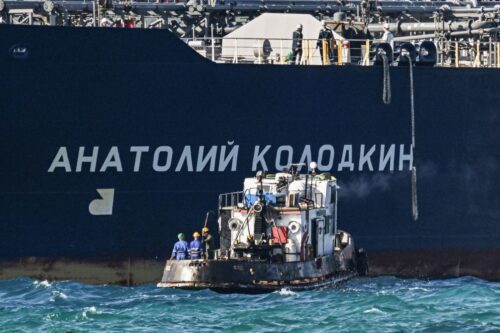
Russia’s oil troubles are further compounded by the Trump administration’s oil blockade of Venezuela. This blockade has interfered with the “shadow fleet” of tankers — a network used by Russia and other countries to circumvent US and EU sanctions — resulting in halted shipments and, in some cases, the US government’s seizure of tankers. On January 7, for instance, the Russian navy dispatched an escort for a Russian‑flagged shadow fleet tanker that US forces ultimately seized in the North Atlantic after a weeks‑long pursuit that began in the Caribbean. The operation was conducted in cooperation with the UK, which has reportedly come up with its own legal basis to authorize such seizures. France has escalated its own enforcement, seizing a Russian-linked shadow fleet tanker in the Mediterranean on January 22, the second such interdiction by Paris since September.
After President Trump invited Russia to sit on the Board of Peace (discussed below), President Putin offered to use $1 billion of Russia’s assets frozen in the US to cover the fee Trump has requested for permanent membership on the board. Most of Russia’s $300 billion in frozen assets are held in Europe, though roughly $5 billion are in the US. Putin said that “the remaining funds from our frozen assets in the US could also be used to rebuild territories damaged by the fighting after the conclusion of a peace treaty between Russia and Ukraine.”
Read more:
This month, the Israeli government revoked the operating licenses of 37 international humanitarian organizations — including Oxfam, Doctors Without Borders, ActionAid, and the International Rescue Committee — citing their failure to meet new, widely criticized registration requirements. As a result, these groups — which, according to the UN, “deliver more than half of food assistance in Gaza, support about 60 per cent of field hospitals, implement three quarters of shelter and non-food item activities, and provide all treatment for children with severe acute malnutrition” — are no longer permitted to bring supplies or staff into the Strip and must halt their operations entirely by March 1. UN Secretary-General António Guterres expressed “deep concern” over the ban, calling for it to be revoked and warning that it “comes on top of earlier restrictions that have already delayed critical food, medical, hygiene and shelter supplies from entering Gaza.” In a statement, 22 independent UN experts and special rapporteurs echoed these concerns:
“Banning life-saving organisations from operating in Gaza marks a new phase in a policy that renders life unbearable for a population already devastated by genocide,” the experts said. “This strategy will create conditions that force Palestinians into chronic deprivation, threatening their very survival as a group and further violating the Genocide Convention – it must be stopped. …
“The ban is not an isolated act, but part of a systematic assault on humanitarian operations in the occupied Palestinian territory and another step in the deliberate dismantling of Gaza’s lifeline,” the experts said. “In Gaza, genocide survivors are battling winter, severe food insecurity, malnutrition and the collapse of the healthcare and education systems in the context of severe environmental harm impact caused by Israeli aggression.”
Israeli authorities also demolished the headquarters of the UN Relief and Works Agency for Palestine Refugees in the Near East (UNRWA) in occupied East Jerusalem. UNRWA, the UN’s primary humanitarian agency for the occupied Palestinian territories, has been barred from operating in Israel since October due to a series of laws passed by the Israeli parliament.
Meanwhile, the Trump administration has officially begun the second phase of the Gaza ceasefire agreement. However, although the UN says that enough aid has recently entered to meet 100 percent of Gazans’ minimum caloric needs and that famine has been reversed, an Associated Press investigation from last month found that the aid quantities required during the first phase were never fully delivered. Thousands of children remain acutely malnourished, and Oxfam has stated:
Needs in Gaza exceed far beyond the aid and reconstruction materials Israel is allowing in and the situation will worsen if Israel’s collective punishment and illegal blockade continues.
As part of the second phase, the US launched a “board of peace” — that includes a $1 billion fee for permanent members — to oversee the agreement’s implementation. The Trump administration, reportedly seeking to expand the initiative beyond Gaza to other conflicts, invited several countries to participate, including France. When French President Emmanuel Macron declined, Trump threatened 200 percent tariffs on French wine, a move the country’s agriculture minister called “blackmail.”
In addition, the Treasury Department has imposed sanctions on six Palestinian charities that provide medical care and distribute aid, accusing them of having links to Hamas.
Read more:
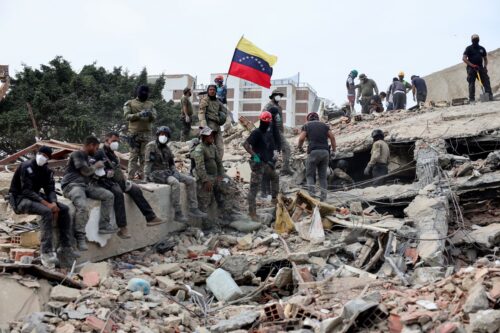
The Syrian government has redoubled its efforts to strengthen international economic engagement and revitalize its long-stagnant economy following the removal of key sanctions — including the repeal of the Caesar Act by the US Congress — late last year. Visiting Damascus at the start of the month, European Commission President Ursula von der Leyen announced new trade initiatives, as well as a $722 million support package for reconstruction. The Syrian government has also announced new banknotes which feature agricultural products in place of members of the Assad family, and which are redenominated to remove two zeros — an effort to project stability and confidence in the Syrian pound following years of sanctions-fueled inflation. “The Syrian pound’s value ha[d] been drained, and inflation recently reached triple digits. Towards the end of 2025, an unnamed official told the Reuters news agency that the Central Bank of Syria had just $200m in foreign exchange reserves. At the end of 2010, it had $17bn,” reports Al Jazeera. The government also hopes to revitalize the country’s oil production, though the fruits of investment may take some time to be felt. Per Al Jazeera, the oil infrastructure has been left “dilapidated” after “years of war and international sanctions.”
Following the Syrian government’s offensive on territories held by the Kurdish-led, and formerly US-backed, Syrian Democratic Forces in the northeast of the country, Senator Lindsey Graham (R-SC) has threatened to do “everything in [his] power to revive the Caesar Act sanctions, making them even more bone-crushing.”
Read more:
Lecturer and development expert Dr. Sara Moussavi published an article in The New Humanitarian on the human impact of Western sanctions on Afghanistan. She argues that sanctions have failed to alter the Taliban government’s behavior and have instead had severe consequences for civilians, exacerbating many of the crises the country already faced:
Almost four-and-a-half years after the Taliban returned to power, Afghanistan is still struggling to recover from the seizure of $9.5 billion of Central Bank assets by the United States and the European Union. Alongside reductions in foreign aid and international limitations on the banking system, the asset freeze has led to a strangling of Afghanistan’s economy that has exacerbated one of the world’s worst humanitarian crises. …
The package of economic statecraft deployed to apply pressure on the Taliban’s Islamic Emirate government amounts to collective punishment on all Afghans. And while the humanitarian crisis persists, US courts have ruled that billions of dollars of the assets cannot be used to compensate 9/11 victims, which was one of the reasons given by former president Joe Biden’s administration when it announced the freeze in the first place.
The last four years in Afghanistan represent a clear example of how sanctions – even those that include humanitarian exemptions – can cause significant civilian harm, particularly in countries dependent on aid.
Today, an estimated 23 million Afghans, more than half the population, are in need of urgent humanitarian aid.
Moussavi also argues that steep aid cuts to Afghanistan should be considered a form of sanctions, especially given how the US occupation left the country heavily dependent on foreign assistance:
The initial wave of Afghan aid cuts, which came before most international NGOs started to tighten their purse strings in 2023, were all the more devastating because 75% of the former Western-backed government’s expenditure relied on international grants.
The next round of cuts, as US President Donald Trump’s administration shut down USAID in early 2025, only added to the financial strain faced by international NGOs. They also came as hundreds of thousands of Afghans were being expelled from Iran and Pakistan, adding to the humanitarian strain. Aid workers speaking to the media at the time said Trump’s cuts made a notable difference in their ability to respond to Islamabad’s mass expulsions. …
The persistent neglect of humanitarian needs compounds vulnerabilities and perpetrates more extreme impoverishment, while sanctions continue to restrict financial transactions, access to aid, and the process of payments due to the asset freeze and exclusion from the global financial market, placing a further burden on the Afghan population.
Read more:
An association of South Korean investors in suspended projects involving North Korea have urged Seoul to lift certain unilateral sanctions on Pyongyang. Yonhap reports:
The businessmen were referring to far-reaching suspensions of joint economic projects with North Korea announced on May 24, 2010, under the former conservative Lee Myung-bak administration following the North’s deadly torpedoing of the South Korean Navy frigate Cheonan in March that year.
Under the action, Seoul suspended trade, investment and all assistance programs with North Korea, except for humanitarian aid.
“The May 24 measures dealt a fatal blow to companies involved in inter-Korean economic projects and blocked all economic lifelines,” an association official said.
“The government should open up the passage for the private sector and companies to do business legally at a time when dialogue between the South and North governments is difficult,” the official added.
Yonhap also adds that South Korea is considering lifting these sanctions:
The call came as the unification ministry plans to consider lifting the 2010 sanctions as part of an effort to ease tensions with North Korea and resume dialogue.
North Korea expert Chan Young Bang outlined the impact of sanctions in a 38 North article, arguing that they have failed to change North Korea’s behavior and that the government instead adapts by extracting and redirecting wealth to its elites:
Extraction disproportionately impacts both the formal sector and informal markets, explaining why sanctions often produce outcomes that defy conventional policy expectations. Rather than reforming or collapsing under pressure, the regime intensifies coercion, expands extraction, and recalibrates the relationship between workers and markets to reinforce control. …
International sanctions imposed on the DPRK lead to severe contraction of its GDP across the board, though to varying degrees. Sanctions have had a major impact on heavy industry and agriculture by limiting access to vital imports of oil, machinery, fertilizer, and industrial chemicals. Estimates suggest crop production declined by 20 percent between 2016 and 2018, highlighting the severe impact of sanctions on agriculture, which represents 23 percent of North Korea’s GDP.
Read more:
Also this month, CEPR published an updated version of its Frequently Asked Questions on US sanctions policy. Intended as an accessible introduction and guide to economic sanctions for policymakers and advocates alike, the updated FAQ includes new research on the human impacts of sanctions, the latest developments in US policy, and a new section highlighting the “extraterritorial” impacts of US sanctions regimes.
Read more:
Economic sanctions have become one of the main tools of US foreign policy despite widespread evidence that they can cause severe harm to civilian populations (which may, in fact, be the point). Though now a defining feature of the global economic order, sanctions and their human costs receive relatively little attention in most US media outlets.
CEPR’s Sanctions Watch news bulletin aims to generate more awareness on the use and impact of sanctions through monthly round-ups of news and analysis on US sanctions policy.
Previous editions of the Sanctions Watch can be found here. CEPR’s US Sanctions Policy FAQ can be found here.
Article
Article
Article
Article
Article
Report
Article
Article