Article • Sanctions Watch
CEPR Sanctions Watch April 2026
Article • Sanctions Watch
In this edition of Sanctions Watch, covering April 2026:
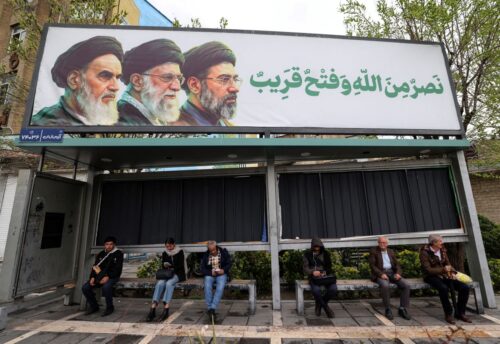
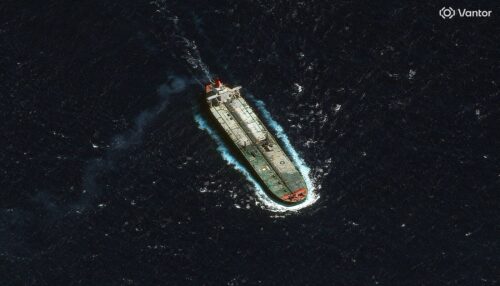
The Trump administration launched a new campaign of sanctions and trade restrictions against Iran this month and dubbed it as “Operation Economic Fury.” US Department of Treasury Secretary Scott Bessent described the measures as the “financial equivalent” of a bombing campaign (an apt metaphor, as CEPR research has found that sanctions cause roughly as many deaths annually as armed conflict). As a part of this operation, the Department of Treasury has directly contacted businesses and financial institutions in China, Oman, and the UAE with threats of secondary sanctions for doing business with Iran. The Department of Treasury also announced a series of new sanctions against dozens of individuals and entities alleged to be tied to the oil shipping business of Iranian magnate Mohammad Hossein Shamkhani and 14 Iranian, Emirati, and Turkish individuals and entities accused of involvement in Iranian weapons procurement networks. On April 24, another sweeping set of sanctions were announced that targeted 40 shipping firms and vessels allegedly involved in Iran’s “shadow fleet,” including the China-based oil refinery Hengli Petrochemical. The administration also allowed last month’s 30-day license authorizing the purchase of Iranian oil that was already at sea to expire (a similar license issued for Russian oil, however, was renewed).
These new economic measures come on top of the administration’s decision to enact a maritime blockade against Iran in the Strait of Hormuz. The US has intercepted and seized Iranian ships not only in the strait but also in the Indian Ocean, which the Iranian government has described as an act of piracy. Though most exports have been halted, Iran continues to produce oil, which it stores domestically. The Trump administration appears to be betting that, as storage runs low, the country will be forced to shutter its wells — an expensive prospect. “Iran could probably sustain current oil production for another two to three months before storage issues become ‘a significant consideration,’” sanctions expert Esfandyar Batmanghelidj of the Bourse & Bazaar Foundation told CNN. “If the blockade is in place for months, it will definitely impact the economic outlook for Iran, but the Iranian expectation is that the US itself cannot tolerate that pressure for that long,” Batmanghelidj continued. The continued blockade would impact not only Iran and the United States but also countries around the world, including low- and middle-income nations that stand to suffer greatly from the price shocks. The Quincy Institute’s Eldar Mamedov writes that the blockade would “hammer every economy reliant on Gulf energy, from Asia to Europe. And the blame would fall squarely on Washington.”
Read more:
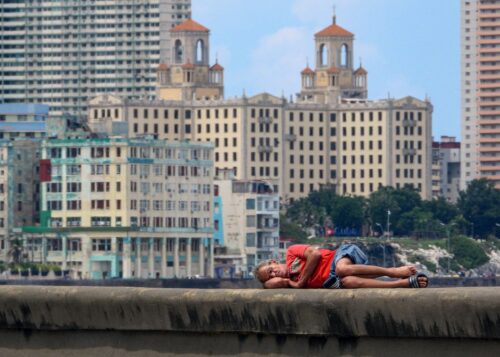
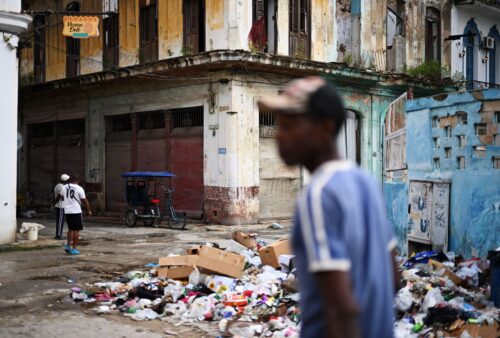
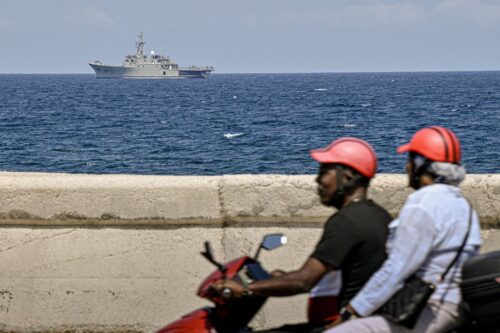
The Trump administration warned Cuba, which is experiencing a dire economic crisis as a result of a US fuel blockade, that it has a small window of time to yield to its demands. At the same time, the Pentagon is reportedly accelerating its preparations for potential military action against the country, and President Donald Trump himself has said, “We may stop by Cuba after we’re finished with [Iran].” It is unclear whether these are genuine plans for war or simply a negotiating tactic, but Cuban officials appear to be taking the threats seriously.
Democrats have stepped up their criticism of both the threats of war and the Trump administration’s fuel blockade. Reps. Pramila Jayapal (D-WA) and Jonathan Jackson (D-IL), who visited the island this month, released a statement calling the blockade “cruel collective punishment — effectively an economic bombing of the infrastructure of the country.” Rep. Gregory Meeks (D-NY), ranking member of the House Foreign Affairs Committee, and Senator Tim Kaine (D-VA), ranking member of the Senate Foreign Relations Subcommittee on the Western Hemisphere, led 50 US Representatives and Senators in a letter to Trump:
We write with great urgency to express our alarm at the dire humanitarian crisis in Cuba, a crisis your administration is actively worsening through its expansion of a policy that has failed for more than six decades. For 64 years, the United States has relied on the flawed premise that maximum pressure would yield political change on the island. It has not.
Doubling down on failed strategies by restricting access to energy and health care is contrary to American values and is needlessly exacerbating a humanitarian crisis.…
Widespread blackouts, shortages of basic goods, and the collapse of critical infrastructure are placing extraordinary strain on ordinary Cubans. The most vulnerable — children, the elderly, and those with chronic illnesses — are bearing the heaviest burden. With hospitals unable to stay online due to fuel shortages, patients are being turned away for treatment, and people will die if you do not reverse course immediately.
This month, the Senate was set to consider a War Powers Resolution led by Senators Kaine, Adam Schiff (D-CA), and Ruben Gallego (D-AZ), which would have blocked unauthorized military action against Cuba, including the militarily enforced maritime fuel blockade. It was blocked by a vote of 51 to 47, largely along partisan lines. Senators Susan Collins (R-ME) and Rand Paul (R-KY) were the sole Republicans not to block the measure, and Senator John Fetterman (D-PA) was the sole Democrat to block it. A similar measure, led by Rep. Nydia Velázquez (D-NY), was introduced last month in the House of Representatives.
Prior to the vote, over 40 organizations, including CEPR, sent a letter to Congress urging support for the measure. The organizations highlighted not only the humanitarian impacts of US policy toward Cuba but also its unpopularity and impacts on US interests, including the risk of a surge in migration. A few weeks prior, over 80 organizations, including both the Center for Victims of Torture and Refugees International, sent a letter to Congress in response to comments from the head of the US Southern Command indicating that, if there were a jump in Cuban migration, migrants would be held at the US military base in Guantanamo Bay. The signatories decry not only the plan to hold migrants at the detention center but also the US sanctions that are a known push factor for migration. “If the Trump administration is worried about Cuban migration, the solution is simple: stop intentionally impoverishing the Cuban people through an embargo and fuel blockade,” CEPR’s Michael Galant told The Guardian.
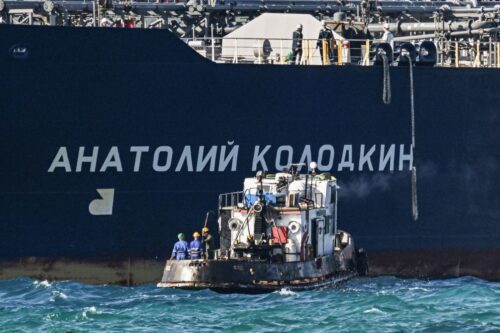
Cubans enjoyed a brief reprieve from the fuel crisis late this month as the oil provided by the Russian tanker Anatoly Kolodkin in March made its way into the energy system. The country’s Minister of Energy and Mines, however, warned that the lone shipment is “not going to buy us too much time,” noting that eight such shipments per month would be required to meet current demand. A second Russian tanker is reportedly on its way to the island.
A new report by CEPR’s Alex Main, Joe Sammut, Mark Weisbrot, and Guillaume Long shines a light on the impacts of US sanctions on Cuban infants. The authors find that Cuba’s infant mortality rate — until recently better even than that of the United States — surged dramatically alongside the progressive hardening of sanctions under the Trump and Biden administrations, increasing by 148 percent from 2018 to 2025. If the rate of infant mortality had remained unchanged, approximately 1,800 fewer babies would have died since 2018, the report finds. While data is not yet available for the last few months, the authors contend that the fuel blockade has very likely caused the infant mortality rate to increase even further.
A recent article in the Associated Press highlights the impacts of the US fuel blockade on the elderly as well:
The elderly are among the hardest hit by the severe economic crisis on the island, which has worsened dramatically since the beginning of the year following an oil embargo imposed by U.S. President Donald Trump.
Most are former government employees — teachers, doctors, nurses, technicians, custodians, lawyers — whose pensions are usually less than $10 a month and who must face cuts to the basket of goods that have been subsidized for decades, as well as the loneliness brought on by the growing emigration of young people.…
“We’re doing everything we can here to move the country forward,” [one elderly woman] said. “But the thing is, we have a very powerful enemy, and he’s right there, right on our doorstep.”
Read more:
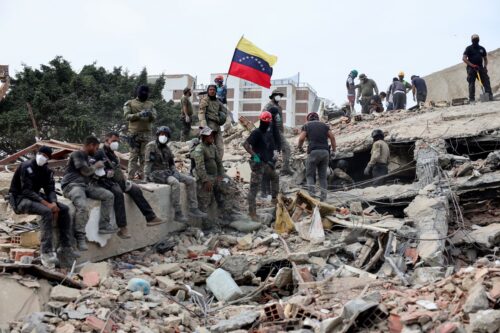
The Trump administration continued to ease sanctions on Venezuela this month. On April 14, the Department of Treasury issued General License (GL) 57, authorizing transactions with the country’s central bank (Banco Central de Venezuela [BCV]) and a number of other public banks. Earlier in the month, CEPR’s Andrés Arauz and Michael Galant published an analysis of how US policies had undermined the operations of the BCV, and therefore Venezuela’s entire financial system, and why lifting these sanctions was necessary to allow the BCV to fulfill its essential functions. The authors also wrote that the easing of sanctions should be paired with formal recognition of the current BCV authorities under Section 25B of the Federal Reserve Act — without this certification, FDIC-insured banks cannot process transactions on the BCV’s behalf. While the Trump administration has otherwise declared its recognition of the government of Delcy Rodríguez, there has to date been no announcement regarding 25B certification.
The International Monetary Fund (IMF) and World Bank Group, on the other hand, announced this month that they would be resuming their relationship with Venezuela, which had been on pause since 2019 when the US and certain other countries ended their recognition of the government of Nicolás Maduro. The move paves the way not only to the potential resumption of lending but also — of more immediate consequence — to Venezuela’s regaining access to nearly $5 billion in IMF Special Drawing Rights (SDRs). SDRs are a unique reserve asset issued by the IMF that can be traded for hard currency. CEPR’s Alex Main and Ivana Vasić-Lalović wrote an article earlier this year calling for Venezuela to be allowed to access these crucial resources to support the country’s recovery. Acting President Rodríguez called the World Bank and IMF’s decision “a very important step for the Venezuelan economy.”
At the start of the month, Rodríguez herself was removed from the US sanctioned entities list, on which she had been placed in 2018. On the same day as the easing of central bank sanctions, the Department of Treasury issued GL 56, which authorizes commercial actors to negotiate “contingent contracts” with the Venezuelan government, though the contracts can still only enter into force with explicit approval from the US Office of Foreign Assets Control. And at the end of the month, the US committed to easing sanctions that have been preventing the Venezuelan government from paying for the legal fees in the trial of Nicolás Maduro in New York.
Read more:
The Trump administration allowed a month-long waiver on purchases of Russian oil to expire this month, only to renew it days later. The waiver had been issued amid rising oil prices following the closure of the Strait of Hormuz during the US and Israeli war on Iran. Its aim was to ease prices through increased supply by allowing countries to purchase Russian oil that was already at sea as of March 11. Treasury Secretary Bessent emphasized that the measure was temporary, but it nonetheless marked a significant shift in the administration’s sanctions policy and drew backlash from European countries and members of Congress. It ultimately failed to meaningfully reduce oil prices at home, though some Asian countries found relief as a result of the measure and urged the administration to renew it.
The waiver was allowed to expire on April 11, leaving its future uncertain. Renewal appeared unlikely, particularly after Treasury Secretary Bessent stated on April 15 that the administration “will not be renewing the general license on Russian oil.” Two days later, however, the Department of Treasury reversed course by issuing a new 30-day waiver for Russian oil that had been loaded onto tankers as of April 17. The only explanation for this shift came from a Department of Treasury spokesperson, who said, “as negotiations (with Iran) accelerate, Treasury wants to ensure oil is available to those who need it.” Secretary Bessent later said that the decision came as a result of lobbying from developing countries and that the waiver would not be extended a second time.
In Europe, the electoral defeat of Hungarian Prime Minister Viktor Orbán — who frequently threatened to veto, and at times did veto, European Union sanctions on Russia — is likely to make it easier for the EU to harden sanctions on Moscow. Days after Orbán’s defeat, in response to Russian attacks on Ukraine, the EU’s foreign policy chief posted on social media that “it is high time to … move forward with the 20th sanctions package,” which had been blocked by Hungary over allegations that Ukraine was deliberately obstructing oil flows to the country. Following Kyiv’s repair of a damaged pipeline and the resumption of oil deliveries, Budapest lifted its veto on April 22. This cleared the way for the EU member states to approve the 20th sanctions package, which includes a full ban on the provision of maritime services to vessels transporting Russian oil, to be implemented following coordination with the G7. Additionally, the package sanctions 20 Russian banks and financial institutions in third countries and prohibits the export of “computer numerical control machines or radios” to Kyrgyzstan, in what the EU says is the first use of its sanctions “anti-circumvention tool.”
At the same time, member states approved a €90 billion loan for Ukraine, backed by EU borrowing, after an earlier proposal to finance such a loan using frozen Russian assets failed to gain sufficient support in December. Nevertheless, the EU has stated that it “reserves its right to use” frozen Russian assets to repay the €90 billion loan, and Ukraine continues to receive the profits generated by these assets as part of a separate G7-backed arrangement.
Finally, after Ukraine claimed on April 28 that Israel had knowingly allowed Ukrainian grain allegedly stolen by Russia to be unloaded at the port of Haifa, the European Union said it was “ready to target” individuals and entities in “third countries” that help finance Russia’s war effort, adding that it had contacted Israel’s foreign ministry about the matter. Despite the rhetoric, sanctions on Israeli individuals or entities appear unlikely, given the EU’s unanimity rules and the opposition such measures against Israel have faced in the past.
Read more:
This month marks six months since the Gaza ceasefire took effect. It originally promised the “immediate” delivery of “full aid” to the Gaza Strip. Although US Vice President JD Vance reportedly said in mid-April that more aid is now entering Gaza than at any point in the past five years, human rights organizations contend that the ceasefire’s minimum requirements are not being met due to Israeli restrictions. A week before Vance’s remarks, Refugees International published an article aimed at “setting the record straight about aid” to Gaza. The organization reports that most trucks allowed into the territory carry expensive commercial goods rather than the humanitarian supplies people rely on, that overall aid deliveries remain insufficient, and that Israel’s restrictions on “dual-use” goods “results in unpredictable and inconsistent enforcement that blocks many ordinary items needed for daily life.” Even a senior official on the so-called Board of Peace, which is tasked with overseeing the ceasefire’s implementation and Gaza’s reconstruction, said this month that Israeli restrictions remain the main obstacle to the entry of aid. Indeed, an article in Le Monde by journalist Marie Jo Sader notes that:
UN-supplied aid deliveries dropped by 37% between the first and second quarters after the peace plan came into effect, according to the UN Office for the Coordination of Humanitarian Affairs (OCHA). Over the past six months, the authorities in the Gaza Strip recorded a daily average of 227 trucks, split between the private and humanitarian sectors. This is far short of the 600 trips deemed necessary.
Doctors Without Borders (MSF) also warned this month in a statement that:
“People’s needs are massive, yet the Israeli authorities have continued to systematically restrict the entry of humanitarian aid,” says [emergency manager] San Filippo.
People face shortages of clean water, food, electricity, and access to healthcare; the decimated health system has been further hindered by Israel’s deregistration of 37 international NGOs providing vital assistance in Gaza, including MSF. Since 1 January 2026, Israeli authorities have blocked all of MSF’s medical and humanitarian supplies from entering Gaza.
Several other humanitarian groups, including the Danish Refugee Council, face deregistration and are also struggling to operate as Israel continues to deny entry to their staff and aid. These obstacles persist despite an Israeli High Court ruling in February that temporarily suspended the deregistration order pending legal challenges.
In response to aid restrictions, Israel’s ongoing violent military operations in Gaza, and related concerns, Spain, Ireland, and Slovenia pushed for the European Union to suspend its association agreement with Israel on April 21. The proposal ultimately failed due to insufficient support from other member states, including heavyweights Germany and Italy.
Read more:
With the majority of US sanctions lifted, European countries are making moves to lift remaining restrictions and deepen economic ties with Syria. An unpublished policy paper seen by Reuters suggests that the European Union plans to “deepen its engagement with Syria by relaunching formal political contacts and paving the way for closer economic and security ties.” Norway plans to lift a ban on investments in Syrian government bonds for its $2.2 trillion sovereign wealth fund. And, at a diplomatic forum in Türkiye, British Minister for the Middle East Hamish Falconer said that the lifting of sanctions is “an opportunity” for peace and prosperity in the country and emphasized the UK’s interest in playing a role in economic reconstruction.
Read more:
Victor Cha, Korea Chair at the Center for Strategic and International Studies, argues in a recent article in Foreign Affairs that the US should relegate North Korean denuclearization to a long-term objective rather than an immediate priority. Contending that sanctions have failed to alter Pyongyang’s behavior, Cha suggests pursuing a “cold peace” by pivoting negotiations toward arms control and human rights and by strengthening regional alliances. He writes:
The one-dimensional focus on nonproliferation has also hamstrung the United States in other areas of importance in which it could negotiate, such as reducing the size of North Korea’s conventional military or improving human rights. The use of economic sanctions as the primary tool of diplomacy, moreover, has not curtailed the nuclear program, and has only hardened resolve in Pyongyang.…
To effectively deal with North Korea, the United States must scrap the old approach of a single-minded focus on denuclearization and an overreliance on sanctions.… Denuclearization is a noble goal, but past policy failures and North Korea’s dogged determination to obtain weapons have made it unattainable for now. Washington needs to shift the logic of its strategy from disarming North Korea’s nukes to achieving immediate goals that will make the United States more secure against those weapons.
Daily NK similarly reported this month that the North Korean government “issued a strategic directive in late March ordering its foreign affairs and military officials to abandon denuclearization as a negotiating framework and pursue arms control talks with the United States instead.” Indeed, North Korean leader Kim Jong Un has previously made clear that denuclearization is a nonstarter for negotiations with the United States. However, there are currently no indications that negotiations are imminent, and it is unclear how such talks would affect sanctions relief.
Read more:
On April 9–10, Alena Douhan, the UN special rapporteur on the negative impact of unilateral coercive measures on the enjoyment of human rights, and Attiya Waris, the UN independent expert on the effects of foreign debt and other related international financial obligations of states on the full enjoyment of all human rights, held a conference in Geneva on the “negative impact of sanctions in humanitarian action.” The forum brought together a diverse range of perspectives, featuring statements from countries affected by sanctions and from those not directly subject to them. Brazil’s ambassador delivered a sharp critique of unilateral sanctions, which are often referred to as unilateral coercive measures (UCMs):
Brazil has consistently condemned unilateral coercive measures, as they violate international law and have a detrimental impact on the enjoyment of human rights. In particular, unilateral coercive measures undermine the functioning of critical infrastructure related to food, agriculture, water supply, and irrigation, as well as restrict access to seeds, fertilizers, and other essential agricultural inputs. There is consistent evidence demonstrating the negative consequences of sanctions on the living conditions of populations in various targeted countries, some of which are comparable to the effects of the Great Depression of the 1930s or to the reduction in life expectancy observed during the COVID-19 pandemic. In many instances, the effects of sanctions on mortality rates are also comparable to the human cost of armed conflicts and wars, with disproportionate effects on children and older persons. Sanctions can exacerbate public health challenges by reducing public revenue; decreasing the availability of essential imports, including medicines, food, and medical supplies; and creating obstacles to the delivery of humanitarian assistance.
Indonesia’s delegate likewise addressed the humanitarian impacts of sanctions:
We are particularly concerned by the increasing use of secondary sanctions, which enable imposing states to pressure the private sectors and third countries into compliance, especially in the financial sector. For developing countries, this creates systemic constraints that affect economic stability, access to finance, and policy space.
UCMs also generate a sanction environment that discourages humanitarian engagement. Humanitarian actors become reluctant to act because the risks are too high. Instead of alleviating suffering, UCMs often deepen humanitarian distress. The human toll due to the application of UCMs is staggering, with studies linking unilateral sanctions to over half a million deaths annually.
Madam Chair, the continued resort to UCMs reflects an alarming pattern in the human rights system. Too often, human rights are invoked as a pretext to advance strategic interests, as well as geopolitical goals, rather than to genuinely protect human rights and the people. Unlawful unilateral measures are not a legitimate path to improving human rights.
Zimbabwe’s representative echoed these concerns:
The fundamental aim of unilateral coercive measures is to massively disrupt social and economic life, harm national economies, destabilize them, and in many cases, force a political regime change. The imposition of sanctions is the preserve of a few countries that have the capacity and ability to shape international trade. Unilateral coercive measures and enforcements thereof, often involving over-compliance by banks and companies, significantly erode economic, social, and cultural rights, while stalling implementation of the sustainable development goals by targeting vulnerable populations and hindering access to essential goods and services. These measures disrupt international trade and cause financial exclusion. UCMs, by their very nature, severely restrict a state’s ability to promote and protect human rights by crippling economic stability and reducing state revenue. These measures frequently cause widespread unemployment, damage infrastructure, and exacerbate poverty — undermining the rights to health, food, education, and an adequate standard of living for ordinary citizens.
Read more:
Economic sanctions have become one of the main tools of US foreign policy despite widespread evidence that they can cause severe harm to civilian populations (which may, in fact, be the point). Though now a defining feature of the global economic order, sanctions and their human costs receive relatively little attention in most US media outlets.
CEPR’s Sanctions Watch news bulletin aims to generate more awareness on the use and impact of sanctions through monthly round-ups of news and analysis on US sanctions policy.
Previous editions of the Sanctions Watch can be found here. CEPR’s US Sanctions Policy FAQ can be found here.
Article
Article
Article
Article
Article

Report
Article
Article