Article • Sanctions Watch
Sanctions Watch (June 2026)
Article • Sanctions Watch
CEPR’s monthly Sanctions Watch newsletter rounds up the latest news and analysis on economic sanctions — and their deadly impacts around the world. In this edition:
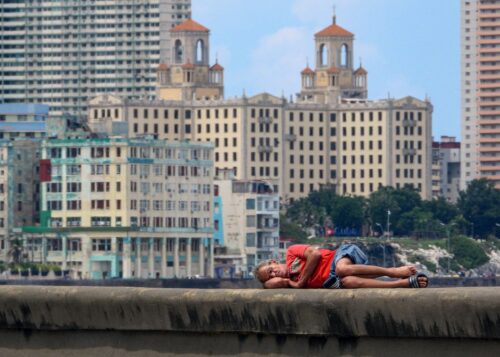
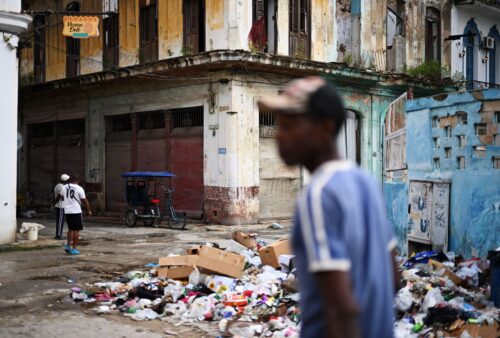
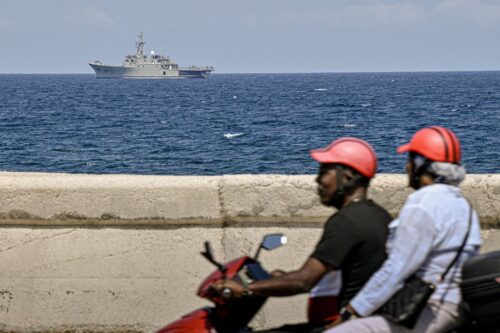
Cuban civilians continue to suffer under the Trump administration’s sanctions and fuel blockade. Water shortages have wracked the island, with nearly three million Cubans experiencing difficulties accessing water every day. The country’s “once vaunted public education system” is now in crisis, reports The New York Times. With limited electricity or transportation and widespread exhaustion and hunger, absenteeism has become rampant, and the government was forced to end the academic year early. According to the regional director of UNESCO, this education crisis “jeopardizes the future of an entire generation.” Childhood health care has also been severely impacted, according to a new report by Cubadebate. Per the Associated Press:
The survival rate for children with cancer has fallen to 65% from 85% before the energy restrictions began in January, according to the report released by Cubadebate. It also said 100,000 children younger than 7 are no longer receiving the daily liter of milk previously provided by the state and that the country’s 16-vaccine immunization program for infants is “at risk.”
Additionally, it said, another 100,000 Cubans are on waiting lists for surgery and the treatment schedules of nearly 3,000 patients requiring kidney dialysis have been disrupted. Regarding medication, 300 of the 395 essential medicines produced on the island are unavailable due to a lack of chemical components required to manufacture medications.
Even the country’s religious institutions have been impacted by the shortages, with Catholic clergy reporting that they have had to start rationing their communion wafers.
UN independent human rights experts released a statement condemning both the sanctions and the Trump administration’s threats of military action, which they describe as part of a “disturbing trend of lawlessness and contempt of multilateralism.” The UN High Commissioner for Human Rights, Volker Türk, similarly condemned the Trump administration’s measures, stating: “The fuel restrictions imposed since early 2026 and recent tightening of extraterritorial sanctions, taken together, are directly harming Cubans, especially the most vulnerable. Children are dying because doctors lack access to essential medical supplies and medicines. This is unacceptable. These sanctions must be lifted immediately.” The UN also reported that the fuel shortages have left it unable to distribute some 20,000 tons of humanitarian aid on the island.
In an apparent attempt to improve the dire economic situation and to appease the Trump administration, the Cuban government announced sweeping pro-market economic reforms this month. According to AFP and Reuters:
The plan would expand opportunities for private enterprise and create measures to attract additional foreign investment…. It could also set the stage for private real estate development on the Caribbean island and the transformation of state-owned businesses into private commercial ventures with shares and equity stakes. It would also allow private banks to enter Cuba’s once state-dominated finance sector.
Days later, however, US Secretary of State Marco Rubio announced new sanctions targeting five Cuban entities, including a state-owned mining company and a commercial bank, which the Associated Press reports “are expected to spook foreign investors and deepen a severe economic crisis.”
Earlier in the month, Rubio had announced additional sanctions against the Cuban Institute of Friendship with the Peoples, the tour company Amistur Cuba, and others. Major hotel operators, including Royalton and Meliá, ended their operations in the country this month due to the threat of sanctions, as did Envioscuba.com, which the Associated Press describes as “one of the main online platforms that Cubans living in the United States use to send money, food, and clothing to their relatives on the island.” The Supreme Court also ruled this month that ExxonMobil can sue state-owned Cuban oil companies over property confiscated after the country’s 1959 revolution under the Helms-Burton Act, despite the legal doctrine of sovereign immunity. This will likely open the door to additional similar suits and will further deter investment in Cuban properties that might be subject to similar claims.
Two recent articles make the case that these and other Trump administration measures, including the threat of invasion, not only harm Cuban civilians but also US interests. In the National Interest, military scholar and NATO advisor Hal Klepak argues that the Cuban government is highly effective at preventing organized crime and narco-trafficking and that destabilizing the Cuban state could create a power vacuum that could empower armed non-state actors. And in The Hill, Miami-based Cuban American Andrés Sánchez argues that President Donald Trump’s approach to Cuba may trigger a new surge of migration to the United States.
Also this month, Congresswoman Rashida Tlaib (D-MI) proposed an amendment to the National Defense Authorization Act that would recognize that the US fuel blockade is causing a humanitarian crisis in Cuba and that would call for its end. Congresswomen Delia Ramirez (D-IL) and Alexandria Ocasio-Cortez (D-NY) submitted a separate amendment that would prohibit any funds authorized by the act from being used to enforce sanctions against Cuba.
Finally, Mexican President Claudia Sheinbaum announced plans this month to resume oil shipments to Cuba. While past shipments had been made to the Cuban government, these would be delivered to the country’s limited private sector and would thus have less immediate impact on public goods such as health care, education, or the public energy grid.
Read more:
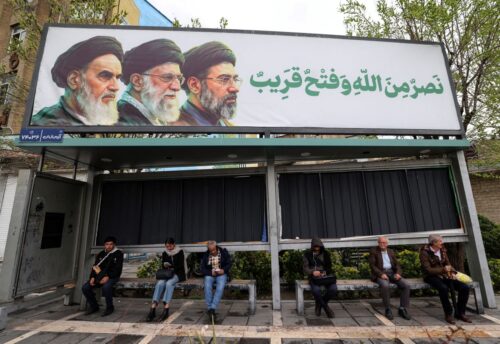
On June 18, the United States and Iran signed a memorandum of understanding to cease hostilities and establish a framework for negotiations going forward. As a part of the agreement, the US lifted its naval blockade of the country; Iran opened the Strait of Hormuz; and on June 23, the Trump administration issued a 60-day waiver on Iranian oil sanctions. According to The New York Times, “the change could provide Iran with a windfall after years of being forced to sell discounted oil to buyers willing to risk breaching U.S. economic restrictions.” During this 60-day period, the US and Iran have agreed to continue negotiations on a range of subjects, including the disposal of Iran’s stockpile of enriched uranium, the future of Iran’s nuclear program, and sanctions. The memorandum commits the US to terminating “all types of sanctions against the Islamic Republic of Iran, including the United Nations Security Council resolutions, IAEA [International Atomic Energy Agency] Board of Governors resolutions, and all unilateral US sanctions, primary and secondary” as well as to making “fully available for use the frozen or restricted funds and assets of the Islamic Republic of Iran” as a part of the final agreement.
Asked about the sanctions element of the agreement, Trump openly admitted that US sanctions cause mass civilian harm, including poverty and hunger: “We have sanctions that will never let them rebuild.… There would be poverty. Then 91mn people would starve.” A CBS poll found that 78 percent of the US public — including a majority of Republicans and self-described “MAGA Republicans,” specifically — support ending the war now on these terms rather than continuing the war in pursuit of further concessions.
Prior to the agreement, Drop Site News reported on the impacts of US economic restrictions and the war on Iran’s economy:
Iran entered the war with an economy already in deep distress. National income per person had fallen from roughly $8,000 in 2012 to about $5,000 in 2024. As a result of the war, the International Monetary Fund now projects Iran’s GDP will contract by a further 6% in 2026, while consumer prices will rise nearly 70% during that time.… Israeli and U.S. attacks on critical infrastructure like steel production plants, pharmaceutical companies, and factories have also resulted in the loss of an estimated one million jobs.
“I am very concerned about the fact that the real pressure is on the middle class and lower classes,” one economist told Drop Site. “These are the people that will be hit very hard, and the fact that a lot of businesses that belong to the middle class have been hit very hard in the past few months.”
Read more:
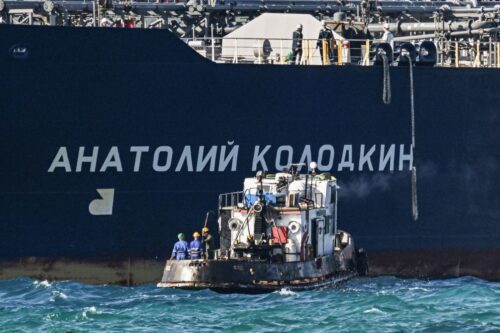
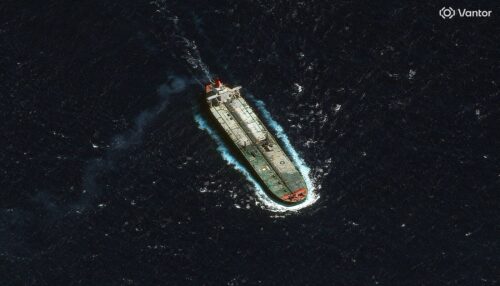
G7 leaders met in France this month to discuss a wide range of global issues, including Russia sanctions. According to a joint G7 statement, the heads broadly agreed to “increase the pressure on the Russian war economy. In this context, we will strengthen our sanctions, including those on the oil and gas sectors.” Citing the recent ceasefire between Iran and the United States, the statement added, “We consider this the right moment to proceed with additional measures.” During the event, British Prime Minister Keir Starmer announced sanctions on Russia’s energy sector and military supply chain, targeting 70 individuals, entities, and so-called “shadow fleet” vessels. The day before, British armed forces had boarded and seized a Russian oil tanker in the English Channel for the first time. Canadian Prime Minister Mark Carney announced similar sanctions against Russia at the conference, to which Russia responded with entry bans on 103 Canadian officials and politicians.
In France, President Trump said the United States would soon be prepared to end the US Department of Treasury’s controversial waiver on Russian oil sales, which allowed third-party countries — excluding Cuba, North Korea, and Iran — to purchase Russian oil that was already at sea as of April 17. The waiver, which had already been renewed twice, was originally issued to increase global oil supply following the start of the war with Iran. The day after the announcement, the Treasury Department quietly allowed the waiver to expire. More broadly, Trump appeared less committed to tightening sanctions on Russia than other G7 leaders, suggesting that future measures would largely depend on a decline in oil prices.
Ahead of the summit, the European Commission presented its 21st sanctions package against Russia for consideration by EU member states. The proposed measures target 34 individuals and 47 entities, including several in third-party countries such as China, for their alleged support of Russia’s military and energy sectors as well as for involvement in Russia’s so-called hybrid activities, the annexation of Crimea, and the poisoning of opposition activist Alexei Navalny. Commenting on the impact of sanctions, European Commission President Ursula von der Leyen stated:
The price Russia pays is heavier by the day. And it is paid primarily by the people of Russia. They are mourning sons, brothers and husbands. And at the same time, they face declining living standards at home. Inflation is close to 6%. Interest rates stand at 14.5%. Taxes are rising. This is the real cost of Putin’s war for Russian citizens. And on top of this, our sanctions keep biting hard and cutting deep. They are weakening the economic foundations of Russia’s war effort.
Sanctions have effectively cut Russia off from global capital markets. Russia’s economy is slowing sharply. Growth is sluggish, at best. The budget is under growing pressure. More than two-thirds of the liquid assets of its sovereign wealth fund are gone. Energy revenues fell by around 40% in early 2026.
The most significant element of the commission’s proposal is a delay in adjusting the EU’s price cap on Russian oil. Shortly after the start of the war in Ukraine, the G7 imposed a $60-per-barrel cap on Russian crude. This mechanism was modified nearly a year ago by the EU and other G7 countries — excluding the United States — to allow it to float with market prices. Since then, the EU’s cap has been set at 15 percent below the average market price, which lowered it to about $47 per barrel at the time. With oil prices rising sharply following the war with Iran, the cap is expected to increase. To counter this, the commission is proposing to freeze the current cap until January to “give oil markets time to stabilise while preserving pressure on Russia’s revenues.” Meanwhile, EU officials appear to have abandoned a related initiative from the 20th sanctions package — a total ban on the provision of maritime services to Russia — amid opposition within the EU and from other G7 countries.
Earlier this month, the US House of Representatives passed a bill that would codify many of the existing broad, sectoral, and targeted sanctions on Russia, along with additional new measures. The legislation stipulates that sanctions must remain in force as long as the president periodically determines that Russia is “waging a war of aggression against Ukraine, refusing to sincerely negotiate a peace agreement with Ukraine, or acting in violation of a negotiated peace agreement.” While the bill preserves significant presidential discretion, its enactment would nonetheless complicate any future effort to fully lift sanctions on Russia. An overwhelming majority of Republicans opposed the bill, along with Democratic Representative Ilhan Omar (D-MN), who stated:
I have always, and will continue, to stand with the Ukrainian people and unequivocally condemn Putin’s illegal and brutal invasion. I voted against the Ukraine Support Act because of its inclusion of broad economic sanctions. Time and again, sanctions like these fail to achieve their stated goals while inflicting real suffering on ordinary people. Opposing Russian aggression does not require us to support policies that punish ordinary civilians who did not ask for this war.
The foreign policy establishment continues to return to the same failed playbook and expects different results. Economic sanctions fail to achieve their desired goals and in most cases are counterproductive to ending war.
Read more:
Following Iranian strikes on Israel on June 7, Israel closed all crossings into Gaza. They cited security reasons and argued that the “substantial quantities” of aid already in the strip would “not affect the humanitarian situation.” Humanitarian organizations rejected this measure and warned that Gaza was already facing severe shortages and that the closure would further endanger lives. Israel began gradually reopening crossings the following day, though restrictions remain in place. Briefing the UN Security Council on June 18, the UN’s relief chief, Tom Fletcher, said:
Humanitarian access continues to rely on one, at most two, operational crossings, when significantly greater capacity could easily be made available for the movement of aid and staff.
Cumbersome approvals and customs procedures, combined with restrictions on so-called ‘dual use’ items, limit the entry of critical humanitarian supplies. For example, WHO notes that at times these have times [sic] included prosthetic limbs.
During the meeting, even some of Israel’s staunchest allies, including the UK, called for restrictions to be lifted. Pakistan’s delegate echoed this demand in stronger terms, stating:
The blockade of Gaza has been an instrument of occupation and collective punishment for years. By controlling access and movement, the occupying power perpetuates the suffering of 2.1 million Palestinians. This blockade is a clear violation of international law, including the Fourth Geneva Convention. Humanitarian access must never be weaponized. The blockade must be lifted immediately.
Days later, the UN Independent International Commission of Inquiry on the Occupied Palestinian Territory issued a report that finds that “Israel continues to commit genocide and other atrocity crimes by deliberately targeting Palestinian children,” according to a press release. The report notes:
Israel’s use of starvation as a method of war, imposed through a blockade and siege, has produced acute and chronic malnutrition among children in Gaza, removing the basic conditions necessary for their survival. Children, including newborns, have been deprived of calories, proteins, and nutrients necessary for growth, with visible effects such as damaged hair, skin, teeth, and paralysed limbs. Immunological vulnerabilities have also contributed to the re-emergence of diseases like polio. Growing food insecurity, destruction of healthcare, and reduced immunization have severely undermined children’s health. Israel’s use of starvation as a method of war has also caused severe reproductive harms to women and girls, impacting all aspects of reproduction, including pregnancy, childbirth, post-partum recovery and lactation, as well as adversely impacted the health of newborns.
Over 60 members of Congress sent a letter to Secretary of State Rubio this month urging the United States to press Israel to facilitate medical evacuations for cancer patients in Gaza. “More than 1,200 people have … died while waiting for evacuation,” wrote the lawmakers, adding that “the only obstacle between these patients and the treatment they desperately need is the Israeli government’s approval of their evacuation requests.”
Read more:
The Trump administration issued a slew of new and amended general licenses early this month aimed at further opening up Venezuela’s energy and mining sectors. The new measures expand the definition of tradable petrochemicals to now include certain fertilizer products and feedstocks; to ease restrictions on the import of US-origin diluents (products that are blended with Venezuela’s particularly heavy crude oil to make it transportable); and to authorize certain transactions related to logistics, infrastructure, and maritime services that support the trade of oil and minerals. Most of the new licenses explicitly bar transactions with Chinese, Russian, Iranian, Cuban, or North Korean entities. The following week, the administration issued three additional licenses authorizing transactions related to telecommunications, the state airline, and a particular bond issued by the state oil company.
The continued easing of sanctions has further spurred the interest of US investors; JPMorganChase and the Jefferies Financial Group reportedly organized trips to Caracas this month in what Bloomberg calls “among the first known visits by major US banks.” The gold rush from risk-tolerant foreign investors has not, however, translated immediately into broad economic gain, reports the Washington Post:
While inflation has slowed slightly, it’s still more than 600 percent year over year.… The government of interim president Delcy Rodríguez recently increased the monthly minimum income to $240, but that’s a small fraction of what the typical family needs to get by.… Reasons for optimism are clear: Oil exports have risen to a seven-year high, and dollars from U.S. oil sales are beginning to trickle into the economy.… The Trump administration has eased sanctions on Venezuela’s central bank and some state-owned banks.… But new oil deals and contract renewals have largely been kept secret. The U.S. Treasury is distributing dollars into the economy, but the specifics — how much has been distributed, how it’s been spent, the discounts companies are granted — are elusive.
CEPR senior research fellow Francisco Rodriguez added additional context to the article, noting that
the bottom line is quite simple. Venezuela did not grow more rapidly despite increased oil revenues in 1Q26 because the US didn’t transfer to the Venezuelan government the totality of its increased oil revenues.… What the data does tell us is that to the extent that the United States continues holding on to some of the resources from Venezuelan oil sales, Venezuela’s recovery will take time and may be much slower than anticipated.
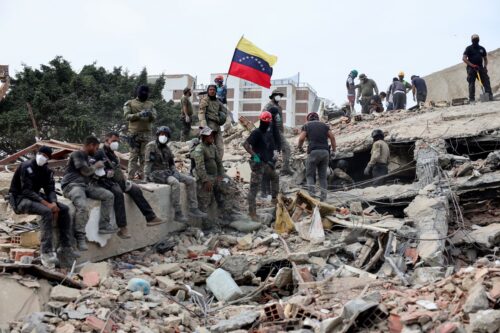
Finally, following two deadly earthquakes that have left hundreds dead — to which the Trump administration responded with a limited and time-bound General License — CEPR called on the US and other countries to lift all broad economic sanctions and unfreeze frozen assets to allow Venezuela to more effectively respond and recover.
Read more:
South Korean President Lee Jae-myung has repeatedly stated this month that sanctions on North Korea have failed to change Pyongyang’s behavior or alter its status as a nuclear-armed state. While continuing to support denuclearization as a long-term objective, he has advocated for talks with North Korea and the establishment of short- and medium-term goals focused on arms control. Following this month’s G7 summit in France, President Lee told reporters that he had spoken with President Trump. “I told him sanctions and pressure are ineffective,” Lee said to the media. “I also said that we can no longer deal with the North Korean nuclear issue in the same way we deal with other countries, and President Trump agreed.” According to Lee, President Trump said it was “time to pay attention” to North Korea and indicated that he would be open to meeting with North Korean leader Kim Jong Un.
Kim Jong Un and other senior North Korean officials, including Kim’s sister Kim Yo Jong, have often said that denuclearization is a nonstarter for negotiations, characterizing North Korea’s nuclear weapons program as a “line of no retreat.” Commenting on potential talks, Yang Moo-jin, a professor at the University of North Korean Studies in Seoul, told Reuters:
“North Korea is once again reaffirming that denuclearisation talks are off the table,” Yang said, adding it would only engage in negotiations “as a nuclear weapons state on an equal footing,” potentially focusing on arms reduction rather than dismantlement.
Such talks would imply acceptance of a minimum deterrent and require sanctions relief, he said, fundamentally differing from phased denuclearisation proposals, such as those raised by South Korean President Lee Jae Myung to U.S. President Donald Trump at the G7.
On June 11, the Department of Treasury imposed new restrictions on the export of certain medical devices to North Korea, including “diagnostic medical imaging equipment, carbon dioxide incubators, fluorescence microscopes and full-face mask respirators,” according to NK News. Designating these items as “dual-use goods,” the department determined that they do not qualify under a general license permitting the export of certain agricultural products and medical equipment to the country. As a result, their export now requires a “specific authorization.”
Read more:
The Senate Foreign Relations Committee advanced bipartisan legislation (A Bill to Repeal Certain Acts That Impose Sanctions Upon Syria) this month to repeal two sanctions-related laws: the Syria Accountability and Lebanese Sovereignty Restoration Act of 2003 and the Syria Human Rights Accountability Act of 2012. The former restricts US exports to the country and limits US-Syrian diplomatic relations, while the latter requires the imposition of sanctions on those responsible for certain forms of censorship and human rights abuses. The sanctions imposed under these bills had already been suspended after the fall of the Assad government, but the laws remain on the books. With the sweeping Caesar Syria Civilian Protection Act having been repealed in December, the passage of A Bill to Repeal Certain Acts That Impose Sanctions Upon Syria would remove some of the last statutory vestiges of the once-comprehensive Syrian sanctions regime.
The far more significant remaining sanctions are not legislative, however. Syria has been on the State Sponsor of Terrorism list since 1979 — a State Department designation that severely curtails the country’s access to the international financial system and significantly impedes foreign investment. In an article published this month in Lawfare, legal expert John Balouziyeh and Middle East Institute fellow Charles Lister argue that “the wrong people are paying” under the designation:
The Syrian people did not sponsor terrorism. They suffered under the government that did. Over more than a decade of civil war, millions of Syrians were killed, tortured, disappeared, or driven from their homes by the Assad regime. They were the primary victims of the conduct that gave rise to these judgments. Maintaining the designation ensures that they — through the diversion of their state’s scarce resources — continue to pay for it.… Delisting Syria is not about letting anyone off the hook. It is about creating conditions under which U.S. victims can actually recover something — rather than holding unenforceable paper judgments that produce nothing.
Syrian president Ahmed al-Sharaa urged President Trump to remove Syria from the list in a call this month, and the Trump administration is reportedly in the process of reviewing the designation.
Read more:
On June 8, the United Nations Security Council gathered for a meeting titled “the situation in Afghanistan,” during which several member states emphasized the importance of sustained engagement with Afghanistan and called for a reassessment of sanctions. India’s representative stated:
The political reality of Afghanistan has changed in the last five years. And the current UN sanctions regime must take that into account. The UN and the international community need policy instruments that aim to benefit the people of Afghanistan and nudge policy in the right direction, rather than only wielding tools of punishment that are yielding diminishing returns.
And China’s ambassador similarly said:
We call on all parties to maintain dialogue and engagement with the Afghan authorities continuously. Bridge differences, build consensus, and encourage Afghanistan to better respond to the concerns of the international community.…
We call on traditional donors to increase assistance to Afghanistan, with countries bearing historical responsibilities taking the lead. The countries concerned should fully return [the] Afghan Central Bank’s overseas assets, lift illegal unilateral sanctions imposed on Afghanistan, and support the rebuilding of its financial system.
Writing in the Small Wars Journal, Dr. Adib Farhadi, an associate professor of Peace and Conflict Studies at the University of South Florida, also argues in favor of pragmatic engagement with Afghanistan. He contends that neither maintaining the status quo nor pursuing a strategy of maximum pressure is likely to change the Taliban’s behavior or to achieve US strategic objectives and that both approaches ultimately harm ordinary Afghan citizens. Regarding sanctions, he notes:
Since 2021, U.S. policy has primarily relied on isolation and coercive measures. The U.S. has utilized a combination of sanctions, financial restrictions, and the withdrawal of aid assistance to exert pressure on the Taliban over human rights issues. These punitive measures have produced limited observable behavioral change in Taliban governance while contributing to the country’s economic and humanitarian deterioration, including the potential for mass starvation. As John Aylieff, the World Food Programme’s (WFP) Country Director for Afghanistan, describes, “‘The impact on women is nefarious,’ with the unthinkable becoming increasingly commonplace as families cut off from WFP assistance are ‘forced to sell their daughters into early marriage.’” In practice, the fusion of U.S. coercive measures and minimal diplomatic engagement has functioned less as a mechanism of leverage and more as the de facto abandonment of Afghanistan’s political, social, and economic future, harming the very populations it seeks to protect.
Despite opposition from certain human rights groups, European Union officials met with a Taliban delegation in Brussels on June 23. The Belgian government issued the delegation one-day visas to attend the talks. The meeting focused on expanding the EU’s efforts to deport Afghan nationals who, according to EU officials, have been denied asylum and have “committed serious crimes.” EU representatives stressed that engagement with the Taliban does not signal a change in the bloc’s policy of withholding formal recognition of the group as Afghanistan’s legitimate government. Afghan officials who attended the meeting said discussions included “restarting broad-range consular services for Afghans in the EU zone, including the need for trust-building measures, consular presence, and a dignified return process.” The sanctions implications of the meeting — or of any eventual agreement — remain unclear.
Read more:
US Representative Jesús “Chuy” García (D-IL) introduced an amendment to the Fiscal Year 2027 National Defense Authorization Act that would require the Departments of State and of Treasury to certify, before imposing any new broad-based sanction, that the measure would not result in civilian deaths. The amendment is highly unlikely to pass but draws attention to the considerable increase in mortality associated with unilateral sanctions.
Read more:
Economic sanctions have become one of the main tools of US foreign policy despite widespread evidence that they can cause severe harm to civilian populations (which may, in fact, be the point). Though now a defining feature of the global economic order, sanctions and their human costs receive relatively little attention in most US media outlets.
CEPR’s Sanctions Watch news bulletin aims to generate more awareness on the use and impact of sanctions through monthly round-ups of news and analysis on US sanctions policy.
Previous editions of the Sanctions Watch can be found here. CEPR’s US Sanctions Policy FAQ can be found here.
Article
Article
Article
Article
Article

Report
Article
Article