

John is a senior research fellow at CEPR, where he was a senior economist between 2005 and 2015. He later worked as the Research Director at the Washington Center for Equitable Growth and the Vice President of the Economic Policy Institute.
He has published peer-reviewed research on a range of labor market issues including unemployment, wage inequality, the minimum wage, unionization, immigration, technology, racial inequality, mass incarceration, and other topics. His research has been cited widely in the media including The Economist, The New Yorker, The New York Times, and The Wall Street Journal.
His popular writing has appeared in The American Prospect, Boston Review, BusinessWeek.com, Challenge, Democracy, Dissent, The Guardian, The International Herald Tribune, Salon, The Washington Post, and other publications. Schmitt co-authored three editions of The State of Working America and co-edited Low-Wage Work in the Wealthy World (Russell Sage Foundation, 2010).
From 1999 through 2015, he was a regular visiting professor in public policy at the Pompeu Fabra University in Barcelona. In the 1990s, he was a Fulbright scholar at the University of Central America in San Salvador, El Salvador, and later worked as an information officer for the United Nations Peacekeeping Mission in El Salvador (ONUSAL).
He has a Ph.D. and an M.Sc. in Economics from the London School of Economics and an A.B. in Public and International Affairs from Princeton University.
All from John Schmitt
The High Cost of Living: What Working Families Pay For Health Care
The combination of rising costs and cost-shifting has left a large share of working families burdened with high levels of expenses: The typical working family spent $3,960 per year on health care.
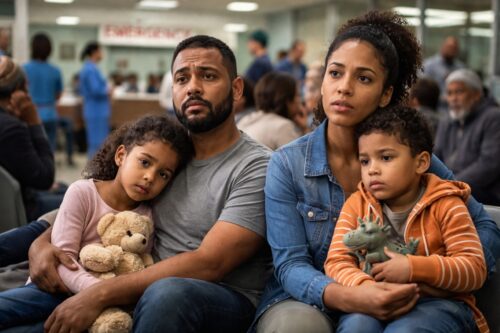
Paying More for Less: The US Health Care System
Despite record-high health spending, the United States consistently lags behind peer nations on key health outcomes, including life expectancy and infant and maternal mortality.

The United States, The IMF, and Special Drawing Rights
A new CEPR report projects that up to over a hundred-thousand US jobs could be saved were the International Monetary Fund to make a new major allocation of Special Drawing Rights, like it did in 2021.

The United States, The IMF, and Special Drawing Rights
A new CEPR report projects that up to over a hundred-thousand US jobs could be saved were the International Monetary Fund to make a new major allocation of Special Drawing Rights, like it did in 2021.
Factsheet: Key Industries that Rely Heavily on Medicaid to Provide their Workers with Health Insurance

Profile of Workers with Health Insurance through Medicaid Fact Sheet
Medicaid is –by a large margin– the most important stopgap for workers that don’t have employer-based coverage. Currently, one of every ten workers obtains their health coverage through Medicaid, which is fully one third of all workers that don’t have employer-based health insurance. Explore more in our Profile of Workers with Health Insurance through Medicaid Fact Sheet.

Medicaid by State Factsheet 2025
Medicaid by State Factsheet 2025. Source: CEPR analysis of the 2024 Current Population Survey Annual Social and Economic Supplement. Data refer to Medicaid status as of March 2024.

A Complicated Maze: How Workers Navigate the US Health Care System
Most US workers with health insurance rely on employer-based coverage, but access varies sharply by income, race, and gender, and millions risk losing coverage due to potential cuts to Medicaid expansion and ACA subsidies.

Chronic Condition: Working Without Health Insurance
Exploring the current landscape of health insurance in the US. Find out how many Americans still lack coverage and the effects of the Affordable Care Act.
Employment Challenges Facing Security Guards
In 2022, more than 850,000 people in the United States worked as security guards. This post provides a quick overview of the challenges facing this particular part of the workforce — challenges that face almost all low- and middle-wage workers — and explores the particular ways security guards experience these issues.