Article • Sanctions Watch
CEPR Sanctions Watch August 2025
Article • Sanctions Watch
In this edition of Sanctions Watch, covering August 2025:
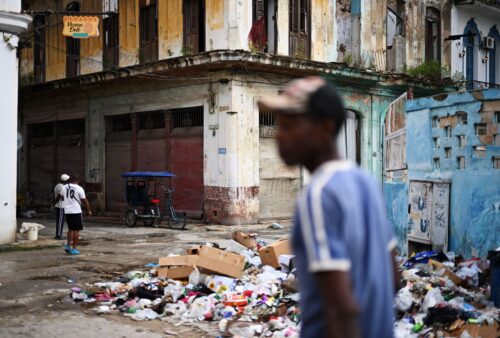
This month, the US Department of State announced new visa restrictions targeting officials from Africa, Brazil, Grenada, and Cuba for their ties to international Cuban medical missions, referred to as a “forced labor scheme” by the US administration. While the full list of targeted individuals is unknown, the State Department confirmed that officials from Grenada and Brazil, namely Brazilian Ministry of Health officials Mozart Julio Tabosa Sales and Alberto Kleiman, and Grenadian Finance Minister Dennis Cornwall, are among those affected.
The move follows similar visa restrictions imposed on Central American officials in June as a part of a wider Trump administration effort to crack down on the missions, which have a long and widely lauded history of providing lifesaving health care to dozens of countries. President Lula da Silva of Brazil condemned the move, calling on the US to lift the “blockade” and let Cubans “live their lives.” “Our relationship with Cuba is one of respect for a people that has been a victim of a blockade for 70 years,” he added. “Today they are suffering due to a blockade that has no justification.”
The Miami Herald reported this month that it had obtained secret financial information indicating that the Cuban military-controlled enterprise Grupo de Administración Empresarial, S.A. (GAESA) has been covertly storing significant sums of cash, arguing that this implies that the Cuban government, more than the US embargo, is responsible for the Cuban people’s impoverishment. Others, however, have cautioned against drawing such conclusions. In an interview with Belly of the Beast, University College London economist Emily Morris points out that it appears that the Herald may have mistaken Cuban pesos for US dollars, thus greatly overestimating the sums involved. Moreover, the Herald has only provided a blurry screenshot of what it purports to be a GAESA document. There is no indication that the Herald has checked the document’s veracity with relevant digital forensics experts. Finally, the documents do not contain a basis for the conclusion that the impacts of the US embargo on the Cuban economy are insignificant.
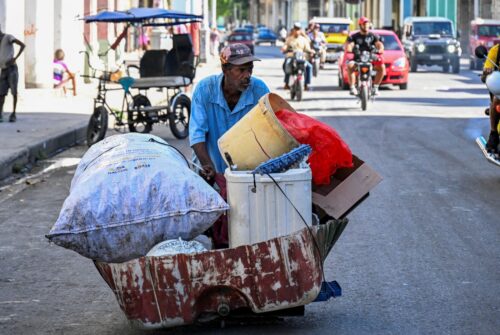
Finally, Cuba’s longtime economic crisis — the product, in large part, of the tightening of the US embargo since Trump’s first turn — continues to deepen. The Cuban peso hit an all-time low this week, amid an economic contraction of 11 percent since 2019, according to Reuters.
Read more:
This month, President Donald Trump met with Russian President Vladimir Putin in Alaska for a summit on the war in Ukraine. Before the summit was announced, Trump had repeatedly threatened to impose additional sanctions on Russia. Last month, he gave Moscow a 12-day deadline to agree to a ceasefire in Ukraine, or 100 percent secondary tariffs would be levied on countries that import Russian goods. Although the deadline was set for August 8, Trump signed an executive order two days earlier placing 25 percent tariffs on India for its purchase of Russian oil. When August 8 arrived, however, no additional tariffs were imposed, and instead the summit with Putin was announced.
In the lead-up to the summit, Trump again threatened “very severe consequences” if Putin refused to end the war. European leaders also said that Trump had “broadly” agreed with them to pressure Russia with new sanctions if no progress was made. Ultimately, despite remaining disagreements, Trump and Putin concluded that pursuing a peace deal, rather than an immediate ceasefire, was the priority. Trump then provisionally backed away from his sanctions threat, telling Fox News: “Because of what happened today, I think I don’t have to think about [sanctions] now … I may have to think about it in two weeks or three weeks or something, but we don’t have to think about that right now.” But just over a week later, on August 23, Trump again threatened “massive sanctions or massive tariffs or both” on Russia within two weeks if no progress toward peace was made.
Top European officials have said the EU is preparing a 19th package of sanctions against Russia, scheduled to be announced in early September. In response to two of its banks being targeted in the EU’s 18th sanctions package, approved last month, China imposed sanctions on two Lithuanian banks on August 13 — apparently the first time it has sanctioned foreign banks. Meanwhile, Switzerland has moved to align itself with the EU’s 18th package and its lowered price cap on Russian oil — a measure Canada has also adopted.
Read more:
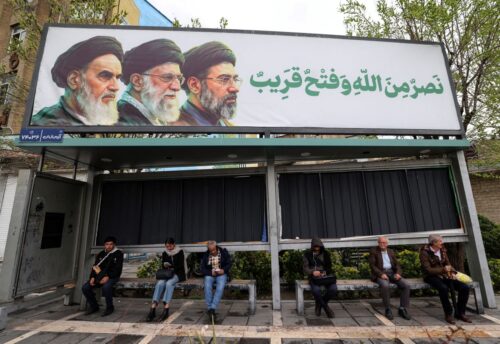
On August 28, the E3 Group — France, Germany, and the United Kingdom — formally triggered “snapback” sanctions under the terms of the 2015 nuclear agreement. The move means that wide-ranging UN sanctions that had been lifted in 2015 will be reimposed on Iran beginning in 30 days, unless the UN Security Council votes otherwise. As the Security Council must affirmatively vote to prevent the reimposition of sanctions, this means that any permanent member can use their veto to ensure that the sanctions are imposed.
Two weeks prior, the group had warned of its intention to initiate the process if Iran did not make sufficient diplomatic progress by the end of the month. This ultimatum followed Iran’s decision to suspend the International Atomic Energy Agency’s (IAEA) access to its nuclear sites in response to Israeli and United States military strikes in June. However, on August 18, Iran reported that talks with the IAEA to discuss the possibility of renewed inspections were ongoing. Conservative figure and former foreign minister Manouchehr Mottaki threatened that, if the UN sanctions go into effect, Iran might leave the landmark global Nuclear Non-Proliferation Treaty. According to Newsweek, “Experts warn that reimposing sanctions would deepen Iran’s isolation, risk unraveling the Nuclear Non-Proliferation Treaty (NPT), and further destabilize a region already under strain from conflicts.” Center for International Policy senior fellow Sina Toosi writes that the snapback sanctions risk “locking both sides into a cycle of pressure and retaliation with no offramp.”
The Iranian Intelligence Ministry issued guidance warning state ministries and the private sector to prepare for the snapback sanctions, including the freezing of overseas assets and the “re-sanctioning of legal and natural persons active in industries such as oil, petrochemicals, banking, shipping, insurance and sensitive technologies.” The Intelligence Ministry highlighted the broad macroeconomic impacts that would affect Iranian civilians: “Severe currency fluctuations, reduced purchasing power, increased unemployment, layoffs and heightened social discontent are to be expected.”
Meanwhile, Iran has not resumed nuclear talks with the US following the June attacks, with Foreign Minister Abbas Araghchi stating this month that “we have not yet reached the point of maturity where effective negotiations with the US can take place.” It has, however, signaled a cautious willingness to accept some restrictions on its nuclear program in exchange for the lifting of sanctions, provided that its right to continue uranium enrichment below a certain level is maintained.
Read more:
Late last month, the US Treasury Department designated the so-called Cartel de los Soles (Cartel of the Suns) as a Specially Designated Global Terrorist organization, alleging that it materially supports the Tren de Aragua and Sinaloa cartels in “using the flood of illegal narcotics as a weapon against the United States,” and that it is headed by Venezuelan President Nicolas Maduro and other top officials in his government. While these officials generally already face extensive sanctions, the new designation will likely facilitate Treasury’s ability to sanction others associated with them.
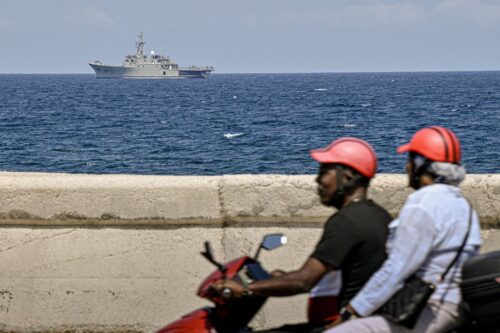
But InSight Crime — a think tank focused on regional security issues — contends that the Treasury Department has mischaracterized the Cartel de los Soles. While there is evidence of narco-related corruption in the Venezuelan military and government, researchers at the think tank note that there is no evidence of the existence of a hierarchical, ideologically driven cartel led by Maduro. The organization further contests the characterization that drug trafficking is being used as a deliberate “weapon” against the US, as are alleged ties between Cartel de los Soles and Tren de Aragua, which Maduro has, in fact, cracked down on. A few weeks following the move, US Attorney General Pam Bondi announced that the administration was increasing the reward for information leading to the arrest or conviction of Maduro from $25 million to $50 million. In addition, the US has announced the deployment of warships and thousands of troops to the southern Caribbean, sparking regional fears of US military aggression against Venezuela.
In spite of these developments, on August 18, Chevron dispatched its first delivery of Venezuelan oil to the US under the limited license the Trump administration granted in July. This license was a reversal from earlier Trump policy; Trump imposed sanctions targeting Venezuela’s oil sector during his first term, and had revoked a license granted to Chevron by President Biden earlier this year. As discussed in last month’s Sanctions Watch, the new license was likely motivated by a desire to increase the flow of oil, to limit migration, and to avoid creating an opportunity for China to make inroads into Venezuela’s oil sector. According to Zacks Equity Research, however, Chevron’s “volumes remain small, signaling a cautious start rather than a full revival of trade.” In a letter to the editor published by The Wall Street Journal, Venezuela-based medical doctor Jacobo Dib welcomed the license:
For years we’ve lived with shortages, failing infrastructure and economic collapse. These problems didn’t begin with sanctions, but sanctions have made them worse. Daily life here is shaped by rising costs, falling incomes and shrinking hope.
The renewal of Chevron’s license may frustrate some abroad, but for many here it represents a rare chance for jobs and much-needed economic activity. It may not solve the crisis, but neither has isolating the country. Though designed to target decision makers, sanctions have ended up hitting ordinary Venezuelans the hardest.
There are no easy answers. But a policy that increases hardship for millions without achieving its goals needs to be re-examined. Pressure without perspective can become punishment.
Read more:
Palestinians in Gaza continue to die from famine due to Israel’s near-total blockade of humanitarian aid in place since March of this year. The World Food Programme reported that “starvation and malnutrition are at the highest levels since hostilities began,” and 27 countries warned in a joint statement that “humanitarian suffering in Gaza has reached unimaginable levels. Famine is unfolding before our eyes.” In a major announcement late this month, the UN-backed Integrated Food Security Phase Classification (IPC), the top authority monitoring global food insecurity, confirmed that famine is occurring in parts of Gaza and is expected to expand. This followed the IPC’s statement last month that a “worst-case scenario of famine” was unfolding in the Strip. Commenting on the IPC’s findings, UN Humanitarian Chief Tom Fletcher said: “It is a famine that we could have prevented, if we had been allowed. Yet food stacks up at borders because of systematic obstruction by Israel.” All members of the UN Security Council except the US said in a joint statement that they “trust the IPC’s work and methodology” in its declaration of famine and that “this is a man-made crisis. The use of starvation as a weapon of war is clearly prohibited under international humanitarian law.”
In response to international outcry, Israel has announced measures it claims will allow more aid into the Strip, such as permitting controlled deliveries through its private sector, denying fewer aid deliveries, and allowing airdrops from foreign governments. Furthermore, the United States has stated that the US- and Israeli-backed Gaza Humanitarian Foundation (GHF) — the primary organization Israel permits to distribute aid — will be ramping up its operations despite widespread criticism that it is dangerous and ineffective. Aid distribution at GHF sites is disorganized and difficult to access, with Israeli forces firing on Palestinians near these locations — killing more than 1,000 people over the past three months — and being “reportedly directly involved in the enforced disappearance of people seeking aid,” according to a recent statement by UN experts. Additionally, the Israeli government has acknowledged arming anti-Hamas groups in Gaza, which UN and aid officials allege are being permitted by the Israeli military to loot humanitarian supplies.
The impact of these announcements — seen by many as a smokescreen — is limited by Israel’s ongoing aid restrictions and deliberate policy of starvation, as documented this month in separate reports by Amnesty International and Doctors Without Borders. Indeed, more than 100 humanitarian organizations have warned that new Israeli regulations could force them to shut down their already stalled operations, and the UN human rights chief stated: “The risk of starvation is everywhere in Gaza. This is a direct result of the Israeli Government’s policy of blocking humanitarian aid. In the past few weeks, Israeli authorities have only allowed aid to enter in quantities that remain far below what would be required to avert widespread starvation.” Looming over the crisis are Israel’s stated plans for a complete military takeover of Gaza, a move likely to exacerbate what has been identified by many human rights groups, including leading Israeli human rights organizations, as an ongoing genocide.
In a shift from Germany’s staunch support for Israel, Chancellor Friedrich Merz announced that it would suspend the sale of weapons that could be used in Gaza, stopping short of a full arms embargo on Israel. Turkey also took action against Israel, banning Israeli-linked ships from its ports in fulfillment of commitments made at the recent Hague Group summit in Colombia. Meanwhile, the US imposed visa restrictions on Palestinian Authority officials and members of the Palestine Liberation Organization, and, in a separate move, paused visas that had allowed Gazan children, including many with severe injuries, to receive medical care in the US. The former decision appears to be a response to various US allies announcing their intentions to recognize a Palestinian state, while the latter was prompted by far-right influencer Laura Loomer’s denunciations of Gazan children arriving at US airports.
Read more:
President Trump ratcheted up economic pressure on Brazil late last month as part of his ongoing efforts to undermine the ongoing trial against former President Jair Bolsonaro for allegedly plotting to stage a coup. Declaring a national emergency under the International Emergency Economic Powers Act, the Trump administration raised tariffs on Brazil from 10 to 50 percent and imposed Magnitsky sanctions on Brazilian Supreme Court Justice Alexandre de Moraes, who is presiding over the trial. This month, Brazil’s top court ruled that, while the US has jurisdiction over assets and transactions involving the US, foreign laws do not automatically apply domestically and Brazilian financial institutions that seize or block domestically held assets in order to comply with the sanctions may themselves face punishment. Nevertheless, the fear of further sanctions sparked what Bloomberg described as a “market rout … across Brazilian assets,” with particular pain in the financial sector.
Representative Jim McGovern (D-MA), a coauthor of the Magnitsky Act, sent Treasury Secretary Scott Bessent and Secretary of State Marco Rubio a letter condemning the administration’s abuse of the authority:
The Global Magnitsky Act is designed to hold accountable individuals who commit acts of corruption and gross violations of human rights. It is therefore disgraceful that the Trump Administration has deployed GloMag sanctions in a manner contrary to their purpose by undermining the Brazilian judiciary’s efforts to defend democratic institutions and uphold rule of law. … The Administration’s claim that the prosecution of individuals who attempted a coup constitutes an “unlawful witch hunt” is not only false, but an affront to the Brazilian electorate and the entire concept of rule of law.
Read more:
The United States is urging the UN Security Council to lift its sanctions on Syrian President Ahmed al-Sharaa and other top officials, after having removed Sharaa, as well as his armed group Hay’at Tahrir al-Sham (HTS), from its own sanctions list earlier this summer. The US has reportedly refrained from publicly requesting that the UN delist HTS as well, anticipating pushback, but will pursue the matter behind closed doors.
Meanwhile, a bipartisan group of US lawmakers traveled to Damascus to meet with Sharaa and others this month. While Trump has lifted many US sanctions on Syria, he is only able to temporarily waive those mandated under the 2019 Caesar Act (for more on what Trump’s executive orders have and have not achieved in regard to lifting sanctions, see this explainer from the Charity & Security Network). Members of Congress remain split over whether to fully repeal the law, as Reps. Ilhan Omar (D-MN) and Anna Paulina Luna (R-FL) have proposed, or to support efforts that would allow for extending waivers while retaining a significant threat of snapback. Proponents of the former point out that the constant threat of the return of sanctions is itself a deterrent to investment and the rebuilding of a functioning economy.
Read more:
During a high-level expert discussion hosted by the Center for the National Interest, the University of South Florida, and the US Institute of Peace, Dr. Adib Farhadi — Associate Professor at the University of South Florida and former Afghan deputy/acting minister of commerce and trade — argued in favor of pragmatic engagement with Afghanistan rather than imposing sanctions or maintaining its isolation. He stated:
It appears that the status quo policy remains unchanged. The status quo means letting more than 90 percent of Afghans remain below the poverty line. It means more than 3 million Afghans — a number that is rapidly growing as hundreds of thousands are forced out of Iran — will face emergency levels of food insecurity, and over 22 million remain dependent on humanitarian aid for survival. Applying maximum pressure through sanctions has so far proven counterproductive. Instead of weakening the Taliban, this has entrenched their rule, especially the hardliners, and has driven the Taliban closer to China, Iran, and Russia. And what benefit has America received from it? …
Today, the sanctions regime continues to paralyze Afghanistan’s economy. The entire banking system is under pressure, aid cannot flow freely, and American business investment is practically frozen. These measures were meant to punish the Taliban, but they have primarily punished the Afghan people and American businesses. Practical engagement is thus an imperative for the United States, not only to counter the damaging legacy of abandonment in terms of great power competition, but because we have a moral responsibility to the Afghan people. …
Sanctions must be eased to open space for economic recovery and regional integration. Let us not forget that we engage pragmatically in Syria, lifting all sanctions very recently. Such a move could serve as a strategic carrot to initiate meaningful dialogue between the Taliban and non-Taliban Afghans, aimed at bringing a real and lasting solution to the country.
Indeed, the humanitarian impact of sanctions is evident. A recent UN News article notes that the Afghan economy “has been devastated by sanctions and climate shocks.” This devastation has disproportionately affected women, as highlighted this month by Afghan-American journalist Freshta Jalalzai in an article for The Diplomat. Focusing on Khala Nafeesa, one of Afghanistan’s few female actors, Jalalzai writes:
After the Taliban’s return to power in 2021, most of the international community and aid organizations withdrew, and Afghanistan faced sanctions due to the Taliban’s policies. Its central bank assets remain frozen. In theory, these sanctions are intended to punish the Taliban leadership, particularly for their extreme oppression of women. In practice, women like Khala Nafeesa bear the heaviest burden of the country’s isolation and sanctions. … They have been left at the mercy of both the Taliban’s oppressive policies and global neglect.
Read more:
In an article for the Stimson Center’s North Korea-focused publication 38 North, fellow Ludovica Favarotto discusses using economic incentives that align with Pyongyang’s economic priorities as a way for the US to engage diplomatically with North Korea and ease tensions. She writes:
As President Trump has expressed his willingness to resume dialogue with Pyongyang, the United States should consider enhanced economic incentives rather than adhering solely to a security-based bargaining framework focused primarily on denuclearization. Offering measures that align with Kim Jong Un’s economic priorities is likely to be a more effective way of encouraging the North Korean leader to engage in high-level discussions with Washington. Easing international sanctions and exploring co-development initiatives could contribute to the country’s economic revitalization and, ultimately, lead to improved socio-economic conditions for its population.
North Korea experts Andrei Lankov and Peter Ward make a similar point in TIME Magazine, emphasizing that the future of relations between North and South Korea depends on US-North Korea talks. They note: “any serious shift in inter-Korean relations requires the lifting—or at least the meaningful relaxation—of U.N. sanctions. This is a step only the U.S. could engineer, and in practice only Donald Trump might attempt.”
While North Korea has largely rejected diplomatic overtures from South Korea’s new president, the powerful sister of North Korean leader Kim Jong Un, Kim Yo Jong, signaled that the country may be open to talks with the US, but only if the US recognizes it as a nuclear weapons state. A State Department official said the US noted the statement “with interest,” while President Trump spoke favorably of Kim Jong Un, expressing a desire to meet him “in the appropriate future” during a meeting with South Korea’s president, who supported Trump’s remarks. It remains unclear what this would mean for sanctions, particularly since North Korea’s denuclearization has long been one of Washington’s primary objectives.
Read more:
Representative Ilhan Omar (D-MN) delivered an impassioned speech to the Panamerican Congress in Mexico City this month decrying the humanitarian impacts of broad economic sanctions — citing recent CEPR research on the subject — and calling for their immediate cessation. A leading congressional champion on the issue, Rep. Omar remarked, to great applause:
Progressives in the US Congress must get serious about our moral obligation to end our government’s addiction to sanctions. A recent landmark study has shown that sanctions kill as many people worldwide as armed conflict. There is no place for a policy of indiscriminate collective punishment, and it is no different when it is economic strangulation than when it is with bombs. Like the War on Drugs, it has also failed on its own merit. Sanctions do not achieve their own stated goals, but they do make it harder for people to buy food or medicine. They make it harder for people to buy fuel. So our position as progressives in the US Congress should be very clear: no more sanctions. Lift the sanctions on Venezuela, lift the sanctions on Syria, lift the sanctions on Iran, lift the sanctions on Nicaragua, and finally, finally, end the blockade on Cuba.
Thank you @Ilhan for calling out our cruel sanctions policy—proving some US officials still choose humanity over politics. CEPR’s landmark study can be read here: https://t.co/HkCCjsR5Um pic.twitter.com/Zq4yuHBCtV
— CEPR (@ceprdc) August 7, 2025
CEPR Senior Research Fellow Francisco Rodríguez wrote an op-ed in the Financial Times this month summarizing the abovementioned new research on the disastrous human impacts of broad economic sanctions. In that study, published in The Lancet Global Health, Rodríguez, Silvio Rendón, and Mark Weisbrot estimate that unilateral economic sanctions lead to 564,000 excess deaths around the world each year. Rodríguez writes:
Woodrow Wilson once described sanctions as “more tremendous than war”, a “silent, deadly remedy” that no nation would be able to withstand. He believed their sheer destructiveness would lead them to be used sparingly. A century later, the opposite has happened: sanctions have become a default weapon of statecraft, wielded routinely. But a policy that kills hundreds of thousands of civilians is neither peaceful nor defensible. It is an economic weapon of mass destruction — used by the very powers that claim to uphold global norms.
Read more:
Economic sanctions have become one of the main tools of US foreign policy despite widespread evidence that they can cause severe harm to civilian populations (which may, in fact, be the point). Though now a defining feature of the global economic order, sanctions and their human costs receive relatively little attention in most US media outlets.
CEPR’s Sanctions Watch news bulletin aims to generate more awareness on the use and impact of sanctions through monthly round-ups of news and analysis on US sanctions policy.
Previous editions of the Sanctions Watch can be found here. CEPR’s US Sanctions Policy FAQ can be found here.
Article
Article
Article
Article
Article
Article

Report
Article